A pushchair goes through puddles, playground sand, slushy snow with de-icer and fresh tarmac every day. Dirt works into the axles and hinges, and soon the pushchair squeaks, rolls heavily and is awkward to fold.
Clean wheels also matter for hygiene, since pushchairs come into the flat and the lift. Here is a routine from inspection to lubricating the axles and folding mechanism.
What you will need
Important: Work on a balcony or outdoors, keep aerosols away from the child and do not spray onto fabric, the handlebar or anything the baby touches. After treatment let the pushchair dry and air out fully, and wipe off any excess product carefully.
Step 1
Inspect the pushchair
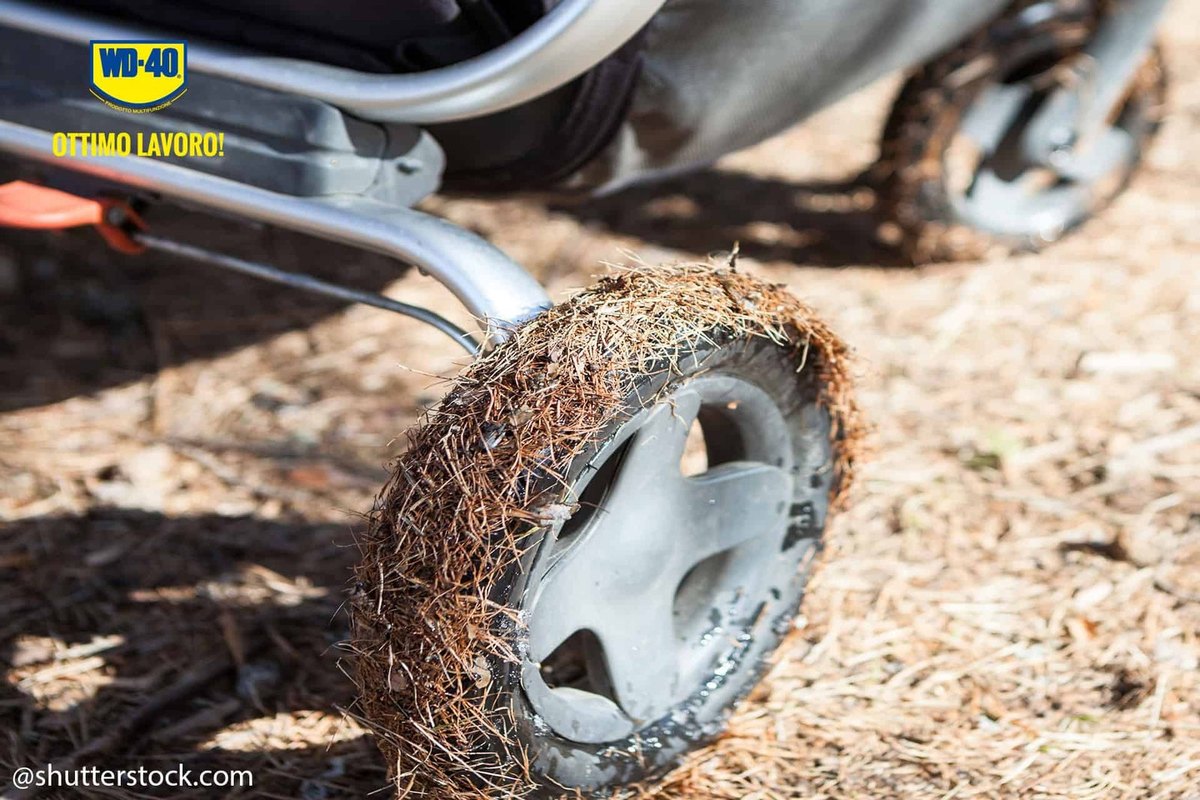
Turn the pushchair over and look at the wheel treads for tar, chewing gum, hair or thread wound around them. Spin each wheel and swivel the front ones around their vertical pivot to feel where they stick.
Check the folding hinges, brake and metal parts for light rust, sand and soil, and look over the seat fabric too.

Step 2
Wash the pushchair
Wash the dirty parts, or the whole frame, with a soft brush and warm soapy water. Be especially thorough with the wheels, getting sand out of the tread and the gaps around the axle. Dry the pushchair well, the fabric parts above all, so no mould appears.
Step 3
Remove greasy marks from the wheels
Wheels may be solid or pneumatic. Greasy and oily marks come off easily with WD-40 Multi-Use: spray it onto a cloth, wipe the tyre, repeat if needed, then wash with soapy water. Check pneumatic tyres at the same time and inflate them to the manufacturer's pressure.
Step 4
Get rid of tar, gum and stickers
Soften tar spots with a few drops of cooking oil, then wipe them away with a cloth. Warm hardened chewing gum with a hairdryer and lift it off with a plastic scraper.
Adhesive left by stickers and tape dissolves with WD-40 Multi-Use: spray, wait a minute and wipe off with a few strokes of the cloth.
Step 5
Lubricate the axles and brake
The wheels turn on their axles, and the front ones also swivel on vertical pins in the frame. Once clean, lubricate the axles with WD-40 Specialist Silicone: it dries quickly, does not attract dust or sand and protects against moisture.
If possible, remove the front wheels, apply the lubricant to the housing and the pin, refit and spin them. Treat the brake lever and its mechanism too, then wipe off any excess.
Step 6
Look after the folding hinges
Check every hinge for the backrest, hood and fold for sand and debris and clean them. Apply a little silicone lubricant to both metal and plastic hinges, then fold and unfold the pushchair a few times.
If a metal hinge shows light rust, treat it with WD-40 Multi-Use first, wait and wipe, then apply the silicone. Stains on removable fabric that did not wash out are best taken to a dry cleaner.
Tip: In winter, wipe the wheels and frame with a damp cloth straight after a walk on salted pavements: salt drying in the axles eats into the metal and causes squeaks within a few weeks.
What next
Wash the wheels every one or two weeks, and lubricate the axles and hinges once a month and after every walk in rain or snow. Before storing the pushchair for a long time, clean, dry and lubricate it fully.
These uses come from the experience of WD-40 users in many countries. Always follow the instructions and warnings on the product label.
More guides in «How to use».