A conventional wet lubricant works well in enclosed parts, but wherever there is a lot of dust, sand or sawdust its sticky film quickly turns into an abrasive paste. That is where dry lube comes in: once dry, it leaves a thin slippery layer that dirt barely clings to.
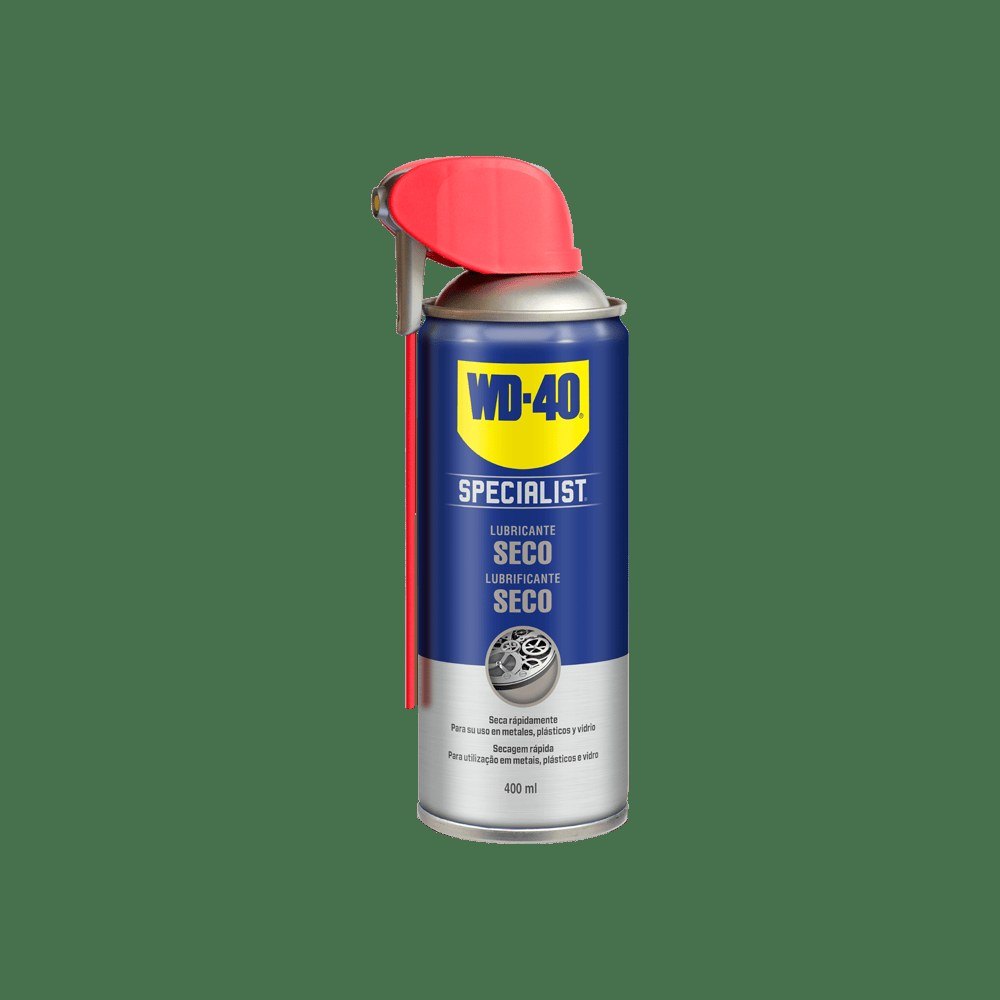
WD-40 Specialist Dry Lubricant suits drawer runners and sliding doors, window and garage door mechanisms, outdoor locks, plastic gears, cables and machine slideways. It is also the right choice wherever greasy marks are not acceptable.
What you will need
Important: Apply in a ventilated area away from naked flames. Do not use on food-contact surfaces, on brakes or on pedals where slipping would be dangerous.
Step 1
Check that dry lube is the right choice
Dry lube makes sense wherever a part works in the open next to dust, sand or sawdust: furniture runners, sliding wardrobes, roller shutters, garage doors and workshop mechanisms. Heavily loaded metal hinges are better served by a thick grease, and rubber seals by silicone.
If the part is rubber, choose WD-40 Specialist Silicone and keep the dry lube for metal, plastic and wood.
Step 2
Clean the surface
Dry lube will not stick to old grease. Brush off dust and sand, and remove any sticky lubricant residue with a rag and a mild degreaser. Let the part dry completely.
Step 3
Apply a thin, even coat
Shake the can and spray WD-40 Specialist Dry Lubricant from 15-20 cm in a thin, even coat onto the working surfaces. There is no need to flood the part: extra product will not make it slide any better.
For heavily loaded runners you can use WD-40 Specialist Dry PTFE, which forms a particularly tough slippery film.
Step 4
Let it dry
Leave the part for a few minutes so the solvent evaporates and a dry film stays on the surface. Then slide the drawer, door or mechanism back and forth several times to spread the lube along the full length of travel.
Step 5
Reapply from time to time
The dry film wears away gradually. When the mechanism starts to feel stiff or squeak again, wipe off the dust and apply a fresh thin coat. In very dusty conditions, check the parts more often.
Tip: Before spraying near light fabrics, paper or wood, mask the surrounding surfaces with masking tape or a piece of card. The spray is fine and easily lands where you do not want it.
What next
Renewing dry lube every few months is usually enough, more often for mechanisms in a dusty workshop or garage. For rubber door and window seals, use WD-40 Specialist Silicone before winter.
These uses come from the experience of WD-40 users in many countries. Always follow the instructions and warnings on the product label.
More guides in «How to use».