WD-40 Specialist White Lithium Grease is made for joints where metal rubs on metal under load and where an ordinary thin lubricant quickly drips off or washes away. It goes on as an aerosol, penetrates the gap and then thickens, staying exactly where it is needed, even on vertical surfaces.
It resists water and copes with temperature swings, so it works well in the garage and outdoors: on gates, door locks and checks on cars, runners and pivots on machinery. Below is where it fits and how to apply it properly.
What you will need
Important: The aerosol is flammable: work away from flames and sparks in a ventilated space. Do not apply the grease to brake discs, pads or drive belts. Test on a hidden area before using it on plastic or rubber parts. Isolate motor-driven mechanisms before treating them.
Step 1
Decide where a thick grease is needed
White lithium grease belongs where there is metal on metal, load and contact with moisture: door and gate hinges, bolts, car door locks and checks, seat runners, bonnet and boot catches, garage door rollers and tracks, garden machinery pivots, machine levers and slides.
For small precision mechanisms in dusty conditions, where a thick layer would collect dirt, a lighter product is better. This grease is for a tough film that withstands pressure.
Step 2
Clean old dirt off the joint
Fresh grease over grit and old hardened grease works poorly. Spray WD-40 Multi-Use Product onto the joint, give it a minute to dissolve dirt and light rust, then brush it out and wipe dry.
In autumn and spring, when road salt settles on gates and cars, this step matters most: salt trapped under grease keeps eating into the metal.
Step 3
Choose the spray mode
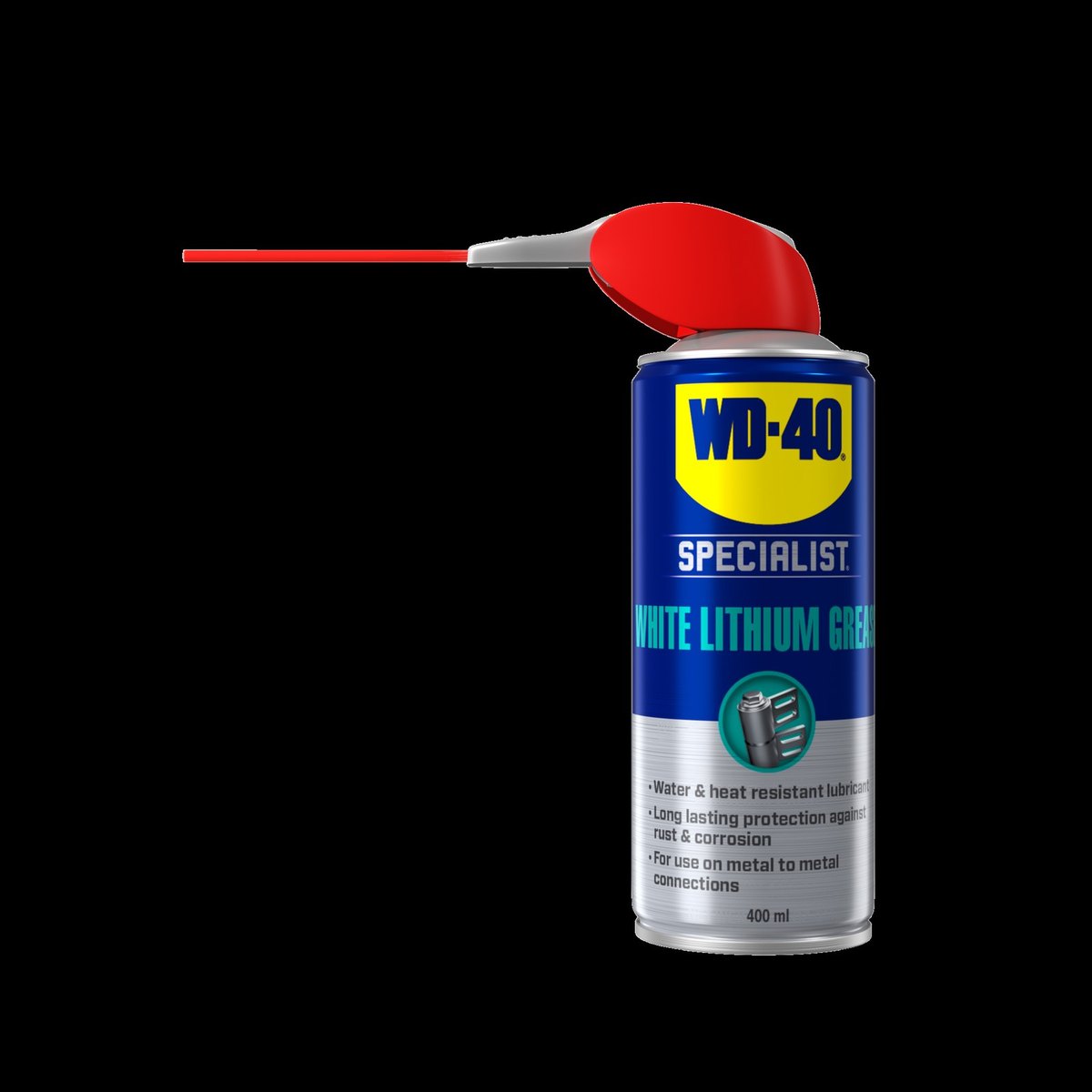
Shake the can well. WD-40 Specialist White Lithium Grease has a two-position spray: with the straw down it gives a wide pattern for runners and larger surfaces, with the straw up a precise jet for hinges, locks and tight gaps.
Hold the can roughly upright so the product comes out evenly to the last drop.
Step 4
Apply a thin coat
Spray precisely onto the friction point: the hinge pin, roller, runner or lock latch. Straight after application the product is liquid and creeps into the gap; within a few minutes it thickens into a dense white film you can see on the part.
More is not better. A thin, even coat lasts longer, while excess only collects dust and grit.
Step 5
Work the mechanism and wipe off excess
Open and close the door or gate several times, spin the roller, slide the seat along its runners. The grease spreads over the whole contact area, the squeak disappears and the movement becomes smooth.
Wipe off anything that has squeezed out, especially where clothing could catch it, such as car door hinges and locks.
Tip: Before winter, treat car door locks and checks, gate bolts and hinges. The water-resistant film keeps moisture out of the mechanism, so doors open smoothly even in frost.
What next
In normal conditions, twice a year is enough, in autumn and spring. Check joints that work every day or in rain and dust more often. Keep WD-40 Multi-Use Product handy for light cleaning and moisture displacement between greasings, and WD-40 Specialist White Lithium Grease for loaded joints.
These uses come from the experience of WD-40 users in many countries. Always follow the instructions and warnings on the product label.
More guides in «How to use».