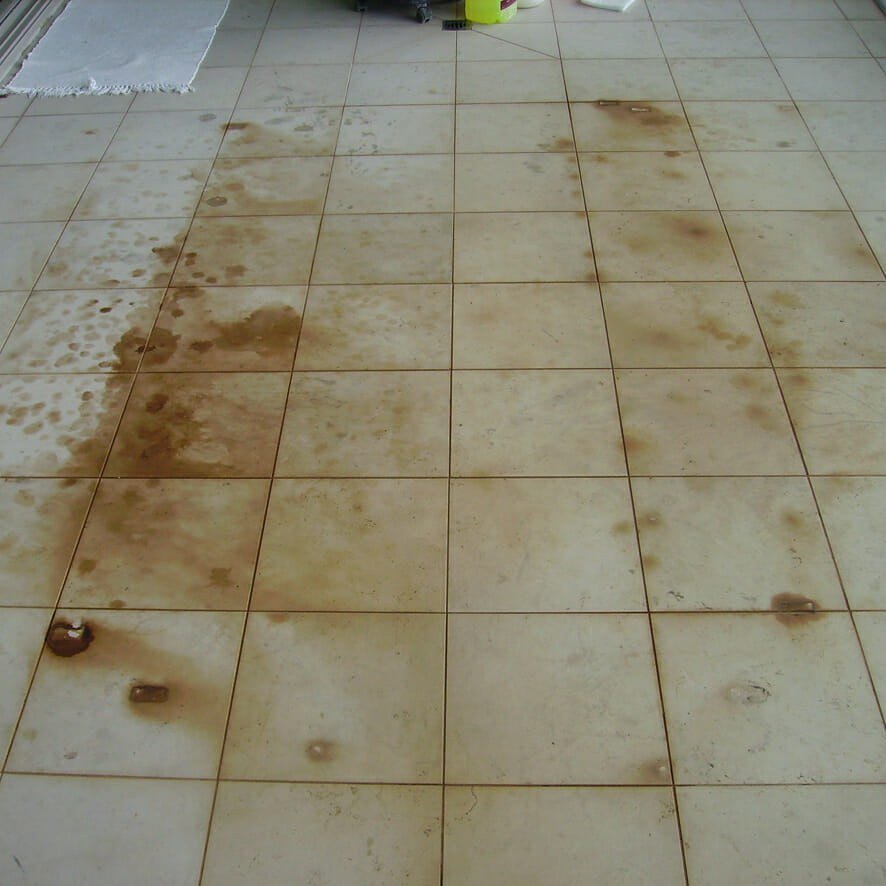
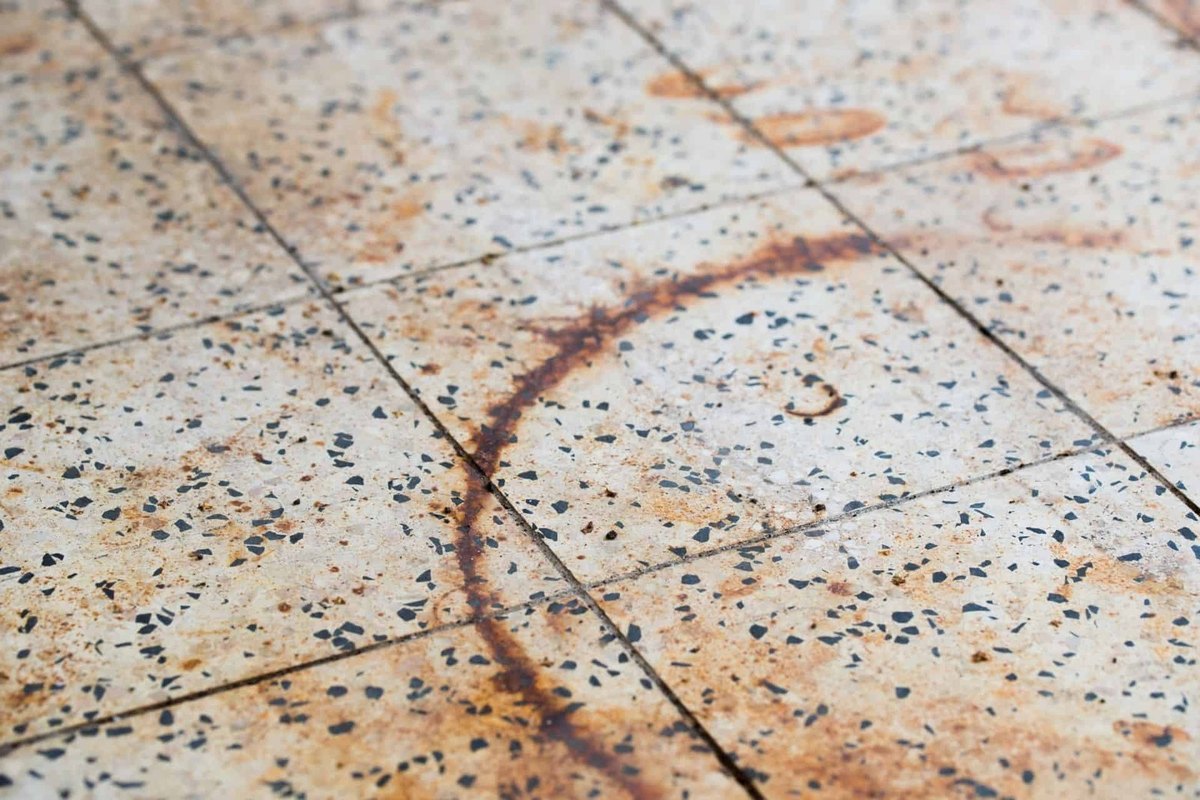
Orange rings on tiles are almost always left by metal objects: a bathroom bin or bucket, chair legs, a gas cylinder in the kitchen, a heater or garden furniture on the patio. Leave metal standing on damp tiles and a stain appears, and on light tiles it really shows.
A fresh stain is easy to remove, an old one is harder, so do not put it off. The method depends on the type of tile, and to stop the rust coming back you need to protect the metal object itself.
What you will need
- lemon juice and coarse salt (for glazed tiles)
- baking soda
- plain household soap and hot water (for porous tiles)
- washing-up liquid
- a sponge with a scouring side, a brush and an old toothbrush
- WD-40 Multi-Use
- gloves
Important: Always test any method on a hidden area first. Acids such as lemon or vinegar, and salt, must not be used on porous tiles, marble or cement tiles. After using WD-40, wash the floor thoroughly so it is not slippery.
Step 1
Identify the tile type
Glazed ceramic and porcelain tiles are non-porous: liquid beads on the surface and does not soak in. Cement tiles, marble, terracotta and unglazed stone are porous and darken when wet. This decides what you can use, so start with a test in a corner.
Step 2
Glazed tiles: lemon and salt
Pour lemon juice over the stain and cover it with coarse salt. A few minutes is enough for a fresh stain; leave an old one for up to an hour. Then rub with the scouring side of a sponge without pressing too hard, so you do not scratch the glaze.
Alternatively, mix baking soda and lemon juice into a paste, leave it on the stain for a few minutes and rub.
Step 3
Porous tiles: gentle products only
On marble, cement tiles and terracotta avoid acids and abrasives. Dissolve plain soap in hot water and scrub the stain vigorously with a brush. You may need to repeat it a few times, but the surface will not be damaged.
Step 4
Use WD-40 on glazed tiles
If a stain on ceramic tiles will not shift, spray a small amount of WD-40 Multi-Use, just enough to cover it. Leave it for about 10 minutes to work under the stain, then rub with a cloth or an old toothbrush, or a scouring sponge for stubborn marks. Do not leave it too long, as it dries. Then wash the tiles with hot water and washing-up liquid and dry them.
Step 5
Patios and outdoor tiles
For outdoor tiles, mix a litre of hot water, three tablespoons of baking soda and a tablespoon of washing-up liquid in a bucket. Apply the solution, scrub with a brush and rinse. Marks from garden furniture gradually fade.
Step 6
Stop the rust coming back
The source of the stains will not disappear by itself. Wipe metal legs and the bottoms of bins, buckets, cylinders or stands, spray them with WD-40 Multi-Use and spread it with a clean cloth: it displaces moisture and leaves a protective film. Fit felt or plastic pads to chair legs and wipe up any water under metal objects straight away.
Tip: To treat legs, fixings and bottom edges of metal items precisely, use the
WD-40 Smart Straw: the thin straw puts the spray exactly where it is needed, with no overspray on the tiles.
What next
Treat metal items in the bathroom and kitchen every month or two, and patio furniture at the start and end of the season. For small bathroom jobs it is handy to keep a WD-40 100 ml within reach.
These uses come from the experience of WD-40 users in many countries. Always follow the instructions and warnings on the product label.
More guides in «How to use».