The suspension connects the wheels to the body and absorbs shocks from the road surface. Springs take the impact, and shock absorbers damp the springs' rebound so the car does not bounce and the tyres keep their grip. Wishbones, bushes, links and anti-roll bar mounts work alongside them.
All these parts are under constant load and are exposed to mud, water, sand, gravel and winter road salt. Rough roads and months of salt speed up wear, so the suspension gradually starts to knock and squeak. Home care does not replace garage repairs, but it helps you spot problems early and extends the life of the parts.
What you will need
Important: Never work under a car supported only by a jack. Keep all products away from brake discs, pads, hoses and tyres. Leave repairs and part replacement to a garage.
Step 1
Wash the suspension thoroughly
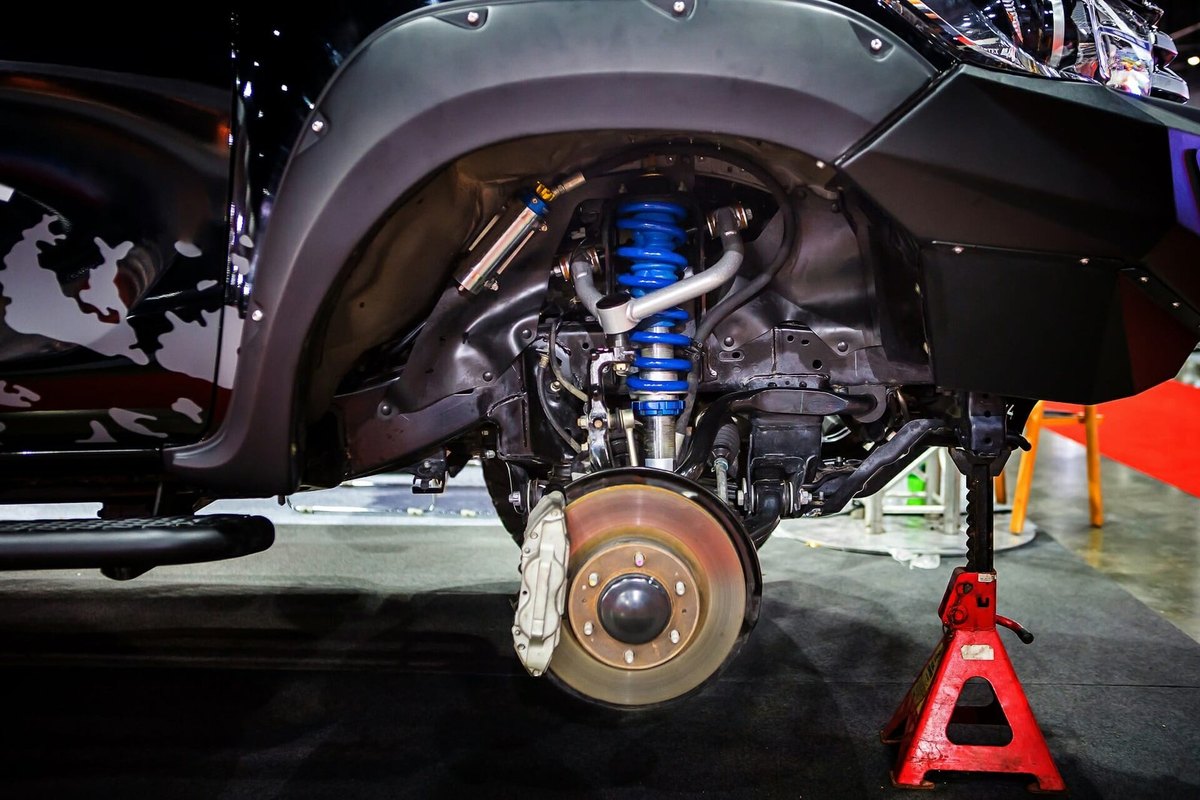
Before inspecting or lubricating anything, wash mud, sand and salt off the suspension. A pressure washer with car shampoo works best, but do not hold the jet right up against boots and rubber bushes.
It is worth doing this even without lubricating: after every trip on dirt roads or sand, and regularly through the winter so salt does not eat into the metal.
Step 2
Raise the car safely
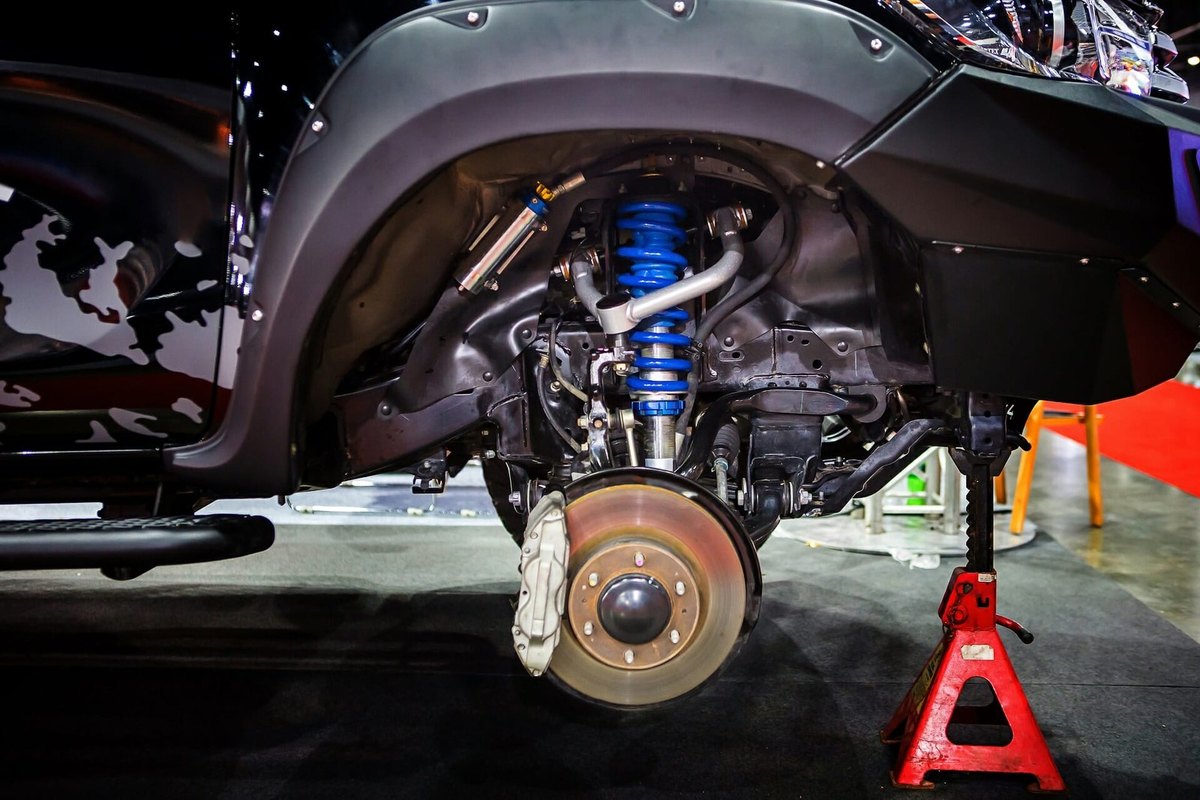
To inspect the suspension, the car must be on a lift or on sturdy axle stands on firm, level ground. Leave it in gear, apply the handbrake and chock the wheels that stay on the ground.
Only when you are sure the car is stable should you go underneath with a torch.
Step 3
Inspect every component
Look at the shock absorbers: oil runs on the rod or body mean the shock needs replacing at a garage. Check the dust boots and bump stops, anti-roll bar bushes, wishbone bushes and ball joint boots for cracks, splits and missing pieces.
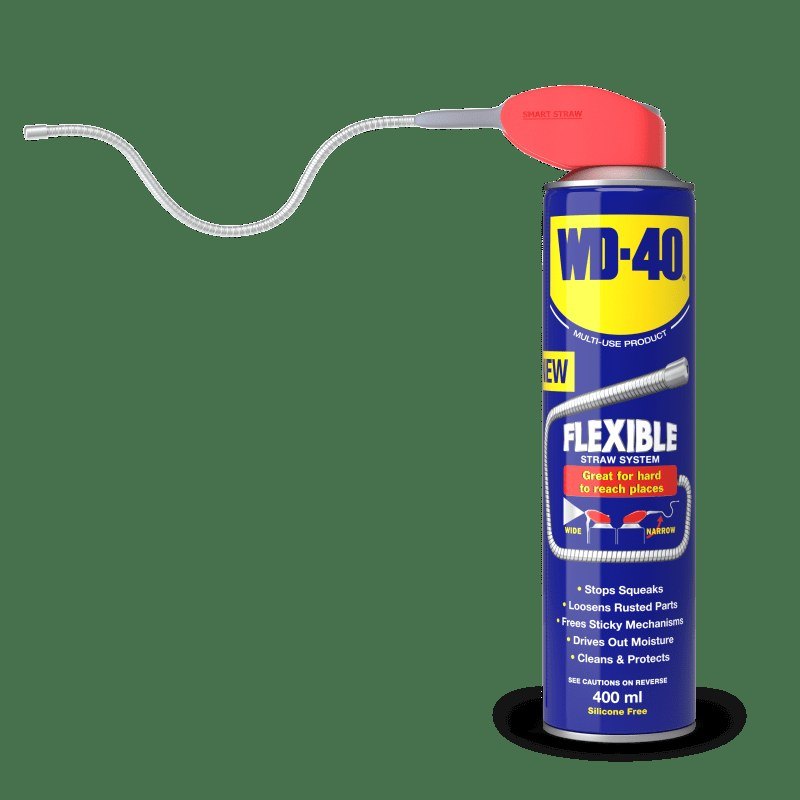
Treat any greasy patches that did not wash off with WD-40 Multi-Use: it dissolves oily grime so you can see the real condition of the part. Have any damaged parts replaced by a mechanic.
Step 4
Lubricate the rod and rubber parts
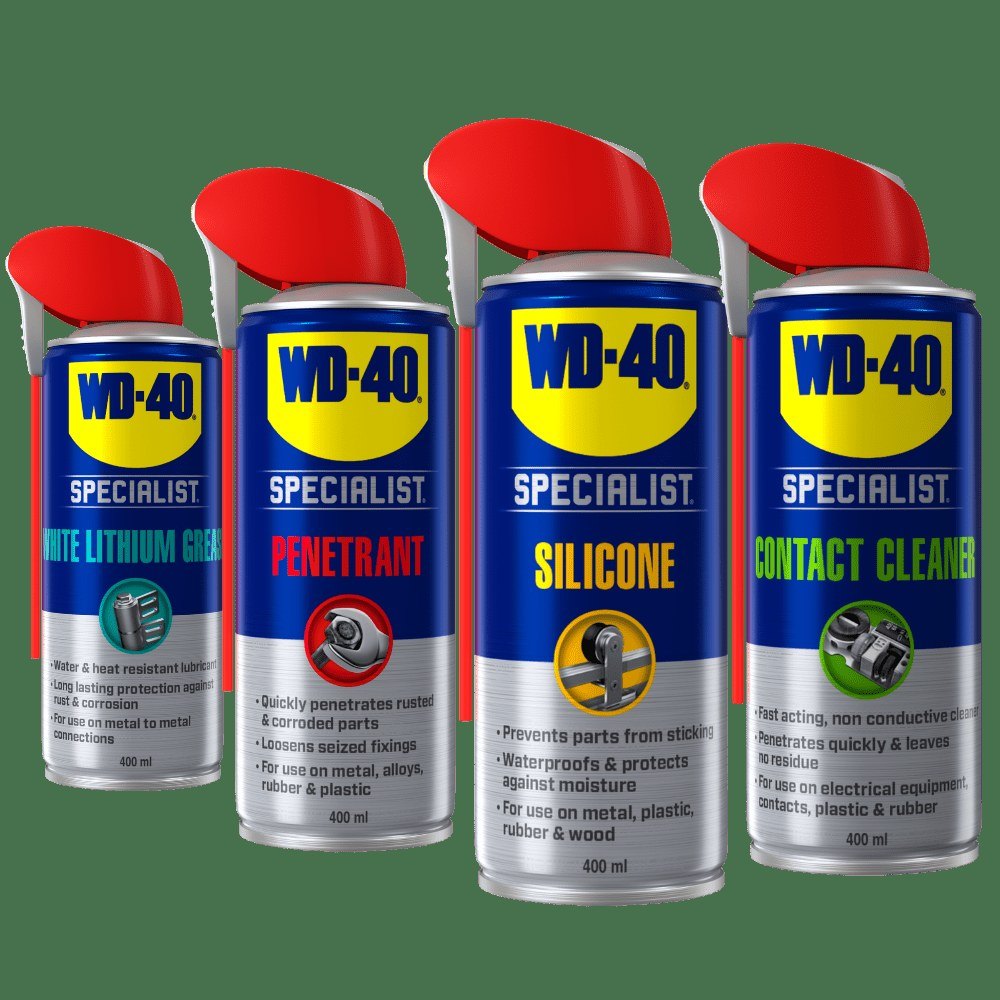
Apply a few short bursts of WD-40 Specialist Silicone to the visible part of the shock absorber rod. It dries quickly, does not attract dirt and leaves a water-repellent film that helps the parts move freely.
Use the same product on anti-roll bar bushes and other rubber anti-noise and anti-vibration parts. Silicone is safe on rubber, stops squeaks and extends its life.
Step 5
Protect the metal fixings
Treat rusty suspension bolts, nuts and brackets with WD-40 Specialist Penetrant. The next garage service will go more easily and fixings will not need cutting off.
Exposed metal surfaces on fixings, well away from the brakes, can be given a thin coat of WD-40 Multi-Use: it drives out moisture and slows corrosion through the winter. Wipe off the excess.
Tip: The best times for this are October to November, before the roads are salted, and March to April once the salt has been washed away. In autumn you protect rubber and metal from salt, and in spring you wash it off and see how the suspension survived the winter.
What next
Inspect and lubricate the suspension twice a year, or more often if you drive on dirt roads. If a knock remains after servicing, do not put off a garage visit. The same WD-40 Specialist Silicone also cures squeaky door and boot seals.
These uses come from the experience of WD-40 users in many countries. Always follow the instructions and warnings on the product label.
More guides in «How to use».