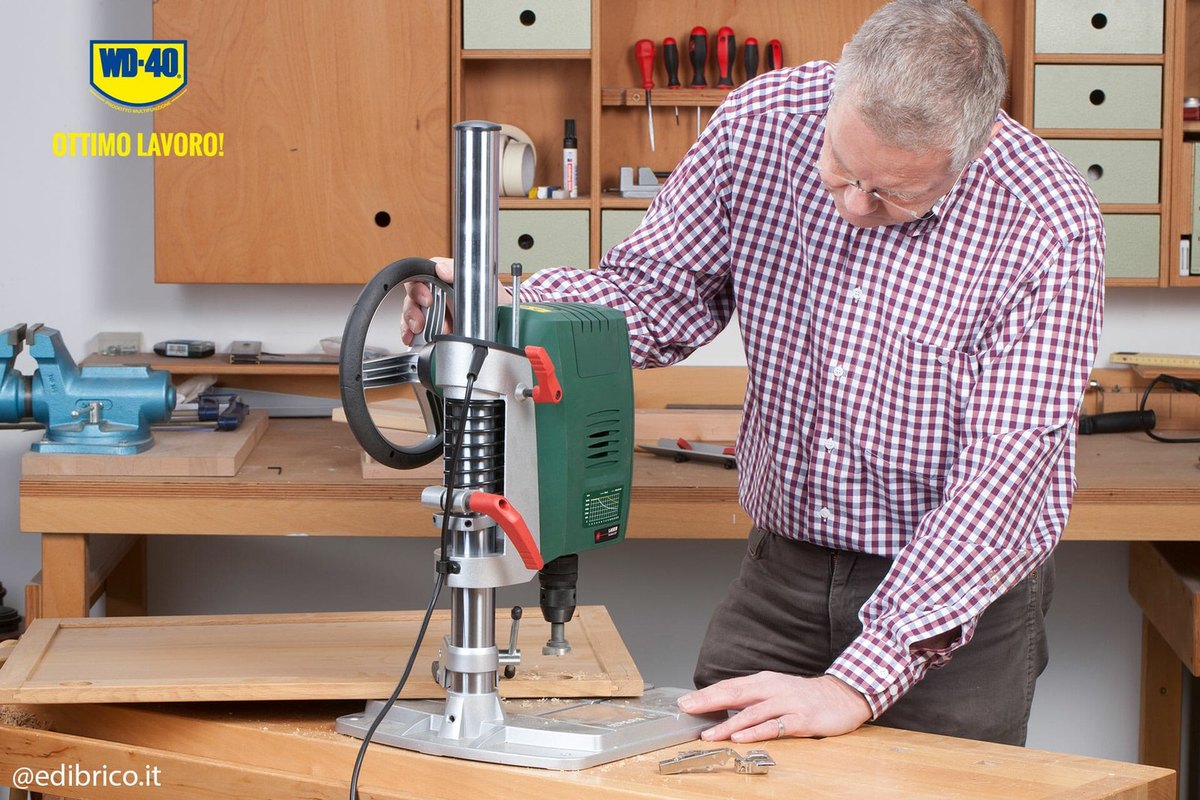
A drill press or drill stand is the tool for perfectly perpendicular holes: in metalwork, in joinery, with Forstner bits or when tapping threads. Its accuracy depends on the head travelling smoothly along the column, and that is exactly where swarf and dust collect.
Metal filings, wood dust and moisture in an unheated garage soon make the travel stiff and uneven, and rust appears on the column. Regular cleaning and the right lubrication restore smooth, accurate operation.
What you will need
Important: Before any maintenance switch the machine off, unplug it and remove the bit. Wear glasses and gloves when clearing swarf, and a dust mask for fine dust.
Step 1
Remove swarf and dust
Drilling produces metal filings and dust that work their way into the stand mechanism. First brush the larger swarf off the column, table and base, then vacuum fine dust out of the slots and gaps.
Do not blow swarf towards the mechanism with compressed air: it will only end up deeper under the carriage.
Step 2
Deep clean the sliding surfaces
Moisten a microfibre cloth with WD-40 Multi-Use and wipe the column along its full length. Spray along the collar that slides on the column too, then raise and lower the head several times.
This dissolves old dirt and dried grease on every contact surface and displaces moisture. Wipe off the excess so the surfaces are ready to lubricate.
Step 3
Lubricate lever-operated stands
On stands with a lever and return spring, focus on the lever joints and where the head runs along the column. If movement is stiff, soak these points with WD-40 Multi-Use first and leave it for a few minutes.
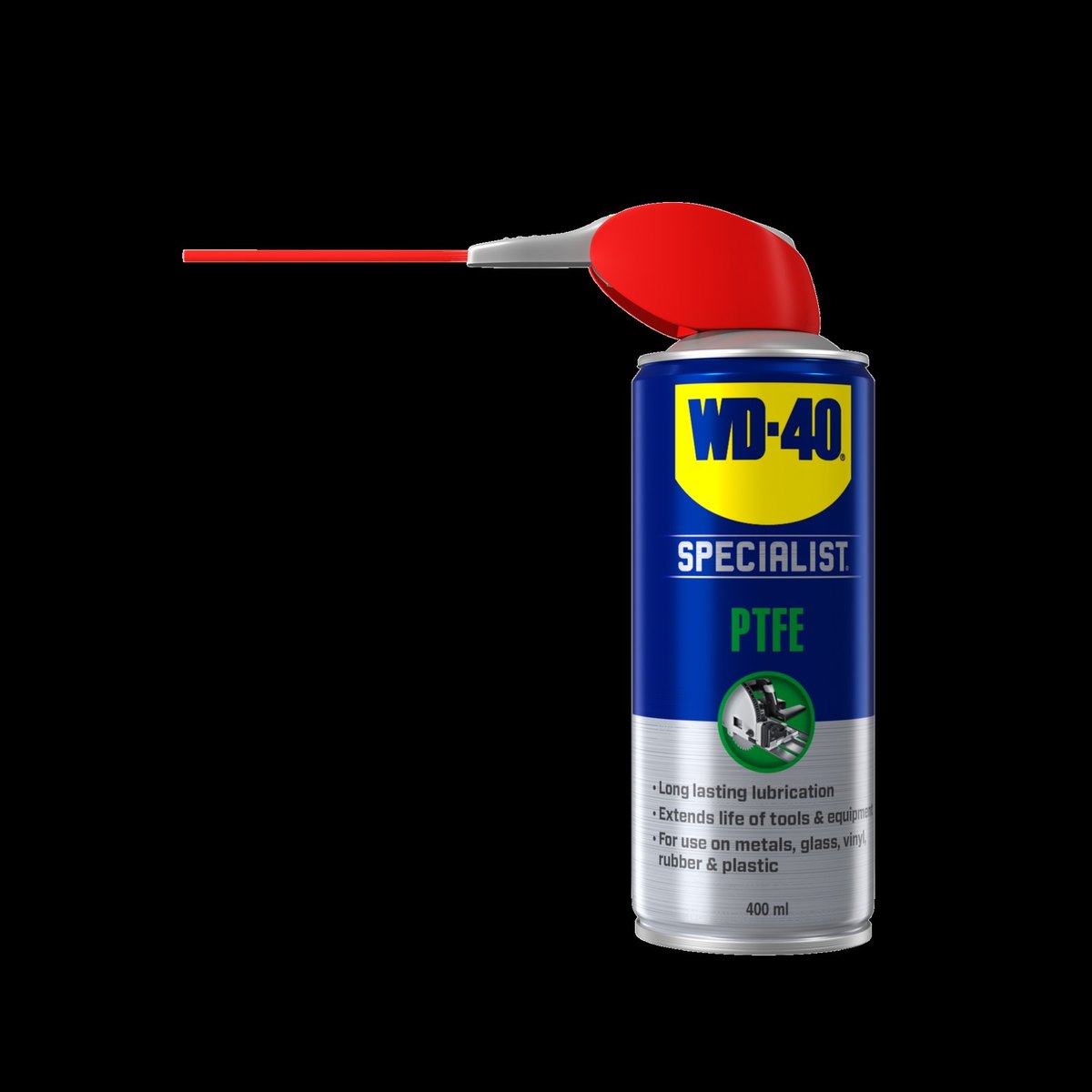
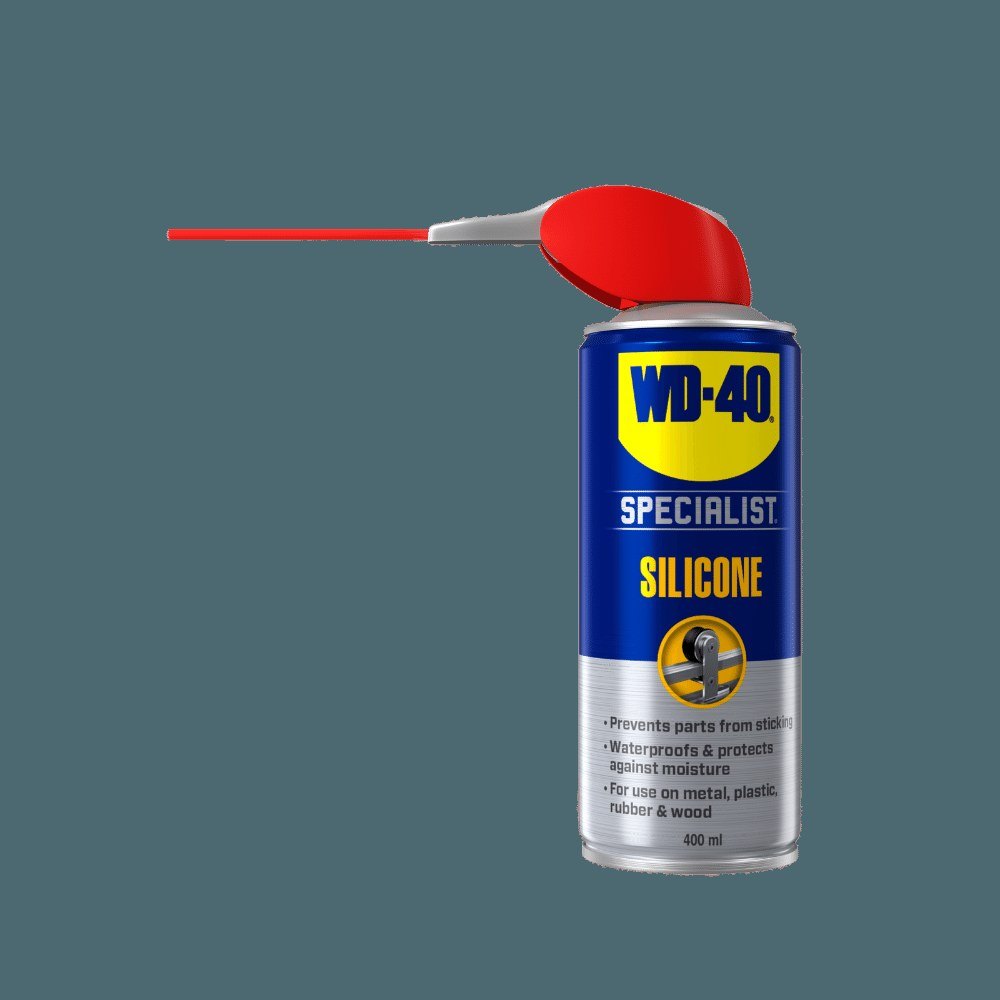
Then apply a thin coat of WD-40 Specialist Silicone to the column and guides: it is compatible with metal and plastic, leaves a thin film and attracts less dust. Check and lubricate the clamp that holds the drill and any adaptors.
Step 4
Lubricate the rack and pinion
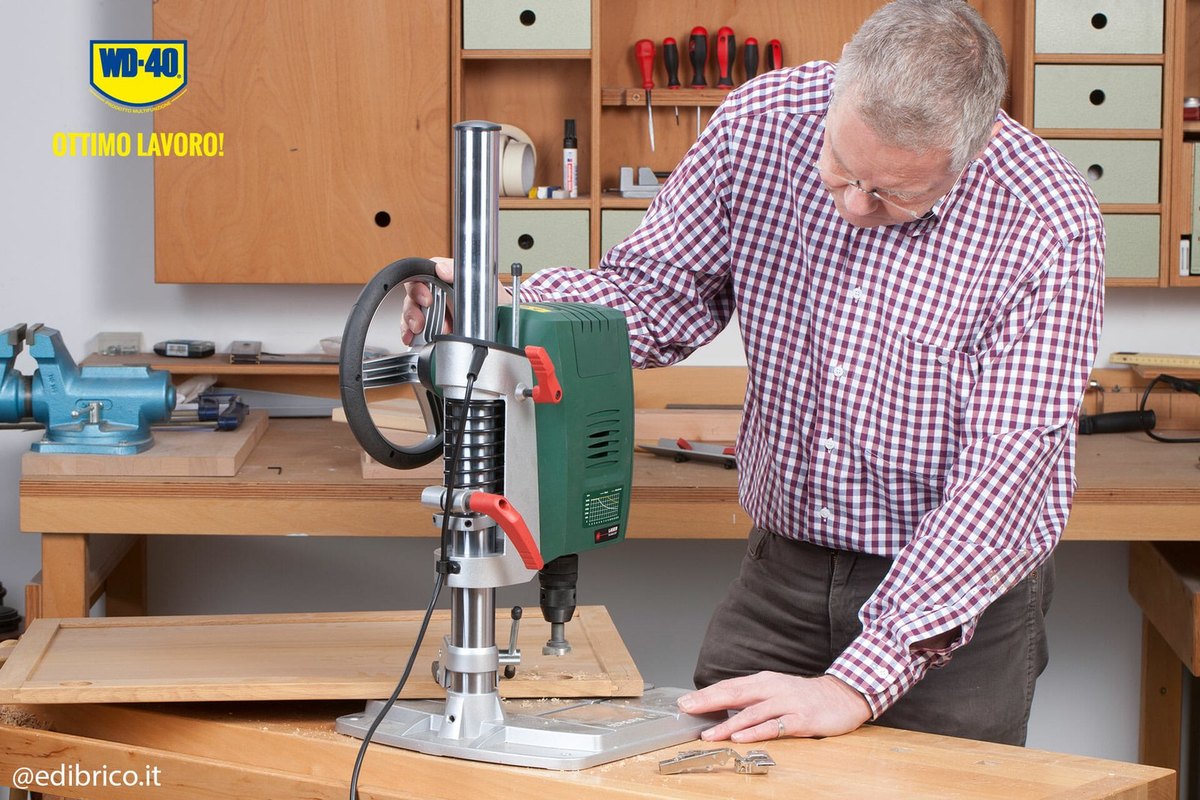
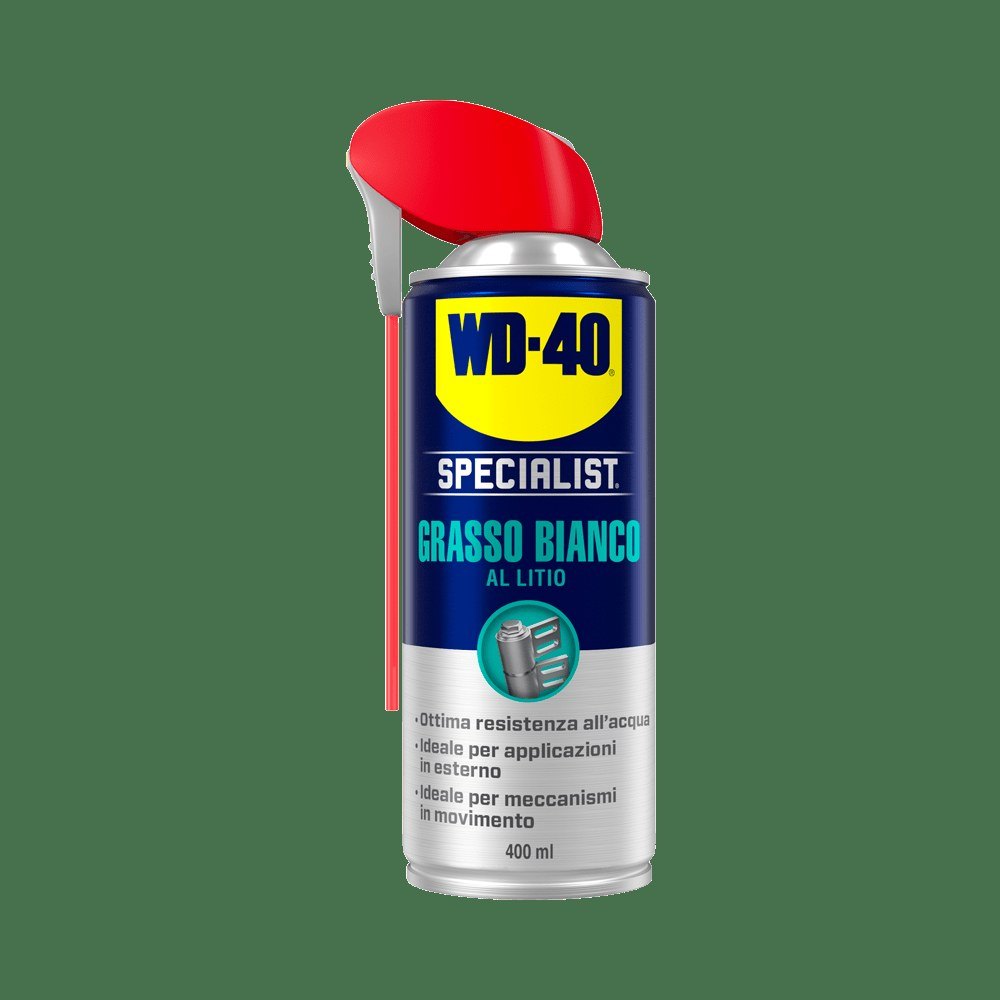
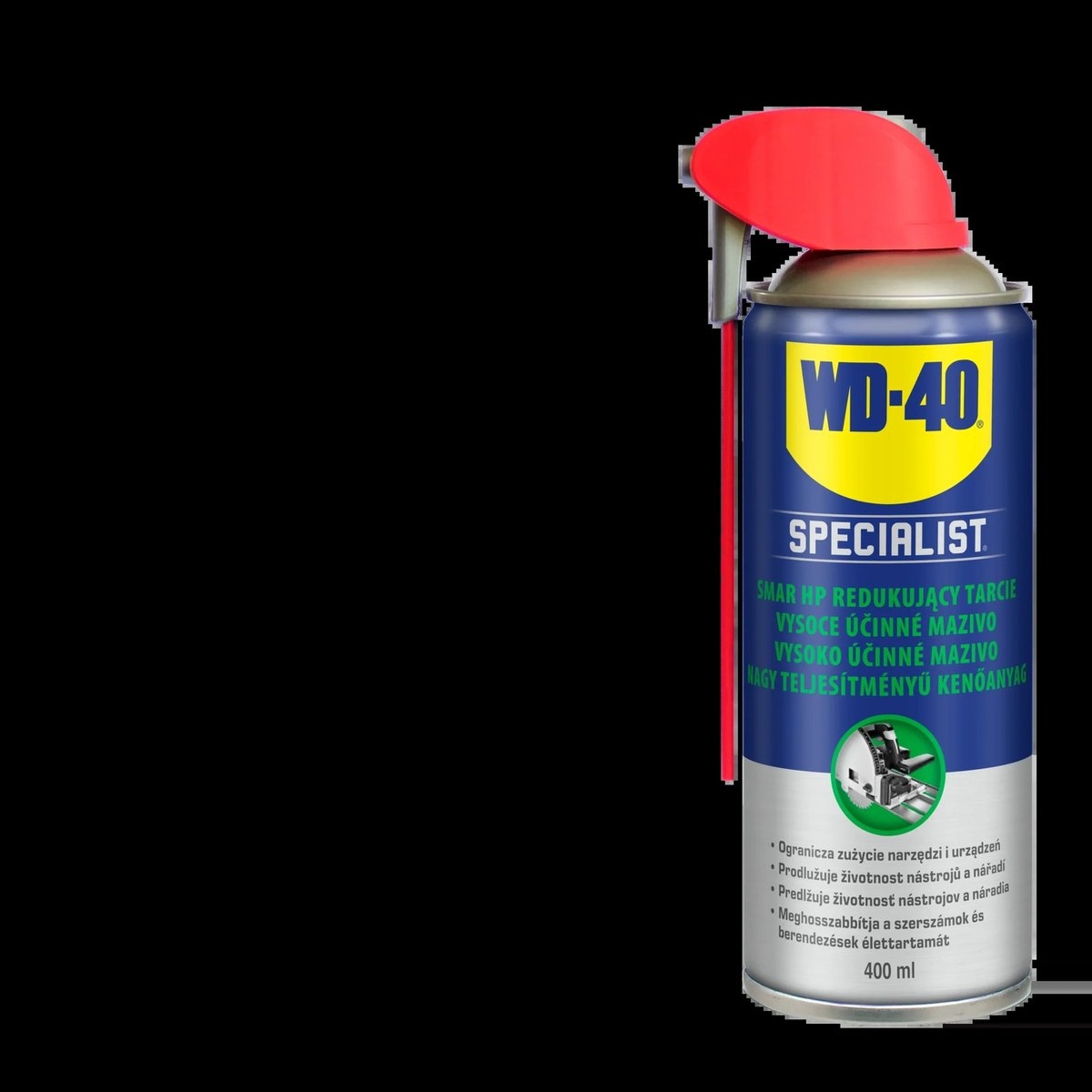
On models with a handwheel, a pinion engages a vertical toothed rack to raise the head. Apply WD-40 Specialist White Lithium Grease along the full length of the rack and onto the pinion teeth, then turn the handwheel back and forth several times.
The thick grease does not run off vertical surfaces and copes with metal-to-metal loads. Wipe off the excess so swarf does not stick to it.
Step 5
Clean the base and table
The base usually needs little care beyond keeping the slots for the vice and clamps clean. Clear them of swarf and wipe the base and table with WD-40 Multi-Use.
A thin film protects bare cast iron from rust, which matters most in a damp workshop in winter.
Step 6
Service a bench drill press
On a drill press the motor and spindle are mounted on the column and the head is moved by a handwheel and rack, so maintenance is the same as for a stand. Many models have a top cover with pulleys and a belt for changing speed: remove it, clear the dust and check belt tension. Never apply lubricant to the belt or pulleys.
If the table slides on the column, lubricate its collar with silicone too. Treat the switch and power connectors with WD-40 Specialist Contact Cleaner: it removes dust and oxidation and evaporates quickly without leaving a film.
Tip: Cover the machine with a dust cover or heavy cloth after use. It halves the dust on the column and protects the metal from condensation in a cold garage.
What next
Give it a light clean after every metalworking session and a full clean and lubrication every 2-3 months with regular use. A hand drill follows a similar routine, and WD-40 Multi-Use also keeps your drill bits free of rust.
These uses come from the experience of WD-40 users in many countries. Always follow the instructions and warnings on the product label.
More guides in «How to use».