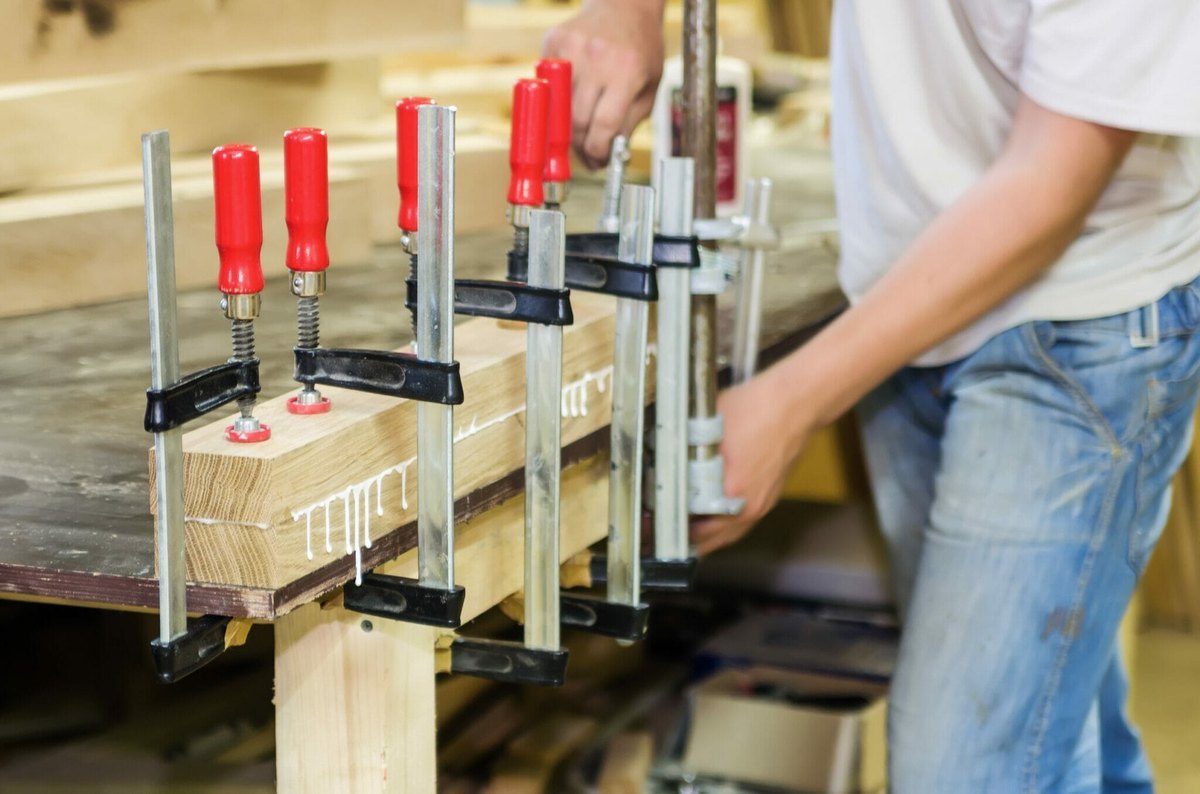
Clamps hold two pieces of wood, metal or other material firmly together while you glue, drill or weld. The most common are F-clamps: a sliding jaw moves along a bar to fit the workpiece and a screw with a handle does the clamping. There are also quick-release clamps with a trigger, C-clamps with a fixed opening and band clamps for large frames.
Clamps can stay under load for hours or days, in contact with glue, sawdust and cement dust, and on building sites out in the rain. Over time the jaw sticks on the bar, the screw turns stiffly and the metal rusts. A few minutes of care brings back smooth action.
What you will need
Important: Keep lubricant off the jaws and soft pads: it stains wood and spoils glue joints. Wipe the jaws with a dry cloth again before any gluing job.
Step 1
Clean the body and screw
Clean each clamp as soon as it comes off the job. Brush away sawdust, sand, cement dust and metal filings with a stiff brush and blow out fine residue with compressed air.
On screw clamps, the two critical areas are the screw thread and the bar the sliding jaw runs on. On quick-release clamps, it is the trigger handle, the release button and the bar. Soften dried glue with WD-40 Multi-Use and lift it off with a scraper.
Step 2
Remove rust
If a clamp has been left outdoors or in a damp garage, spots of oxidation or a full layer of rust will appear on the metal.
Apply WD-40 Multi-Use to these areas, wait a few minutes and rub lightly with fine steel wool. Finish by wiping the surface thoroughly with a cloth.
Step 3
Lubricate a screw clamp
Treat the clean bar with WD-40 Specialist Silicone: a thin film cuts friction, dries quickly and attracts less dust than heavy grease. Slide the jaw back and forth a few times to spread it.
Grease the clamping screw thread with WD-40 Specialist White Lithium Grease and run the screw through its full travel. It stays on the thread under load and protects against corrosion.
Step 4
Lubricate a quick-release mechanism
Quick-release clamps have no screw: a trigger moves and locks the jaw, and a small button releases the pressure.
Treat the pivots and contact points with lithium grease, which does not drip, clings well and resists water. Work the trigger and button several times.
Step 5
Service band clamps
A band clamp uses a long, strong synthetic strap and a tensioning mechanism to pull large items together, such as furniture frames or picture frames.
Wipe glue off the strap, then clean the tensioner and lubricate it with silicone lubricant, which is safe on plastic parts too.
Step 6
Protect large site clamps
Large carpentry clamps on building sites hold formwork and structures for weeks in the open, exposed to rain and wind.
As well as everything above, spray the whole clamp with WD-40 Multi-Use before fitting it. The protective film guards the metal for as long as the clamp stays outdoors.
Tip: Store clamps on a wall rail somewhere dry rather than heaped in a box. The jaws do not knock against each other, and you can see at a glance which clamp needs cleaning.
What next
Clean clamps after every use, lubricate the bar and screw every few months and treat site clamps before each new job. They will then clamp quickly and squarely and last for decades.
These uses come from the experience of WD-40 users in many countries. Always follow the instructions and warnings on the product label.
More guides in «How to use».