Drill, impact driver, angle grinder, jigsaw: every garage and home workshop has a few power tools. Whatever the type, they all need the same basic care to keep working at full power for years.
Dust, chips and moisture get into the vents, onto the contacts and into the gearbox. In Ukraine there is also the unheated winter garage, where condensation forms on cold metal. Care is neither difficult nor time consuming; the key is to do it regularly.
What you will need
Important: Unplug the tool or remove the battery before any maintenance. Never immerse a power tool in water or spray products inside the motor housing. Only dismantle the tool as far as the manufacturer's manual allows.
Step 1
Clean the tool after every job
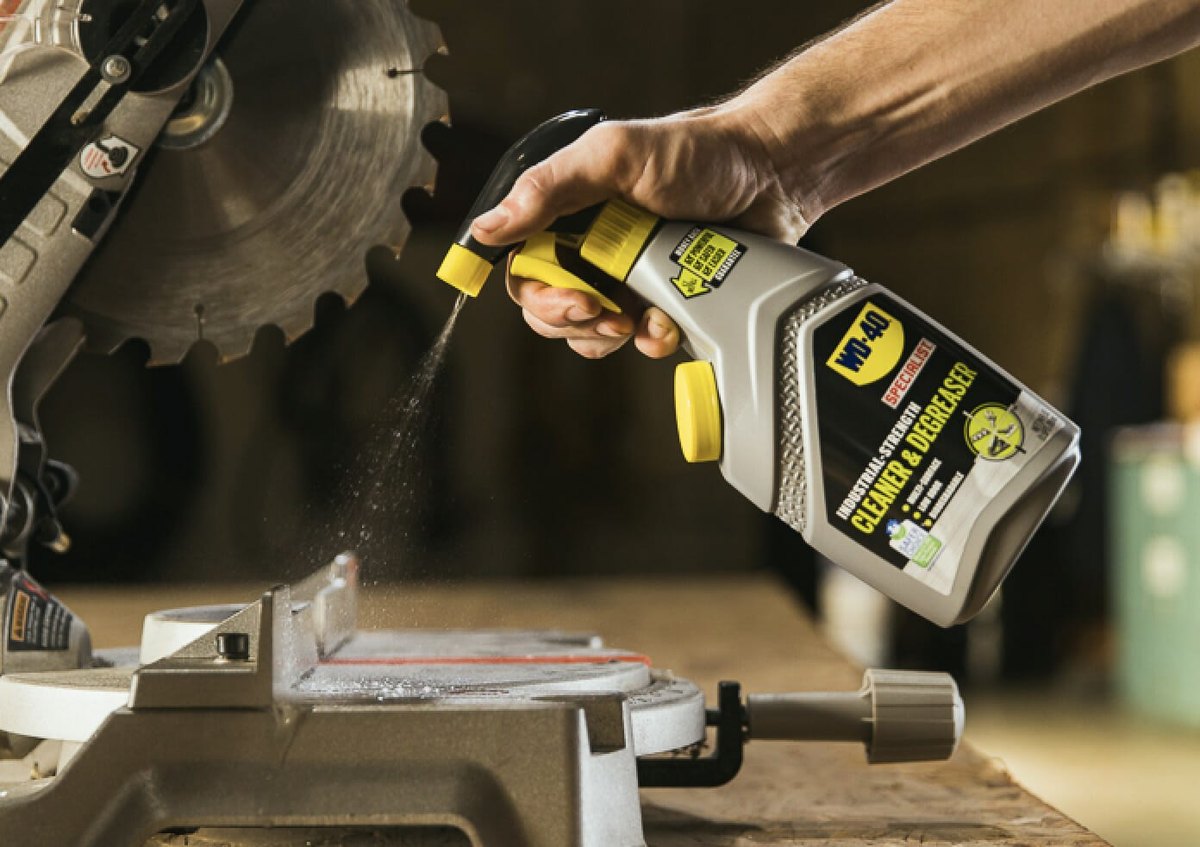
The golden rule is to clean straight after work, or the rest of the care achieves little. Power tools are cleaned dry: brush off the dust and blow out the vents with compressed air while wearing glasses. Wipe stubborn dirt off the housing with a barely damp, never wet, cloth and dry it at once.
Step 2
Inspect the cable and battery
After cleaning, check the power cable, plug and battery housing closely. A tool with cracks or damaged insulation must not be used until the cable is repaired or replaced.
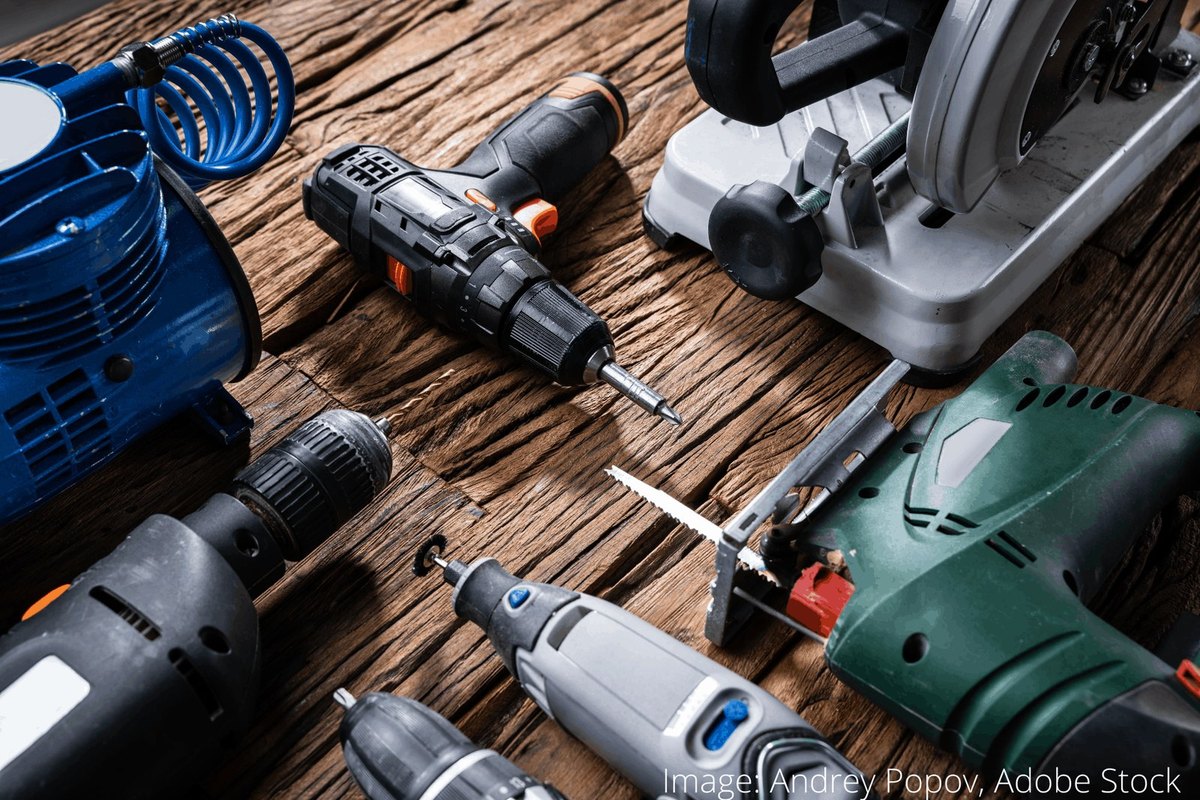
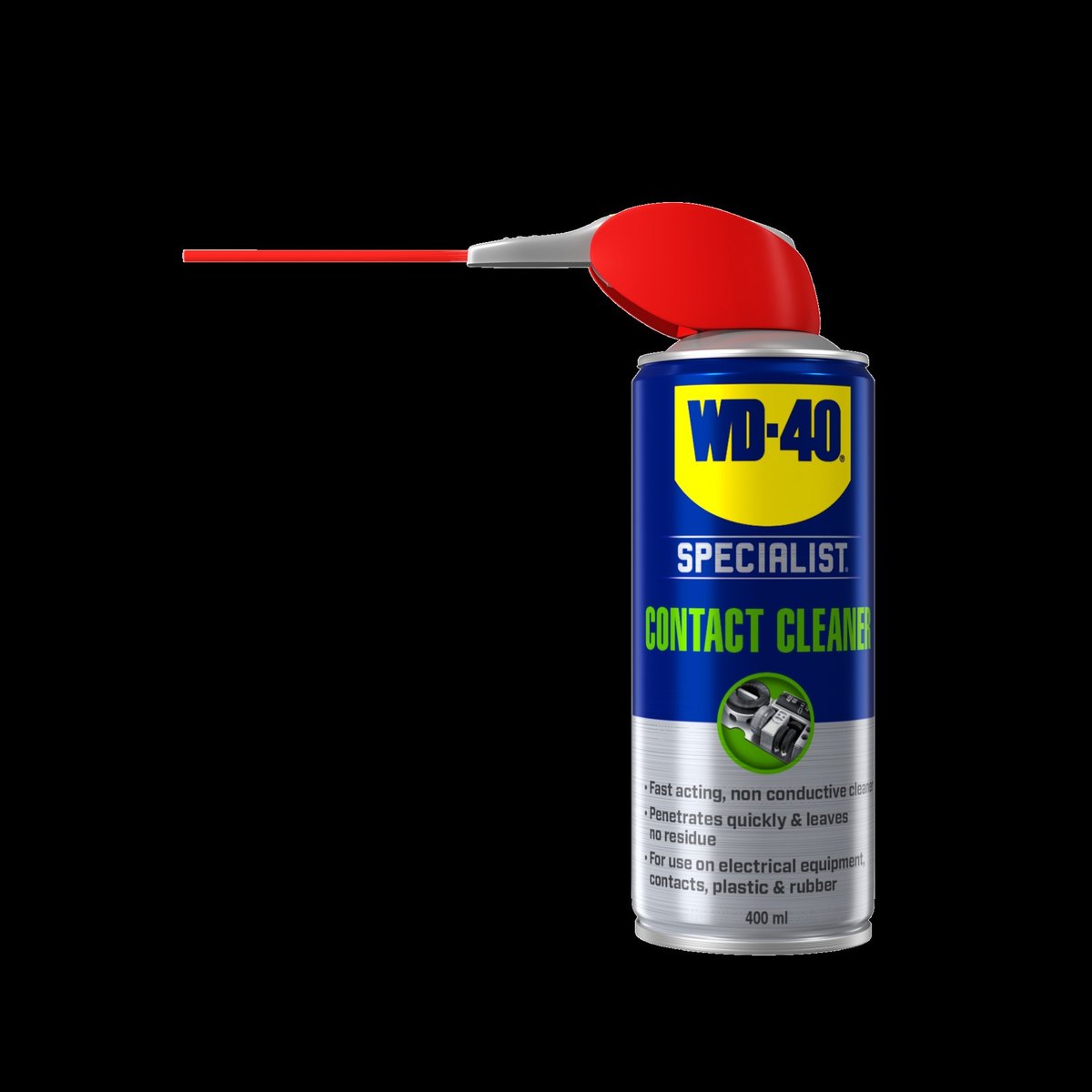
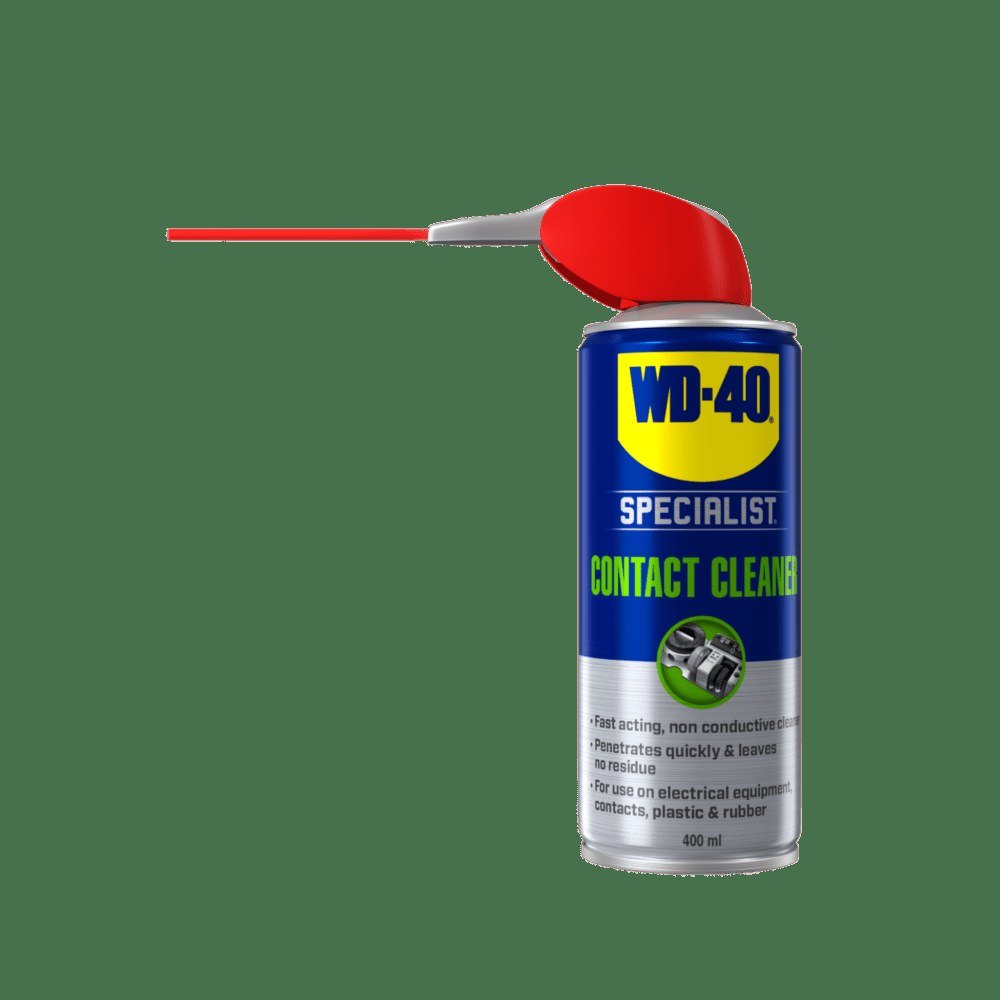
Treat the battery and charger contacts with WD-40 Specialist Contact Cleaner: it removes dust and deposits, improves conductivity, dries quickly and leaves no residue. Spray a little onto a cloth and wipe the cable with it.
Step 3
Clean metal parts and switches
Free chuck jaws, the jigsaw blade clamp, base plate and guides from caked dirt with WD-40 Multi-Use and a toothbrush, then wipe dry. Clean switches and triggers with a dry toothbrush. Light rust on metal parts comes off with the same product and fine steel wool.
Step 4
Lubricate the moving parts
Tools with gearboxes and accessory heads need lubrication: over time the lubricant breaks down, parts wear and dust gets in. Use the straw of WD-40 Smart Straw on the drill chuck, the jigsaw roller and blade clamp and the base plate adjuster. Apply WD-40 Specialist White Lithium Grease to screws and adjusting mechanisms. Service a factory greased gearbox according to the manual or at a service centre.
Step 5
Protect metal from moisture
Before putting the tool away, wipe exposed metal parts with a cloth lightly moistened with WD-40 Multi-Use. It displaces moisture and protects against corrosion. Make sure the tool is completely dry before plugging it in.
Step 6
Store it properly
The best place for storage is a dry, heated room. Keep each tool in its original case or a lidded plastic box lined with cloth, not thrown together in one crate. Store batteries somewhere warm and top them up periodically, even if the tool is not used for several months.
Tip: In winter, do not switch on a tool you have just brought in from the frost: give it an hour to warm up so condensation on the windings and contacts can dry.
What next
Dry cleaning after every job plus a cable check and lubrication every few months add years to a tool's life. Care for larger machines is covered in our band saw and wood lathe guides.
These uses come from the experience of WD-40 users in many countries. Always follow the instructions and warnings on the product label.
More guides in «How to use».