Safes and fireproof cabinets protect cash, documents and data storage. Their key, combination or electronic locks are high-security mechanisms that people only think about once the key refuses to turn. Neglect leads to sticking, play in the cylinder or complete failure, and an emergency safe opening is costly and time-consuming.
Regular cleaning and the right lubricant extend the life of a lock many times over. Below we explain what to look out for and how to service the cylinder, bolts and hinges without putting the mechanism at risk.
What you will need
Important: Do not put thick greasy lubricants inside the cylinder: they collect dust and eventually jam the pins. If the lock will not open at all, do not force it; call a safe lock specialist.
Step 1
Understand what makes a safe lock different
Unlike ordinary locks, those on safes, fireproof cabinets and security doors use multi-point or reinforced pin cylinders, strong anti-tamper springs, parts made of special heat-resistant alloys and a very narrow keyway.
This makes the mechanism more precise but also more sensitive to dust, moisture and lack of lubrication. That is especially true for safes in cellars, garages and unheated rooms where condensation forms in winter.
Step 2
Clean the lock before lubricating
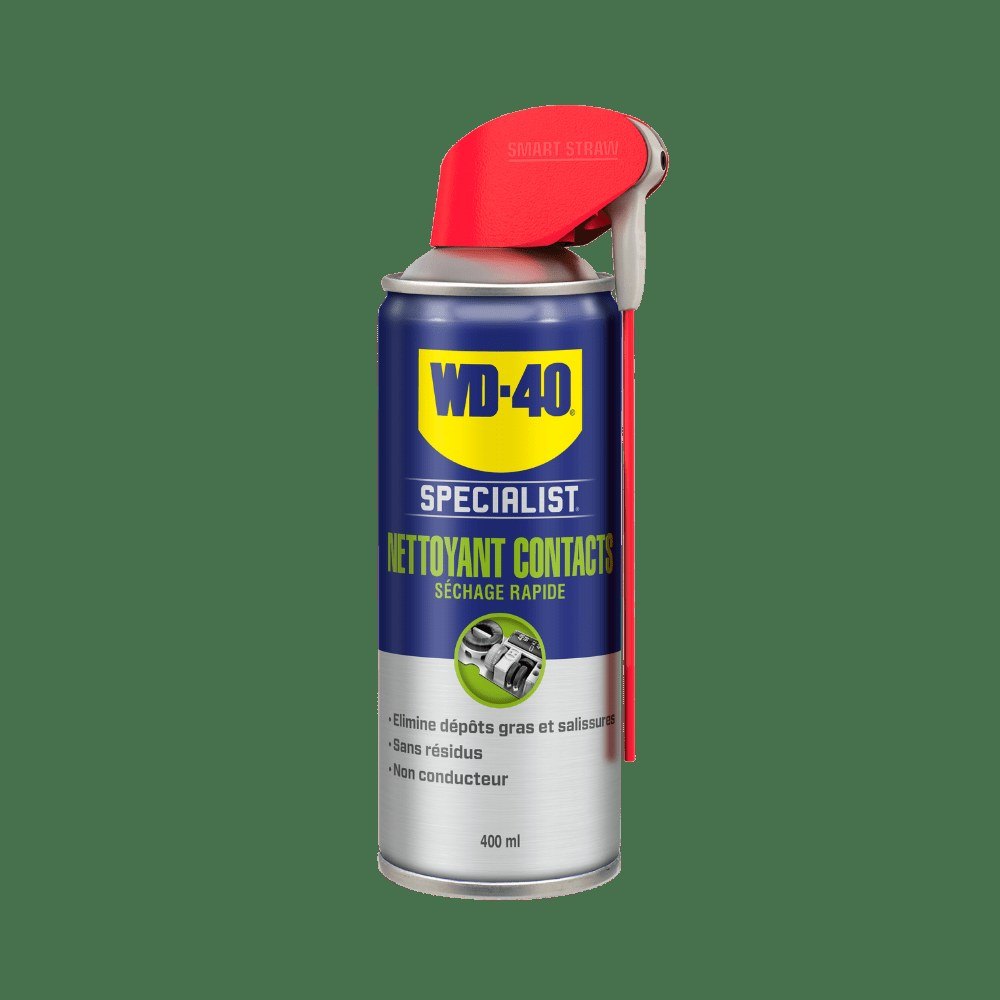
First remove dust, dirt and moisture from the mechanism. Spray WD-40 Smart Straw through the thin straw directly into the cylinder and onto the accessible parts. It loosens dirt, drives out moisture and prepares the lock for lubrication.
Insert and withdraw the key several times, wiping it with a cloth, and wipe the outer surfaces with microfibre so the dirt does not work its way back in.
Step 3
Lubricate the cylinder
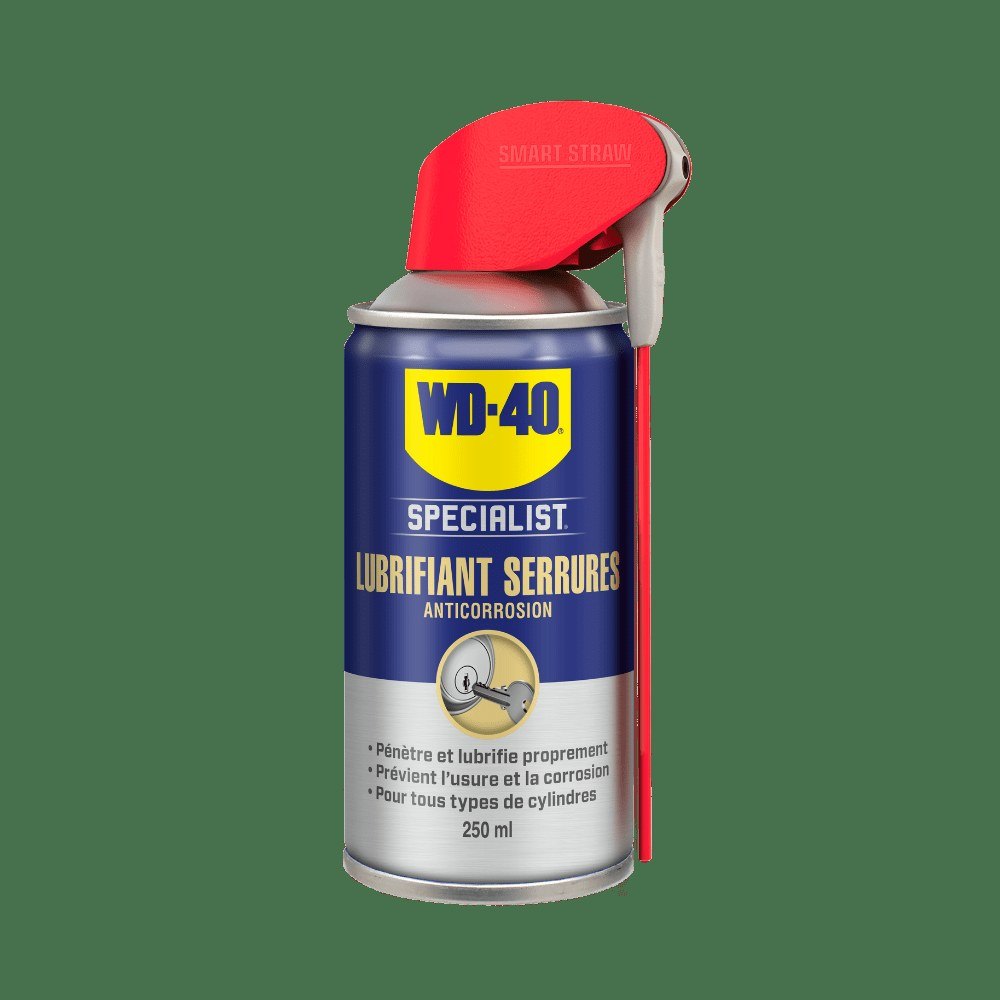
After cleaning, apply a small amount of WD-40 Specialist Silicone into the cylinder. It leaves a thin film that does not attract dust and protects small parts from corrosion. Shake the can well, give a short burst into the keyway, wait a minute and turn the key several times in both directions.
Always wipe away any excess that comes out.
Step 4
Check the bolts, screws and hinges
Maintenance is not just about the cylinder. Inspect the fixing screws and tighten any that are loose. Open the door and check that the bolts, the metal bars that engage the body, slide freely. Apply a little WD-40 Smart Straw to them and work the handle several times.
Lubricate the hinges of heavy doors with WD-40 Specialist White Lithium Grease: it does not run and copes with heavy loads.
Step 5
Know when to call a locksmith
If the key is still stiff after cleaning and lubricating, the cylinder wobbles or the code only works some of the time, do not force it. Force can damage the mechanism for good. Call a safe lock specialist: sometimes replacing the cylinder is the simplest fix.
Tip: The key deserves attention too: wipe it and occasionally treat it with a drop of lubricant on a cloth. A dirty key carries dust into the cylinder every time. For quick jobs in the office, the compact WD-40 100 ml is handy.
What next
Service the locks on safes and fireproof cabinets every 6-12 months, and more often in damp or unheated rooms. It takes a few minutes and saves you from an emergency opening at the worst possible moment.
These uses come from the experience of WD-40 users in many countries. Always follow the instructions and warnings on the product label.
More guides in «How to use».