Sun, dust, road chemicals and daily riding gradually rob a motorcycle of its shine: plastics fade, chrome clouds over and paint looks dry. Machine polishing restores gloss, but it removes some clear coat and takes experience.
There is a gentler route: a thorough wash, a silicone product for plastic and rubber, and wax for painted and chrome parts. You get shine and water-repellent protection without cutting the paint. For plastic and rubber, WD-40 Specialist Silicone does the job.
What you will need
Important: Keep silicone and wax off the tyres, brake discs and pads, seat, grips and footpegs. Do not use silicone on clear plastic (screen, lights) or on parts to be painted. Work in the shade on a cold bike.
Step 1
Know what goes where
A silicone product is meant for plastic and rubber: fairings, mudguards, covers and seals. It restores colour and suppleness and protects against cracking.
Carnauba wax gives deep gloss and a water-repellent layer on paint, chrome, aluminium and the exhaust. So the order is simple: wash first, then plastics, then metal and paint.
Step 2
Wash the bike thoroughly
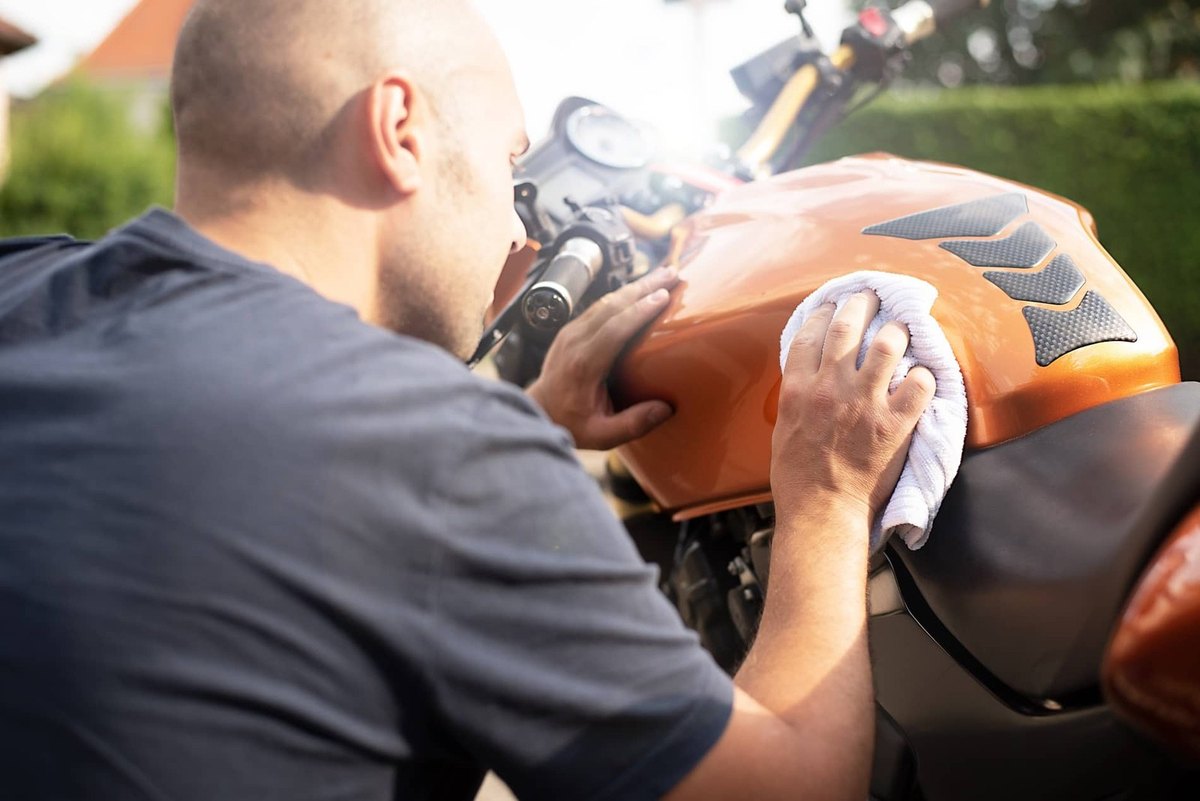
Polishing a dirty surface scratches the paint, so washing is essential. Wet the bike, apply shampoo, let it work and go over the wheels, mudguards and lower engine with a soft brush.
Rinse with plenty of water and dry with microfibre. If the bike is very dirty, repeat. Check the chain while you are at it: a dirty, dry chain spoils the overall look too.

Step 3
Treat plastic and rubber with silicone
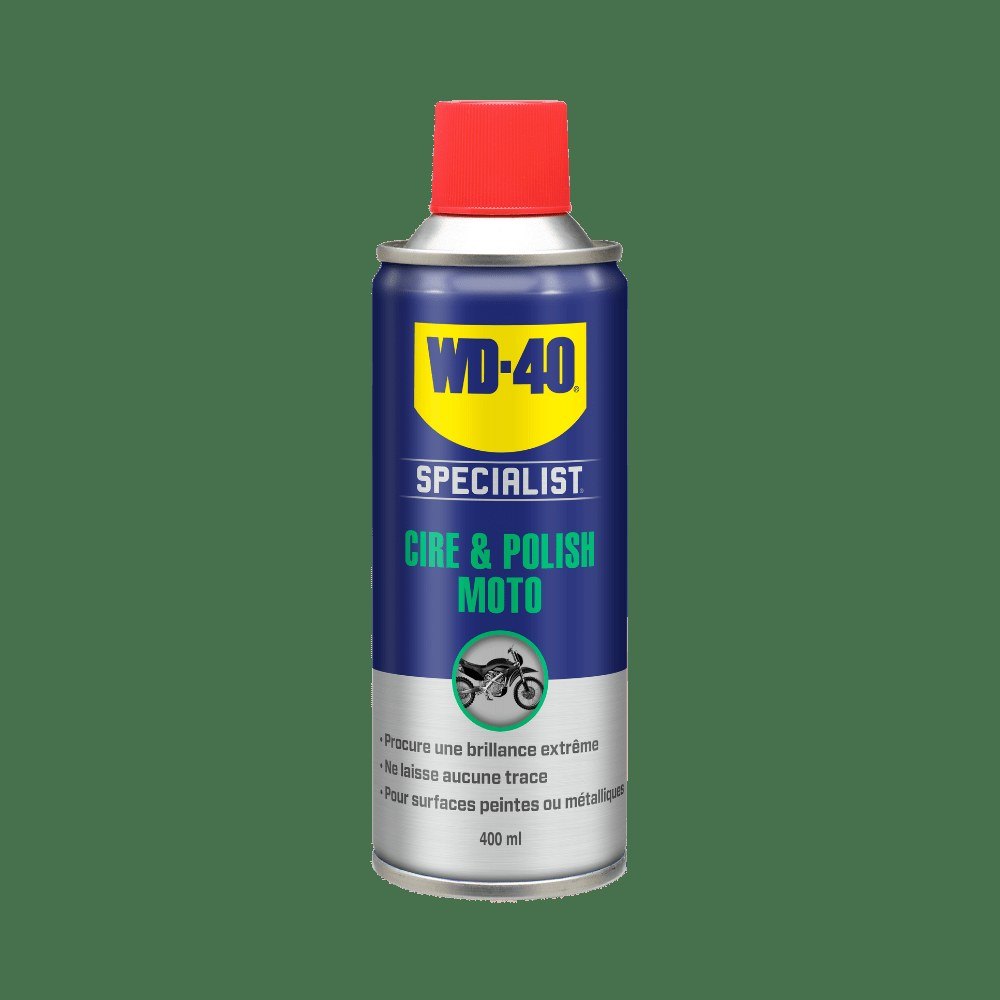
Shake WD-40 Specialist Silicone and spray evenly from 20-30 cm onto fairings, mudguards, covers and rubber seals. Buff with microfibre to an even shine.
Near the brakes, tyres and seat, spray onto the cloth rather than directly. Allow a few seconds to dry.
Step 4
Polish the chrome and metal
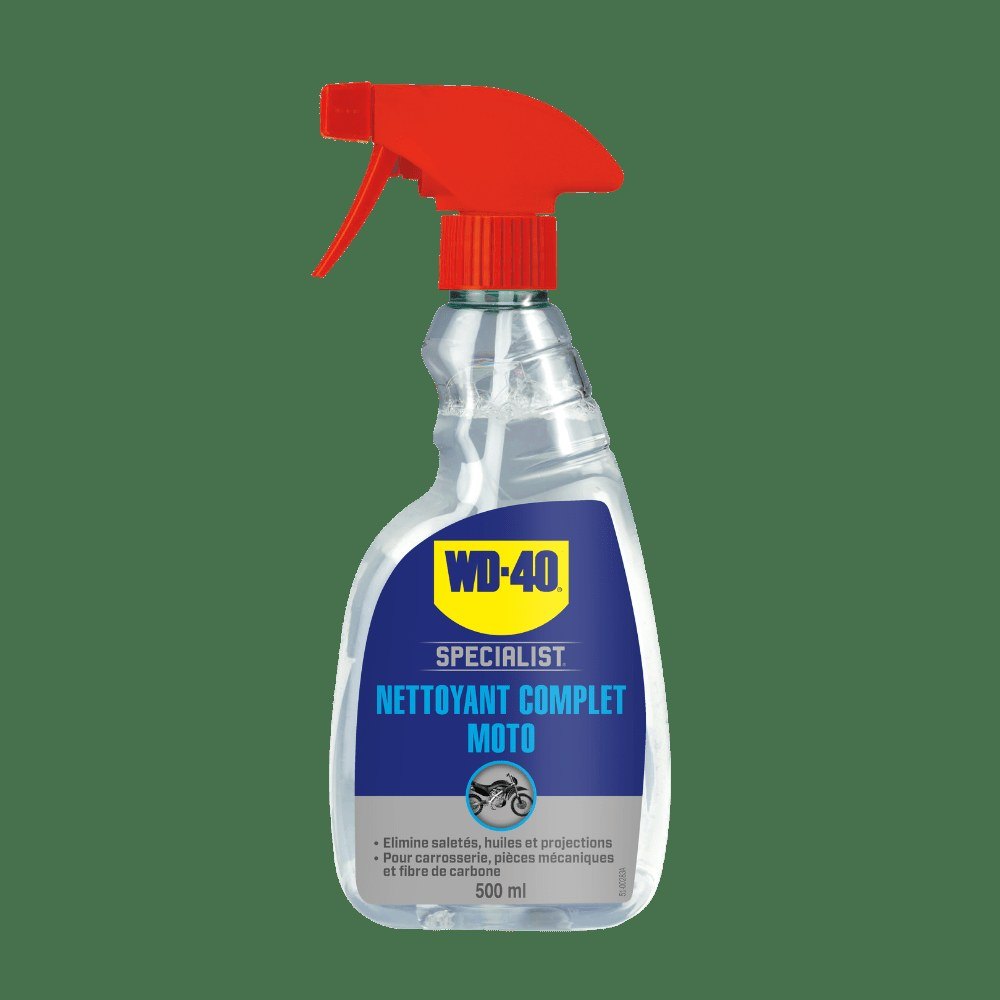
Apply wax to chrome parts: exhaust, handlebars, mirrors and covers. Buff with a clean cloth in circular movements until it shines; repeat for a deeper finish.
Wax leaves a hydrophobic layer that repels water and dust and slows down water spotting.
Step 5
Protect the paintwork
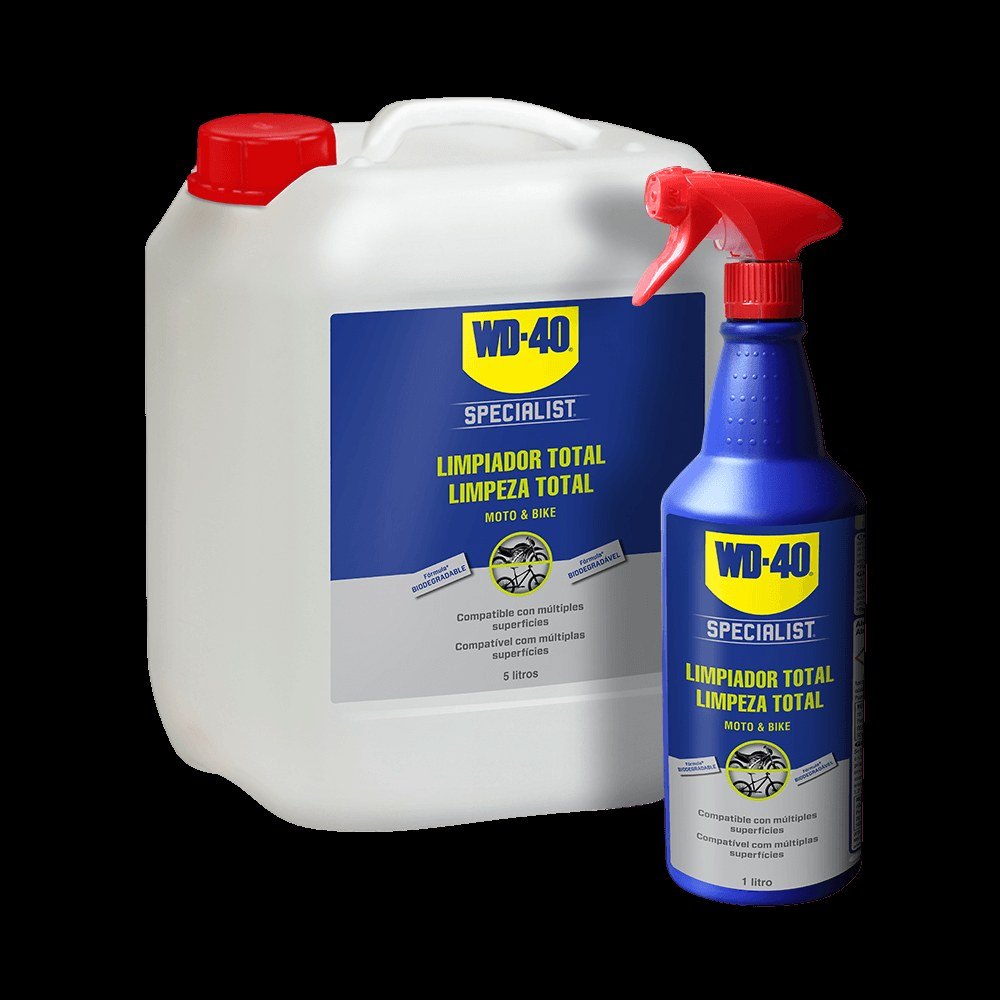
Apply a thin coat of wax to the tank and painted fairings, working in small sections. Let it haze as directed on the pack, then remove the excess with a clean microfibre cloth.
On painted plastic, wax adds a pearl-like gloss, but it does not protect rubber or matte plastic; silicone remains the choice there.
Step 6
Final touches
Go over the metal parts with a dry microfibre cloth to remove fingerprints. Protect hidden spots such as bolts, brackets and cables from moisture with WD-40 Multi-Use.
Inspect the bike in sunlight: direct light shows any areas without an even shine that need another pass.
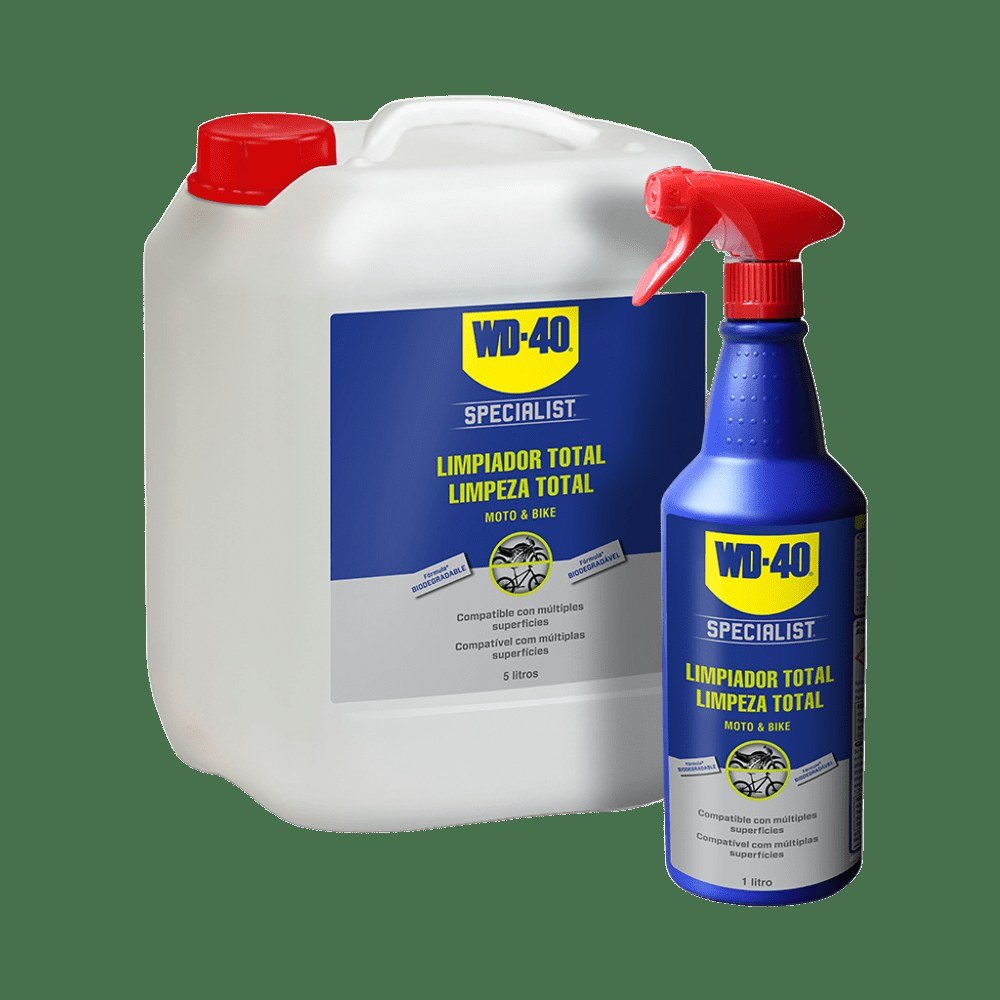
Tip: Make polishing the last step, after cleaning and lubricating the chain. A dedicated
WD-40 Specialist Motorcycle Chain Lube (available to order) is the better choice for the chain: it flings off less and will not spatter your freshly polished wheels and mudguards.
What next
Wash the bike at least once a month, wipe it with microfibre after rain and renew the wax every 1-2 months. Before winter storage, repeat the full routine and treat the metal parts with WD-40 Multi-Use.
These uses come from the experience of WD-40 users in many countries. Always follow the instructions and warnings on the product label.
More guides in «How to use».