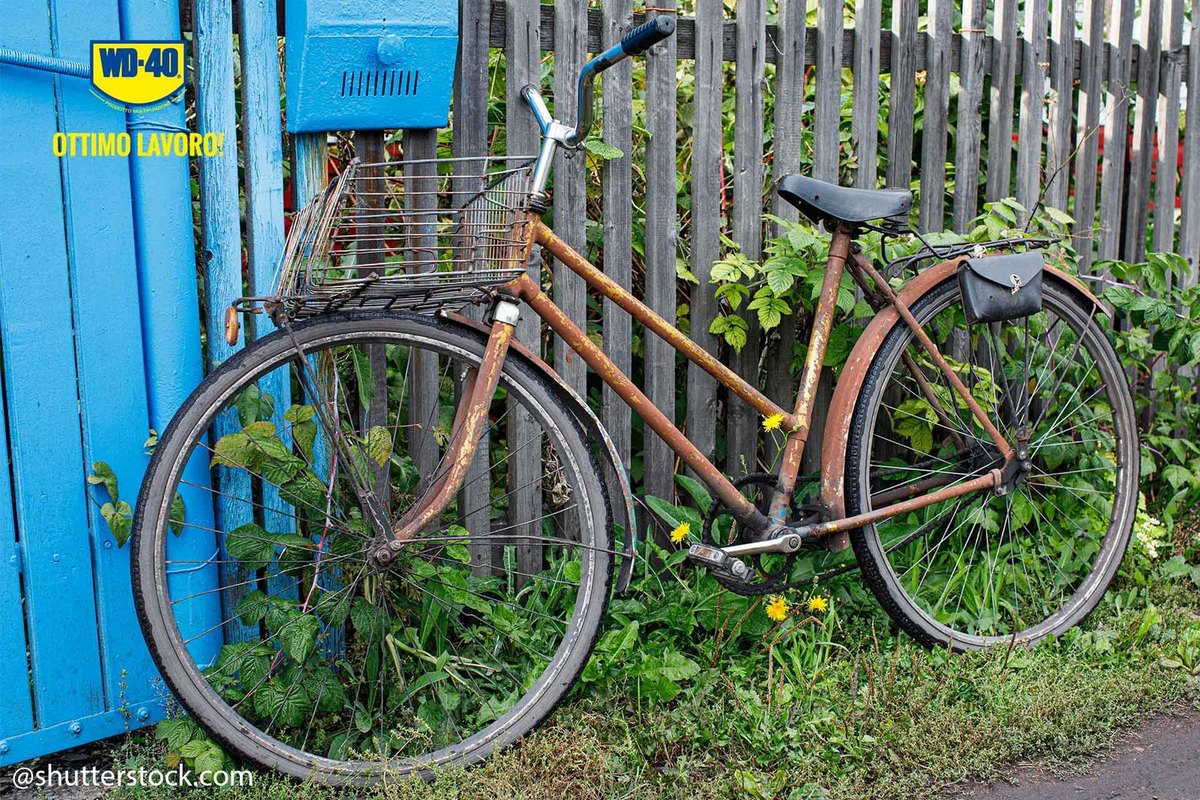
A bike spends most of its life outdoors, on a balcony or in a stairwell, in rain and mud, and in winter close to road salt. Even modern materials and finishes cannot protect it completely: once the paint chips or the lubricant washes off, the metal starts to rust.
Bike care works on three fronts: prevention, removing early rust promptly and repairing areas where rust has already damaged the finish. Here is how to deal with each area.
What you will need
Important: Keep all products away from brake pads, discs, rim braking surfaces and tyres. Cover them with a cloth and wipe off any overspray immediately.
Step 1
Start with prevention
It is best to act from day one. After riding in wet and muddy conditions, wash the bike with a mild detergent and always dry it. Then apply a thin film of WD-40 Multi-Use to the bare metal parts: it drives moisture out of gaps and threads and leaves a protective layer.
Step 2
Remove rust from bare metal parts
Bolts, spokes, cables, pedals and other unpainted parts rust first, and you should not wait, because rust goes deep quickly. If it is only surface bloom, spray the part with WD-40 Multi-Use, wait a few minutes and wipe with a cloth or fine steel wool. Soak seized bolts first with WD-40 Specialist Penetrant. The WD-40 Smart Straw makes precise application easy.
Step 3
Clean the chain, cassette and derailleurs
First remove hardened grease and dirt: spray the chain, chainrings, cassette and rear hub generously with WD-40, leave it for a few minutes and scrub with a brush, then remove the rust bloom. Dry all the parts thoroughly.
After cleaning, the chain needs a dedicated lubricant: apply WD-40 Specialist Bike Chain Lube to the inside of the chain while backpedalling and wipe off the excess.
Step 4
Repair a painted frame
Rust under the paint on the frame takes the most work. Mask off everything around the damaged area and sand the paint back to metal with 120-180 grit sandpaper or a sander with a disc of the same grit. Wipe, degrease, then apply primer and matching paint, followed by clear lacquer once dry.
When everything has fully cured, remove the tape and lightly polish the edge so the repair blends in.
Step 5
Dry and store under cover
After every wet or muddy ride, wash and fully dry the bike, even if you were only caught in the rain. Store it somewhere dry, not on an open balcony or under a canopy where condensation forms. Before winter, give all metal parts a protective film of WD-40.
Tip: Rust is easier to prevent than to remove. A few minutes with a can of WD-40 after each wash saves hours of sanding and painting in spring.
What next
If a part has rusted through or is bent, it is easier to replace than to restore. Treat the rest regularly with WD-40 Multi-Use and lube the chain every few hundred kilometres.
These uses come from the experience of WD-40 users in many countries. Always follow the instructions and warnings on the product label.
More guides in «How to use».