Grease, old lubricant, dust and swarf on metal parts get in the way of inspection, assembly, painting or bonding, and in a workshop they make tools slippery and unsafe. Proper degreasing restores both the look and the function of metal within minutes.
Decide on the goal first. If the part goes back into service or into storage, a product that leaves a protective film is ideal. If it will be painted, glued, sealed or used as an electrical contact, you need a completely dry, residue-free surface.
What you will need
Important: Aerosols are flammable: work in a ventilated area away from open flames, welding and sparks. Isolate equipment from the power supply before treating it. Check compatibility with plastic and rubber components on a hidden area first.
Step 1
Prepare the area and the part
Put on gloves, glasses and a mask to protect yourself from splashes and strong odours. Disconnect the machine or equipment from the power supply and place a tray or rag under the part.
Brush or scrape off loose dirt, swarf and lumps of dried grease. You will need less product, and it will reach the greasy film faster.
Step 2
Apply the product evenly
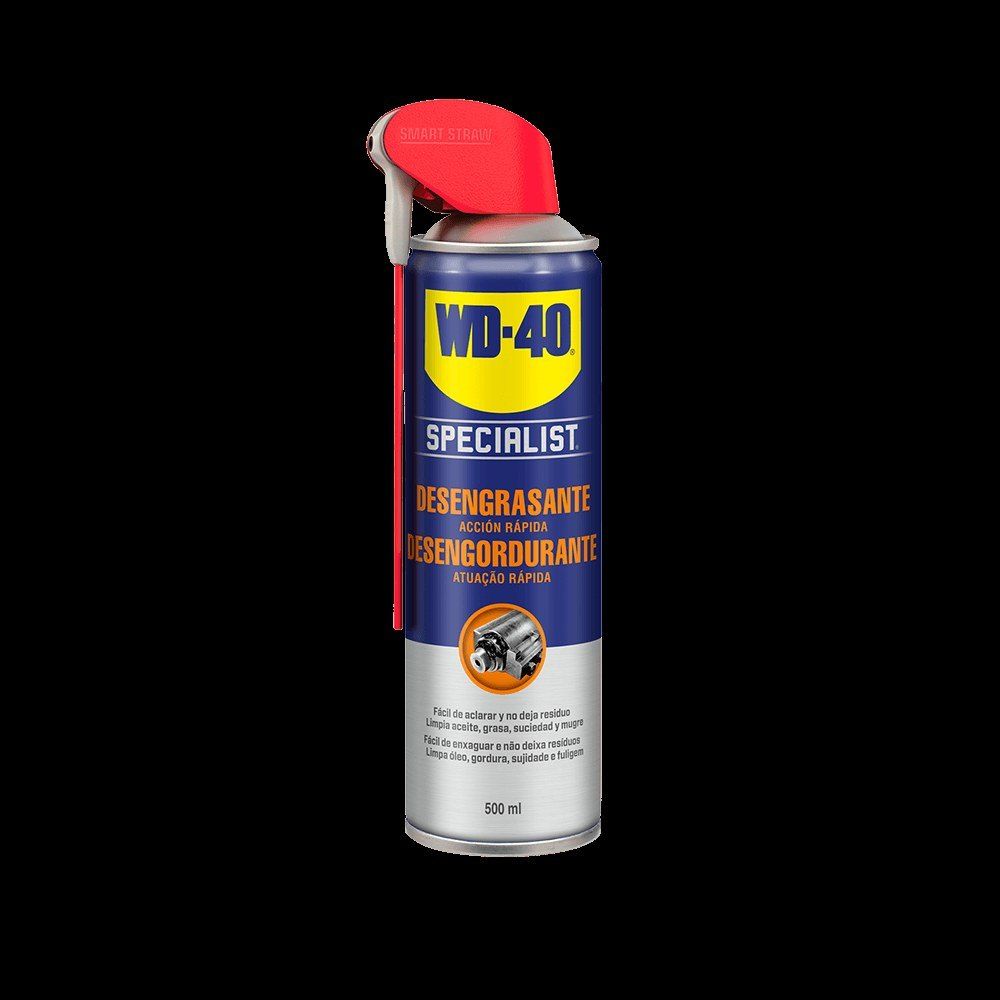
For parts that will be painted, bonded or fitted into electrical assemblies, spray WD-40 Specialist Contact Cleaner. It dissolves grease quickly and evaporates completely, leaving no film.
For tools, fasteners and mechanisms that should stay protected from moisture, use WD-40 Multi-Use. Large areas, machine beds and housings are easiest to treat with the WD-40 Trigger Pro, while in a workshop the WD-40 5 l with sprayer is more economical. Cover the whole area evenly.
Step 3
Let it work
Leave the product for a few minutes so it can penetrate and soften the grease and dirt. For old deposits and thick grease, allow more time or apply a second coat.
Work threads, slots and holes with a synthetic-bristle brush while the surface is still wet.
Step 4
Wipe away the grease
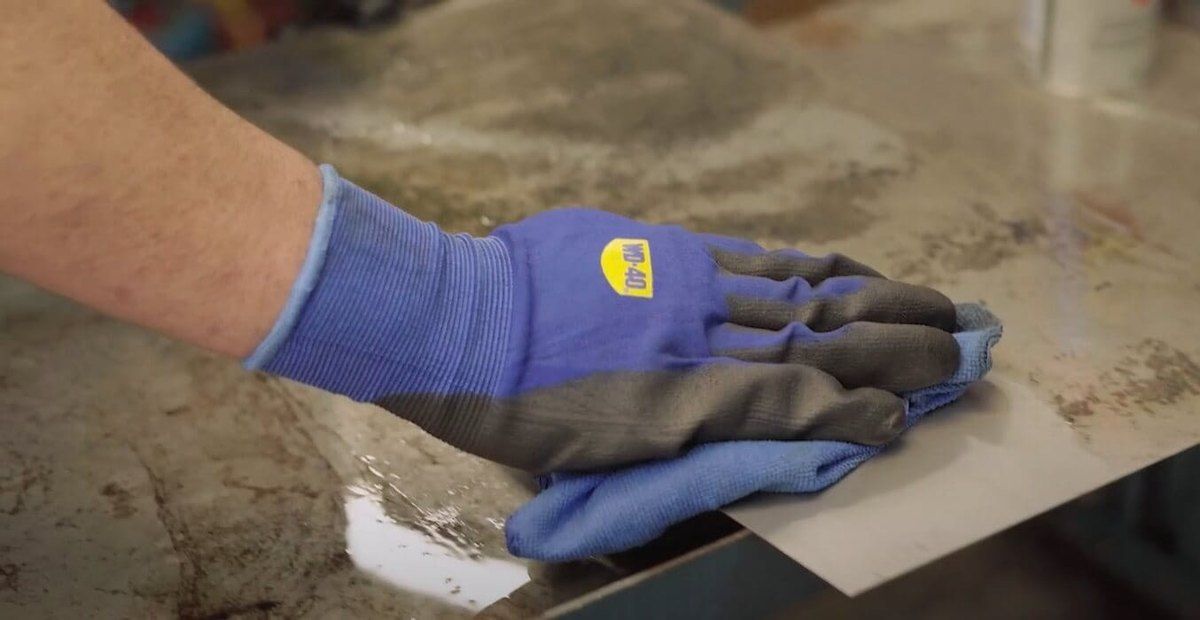
Wipe the surface with the first cloth to pick up the dissolved grease and dirt. Turn the cloth to a clean side regularly so you do not smear the contamination back.
If the part was very dirty, repeat the application and wiping. Where the process allows, large parts can also be rinsed with water afterwards.
Step 5
Dry and protect the metal
Dry the part with the second clean cloth. Moisture left on bare metal quickly causes rust, especially in an unheated workshop or garage during the cold season.
Parts that are not going straight to painting should get a thin layer of WD-40 Multi-Use: it displaces moisture and protects against corrosion in storage.
Tip: Before painting or bonding, do not touch the degreased surface with bare hands, as skin oils reduce adhesion again. Wear clean gloves and start work as soon as the surface is dry.
What next
Degrease parts before every repair, assembly or paint job, and clean tools after working with heavy greases. For seized joints after cleaning, WD-40 Specialist Penetrant is a useful next step.
These uses come from the experience of WD-40 users in many countries. Always follow the instructions and warnings on the product label.
More guides in «How to use».