Checking the engine oil level is one of the simplest jobs a driver can do in five minutes. Too little oil speeds up engine wear, and too much is harmful as well: crankcase pressure rises and seals may start to leak. So pull the dipstick regularly, not only before a service.
Cars often work in tough conditions: short winter trips, dust and mud in summer, long loaded motorway runs. All of this affects oil consumption, so a weekly check or one before a long journey is a good habit.
What you will need
Important: Do not open the filler cap or touch parts on a hot engine: oil and metal can cause burns. Keep WD-40 products away from drive belts, brake discs and tyres.
Step 1
Park the car correctly
Stop on level ground, otherwise the dipstick will give a false reading. Switch off the engine and wait at least 5-10 minutes so the oil drains back into the sump. The most accurate result comes in the morning after the car has stood overnight. Follow your manual if it says otherwise.
Step 2
Find out the change interval
While the engine settles, look in the service book or manual. It lists the oil type and viscosity, the system capacity and the change interval. The interval depends on the engine, the oil and how you drive. If in doubt, ask your mechanic.
Step 3
Open the bonnet and pull the dipstick
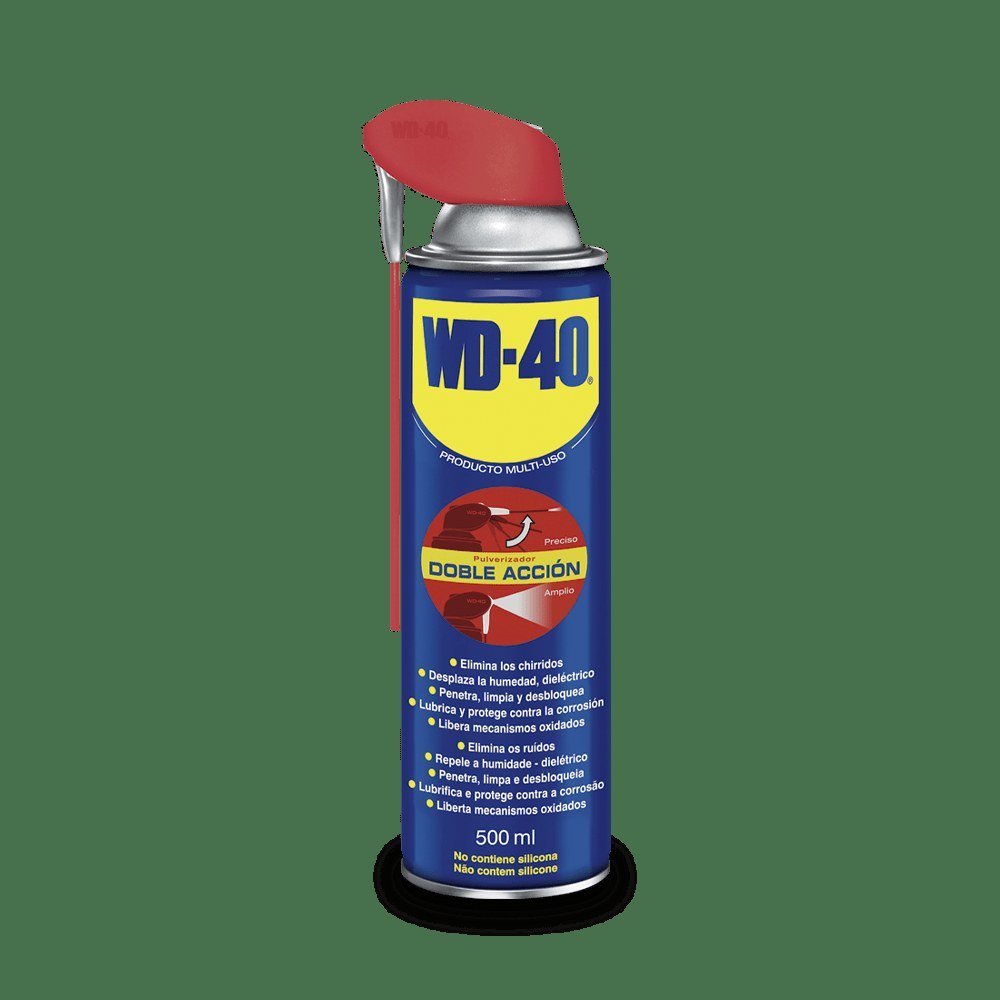
If the bonnet latch sticks or the release cable is stiff, spray the latch mechanism and hinges with WD-40 Smart Straw through the thin straw. Locate the dipstick: it usually has a bright yellow or orange handle. Pull it out and wipe it dry from handle to tip.
Step 4
Read the level
Push the clean dipstick fully home and pull it out again. Look where the oil film ends: between the MIN and MAX marks (or two dots or notches) the level is fine. Ideally it should sit near the middle or the upper mark. Check the colour and smell too: very black, thick oil smelling of fuel, or a pale cloudy emulsion, is a reason to visit a garage.
Step 5
Top up or plan a change
If the level is at MIN or below, add the same oil through a funnel in small portions of 100-200 ml, waiting a few minutes and rechecking each time. Do not exceed MAX. If the oil is due for a change, replace it completely. When the drain plug is seized, apply WD-40 Specialist Penetrant to the thread, wait a few minutes and undo it with steady force.
Step 6
Refit the dipstick and close the bonnet
Push the dipstick fully back in and tighten the filler cap firmly. Wipe away any drips. If the level drops quickly between checks, do not just keep topping up: have a mechanic find the cause, as it may be a leak or engine wear.
Tip: Note the date, mileage and how much oil you added. That way you will spot rising consumption early. In autumn, before the frosts, treat the bonnet latch and hinges with
WD-40 Multi-Use: it displaces moisture and stops the mechanism freezing.
What next
Check the oil level at least every one to two weeks and always before a long trip. Change the oil and filter at the intervals set by the manufacturer. Keep WD-40 200 ml in the garage for small jobs.
These uses come from the experience of WD-40 users in many countries. Always follow the instructions and warnings on the product label.
More guides in «How to use».