Orange spots appear on a knife when the blade stays wet for too long: it was left in the sink, put in a drawer without drying, or taken fishing and sheathed damp. Carbon steels, prized for hunting knives, rust especially quickly, as do the rivets and springs of folding knives.
Fresh rust comes off in 15-20 minutes. Leave it and it eats pits into the metal that later have to be ground out on a sharpener.
What you will need
- dry cotton rag or paper towels
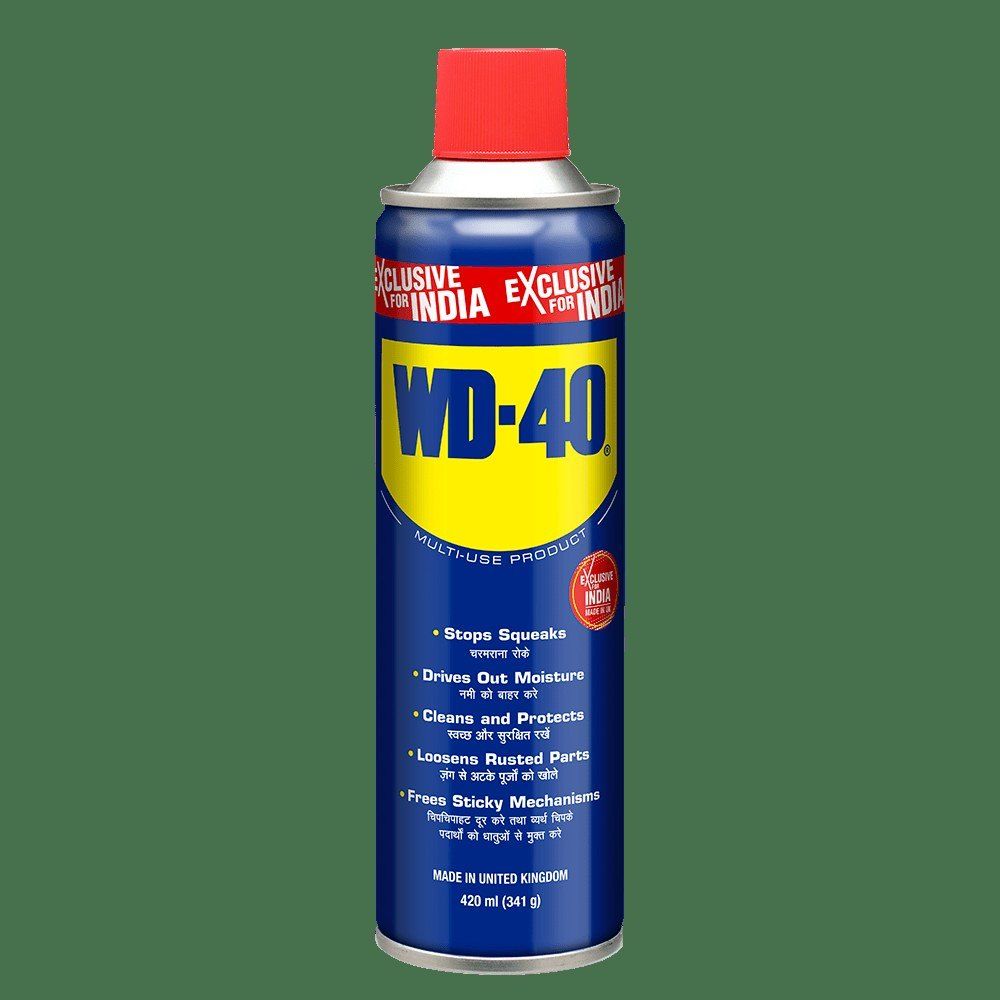
- WD-40 Multi-Use or WD-40 200 ml
- brass brush or the rough side of a kitchen sponge
- fine sandpaper (P600-P1000) for heavy rust
- washing-up liquid and warm water
- gloves
Important: Keep the edge facing away from you and clean along the spine, never across the edge. Always wash a kitchen knife with washing-up liquid and dry it after treatment: no product residue should remain on edges that touch food.
Step 1
Remove dirt
Wipe the knife with a damp cloth to remove grease, food residue and dust. Open a folding knife and blow out the pivot. Then dry the knife completely, as water under the product stops it working.
Step 2
Apply WD-40 to the rust
Shake the can and apply a thin layer of WD-40 Multi-Use to the orange spots only. They just need to be wet; any excess simply runs off. For a small knife, spray the rag and wipe the blade with it.
For the pivot of a folding knife, use the WD-40 Smart Straw with its thin straw so the product goes into the joint rather than onto the handle.
Step 3
Let it work
Leave the knife for 5-10 minutes. In this time WD-40 creeps under the deposit, displaces moisture and loosens the rust, so it can be removed without harsh abrasives.
Step 4
Brush the rust away
Work along the blade with a brass brush or the rough side of a sponge, from spine to edge or lengthways. Brass is softer than steel and does not scratch like a steel brush. Most spots come off at once; repeat on old ones.
Step 5
Sand off what remains
If dark marks remain, wet fine sandpaper with WD-40 and rub lightly along the blade in one direction. The product acts as a lubricant and stops the paper tearing at the metal. Deep pits on the edge are removed by sharpening.
Step 6
Wash, dry and protect
Wash a kitchen knife with washing-up liquid, rinse and dry it. Simply wipe a hunting, camping or folding knife, leaving a barely visible film of WD-40 on the metal, and add a drop to the pivot.
Tip: In damp seasons, store a knife apart from its leather sheath: leather absorbs moisture and passes it to the blade. After fishing or hunting, wipe the knife and give it a spray of WD-40 right there, without waiting until you get home.
What next
Wash and dry knives straight after use, and treat outdoor and workshop knives with WD-40 every few weeks. A WD-40 200 ml can fits neatly in a camping kit next to the sharpener.
These uses come from the experience of WD-40 users in many countries. Always follow the instructions and warnings on the product label.
More guides in «How to use».