Scissors rust quietly: kitchen scissors after washing, garden and sewing scissors from damp in a drawer, office scissors from glue and tape. First orange specks appear on the blades, then the deposit works into the pivot, the scissors get stiff and start chewing the material.
Lemon juice and vinegar only handle light bloom and take hours. It is quicker and more reliable to soften the rust with a penetrating lubricant, brush it off and wash the scissors. The whole job takes about half an hour.
What you will need
- cotton rag or microfibre cloth
- WD-40 Multi-Use
- brass or steel wire brush, fine abrasive paper
- warm water and washing-up liquid
- gloves
Important: Wear gloves and brush from the pivot towards the tip, never across the cutting edge. Always wash kitchen scissors with detergent after treatment before they touch food again.
Step 1
Clean off the dirt
Wipe glue, tape residue, soil or grease off the blades with a damp cloth. Very dirty scissors can be washed in warm soapy water.
Then dry them thoroughly, including around the pivot: the product works better on dry metal.
Step 2
Apply WD-40 to the rust
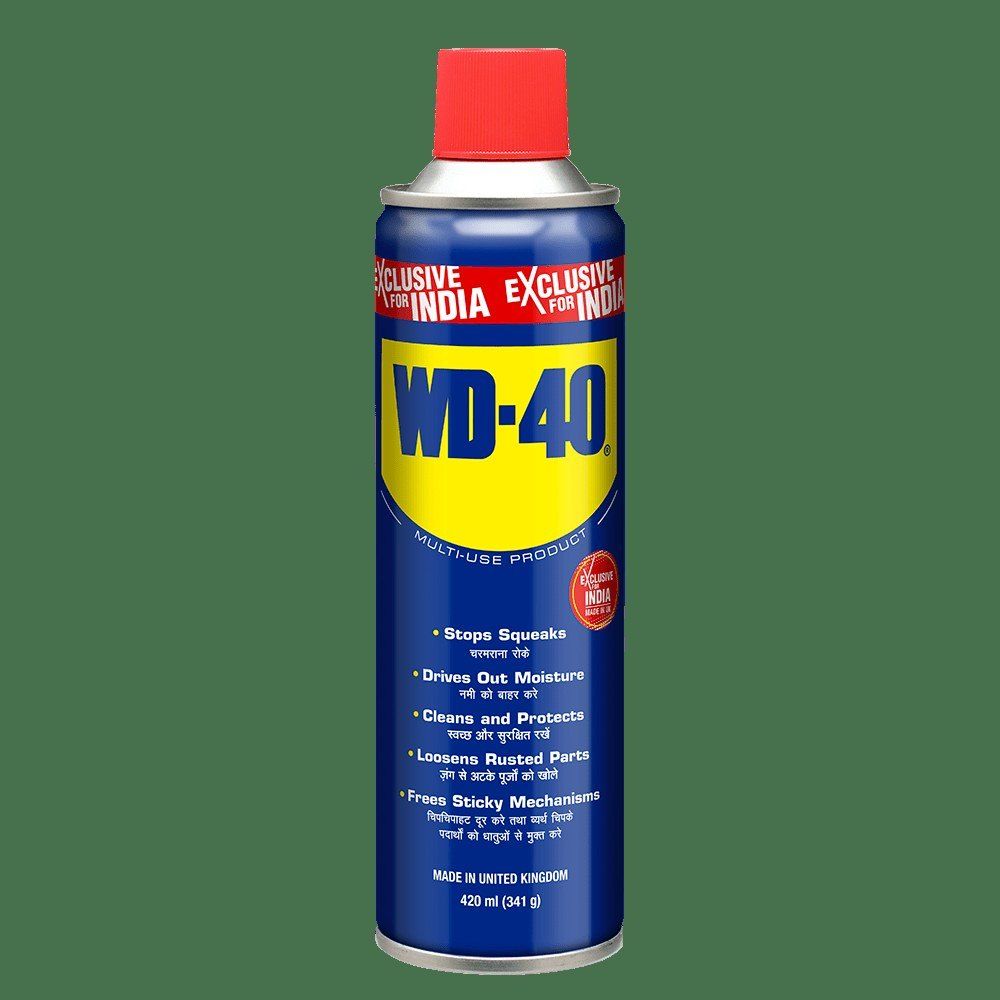
Shake the can and spray WD-40 Multi-Use onto the rusty areas so they are all covered. Do not overdo it: a thin coat is plenty.
Give the pivot a short separate shot, then open and close the scissors several times to spread it between the blades.
Step 3
Wait about 10 minutes
Do not wipe straight away. In 10 minutes the product works under the rust and loosens its grip on the metal, so it comes off with very little effort.
Lay the scissors on a cloth so any excess does not drip onto the table.
Step 4
Brush off the rust
Brush along the blades from the pivot to the tips. Lightly sand any remaining marks with fine paper, again along the blade.
Treat heavy rust a second time: apply, wait and brush again. Deep pits in the cutting edge can only be removed by sharpening.
Step 5
Wash and dry the scissors
Finally wash the scissors in warm water with washing-up liquid to remove fine dirt and lubricant residue, then dry them straight away.
Office and garden scissors can then be wiped with a cloth and a drop of lubricant to leave a thin protective film.
Tip: If the scissors cut worse after cleaning, the pivot is often loose: tighten the screw slightly until the blades meet firmly but without effort.
What next
Never leave scissors wet and do not put kitchen scissors in the dishwasher. Treat garden secateurs and sewing scissors every few months; WD-40 Smart Straw is handy for pinpoint application into the pivot. A pocket WD-40 100 ml fits neatly in a sewing box.
These uses come from the experience of WD-40 users in many countries. Always follow the instructions and warnings on the product label.
More guides in «How to use».