Wheels get dirty faster than any other part of the car: one puddle is enough. The worst of it is not mud but a mix of brake dust, road oil and water. As it dries it forms a dark, sticky film that shampoo barely touches.
In winter, salt and de-icers join in, making steel wheels rust and leaving marks under the lacquer on alloys. Regular cleaning keeps the wheels looking good and protects the metal.
What you will need
- cardboard or a cloth to shield the brake disc
- WD-40 Smart Straw with two-position straw
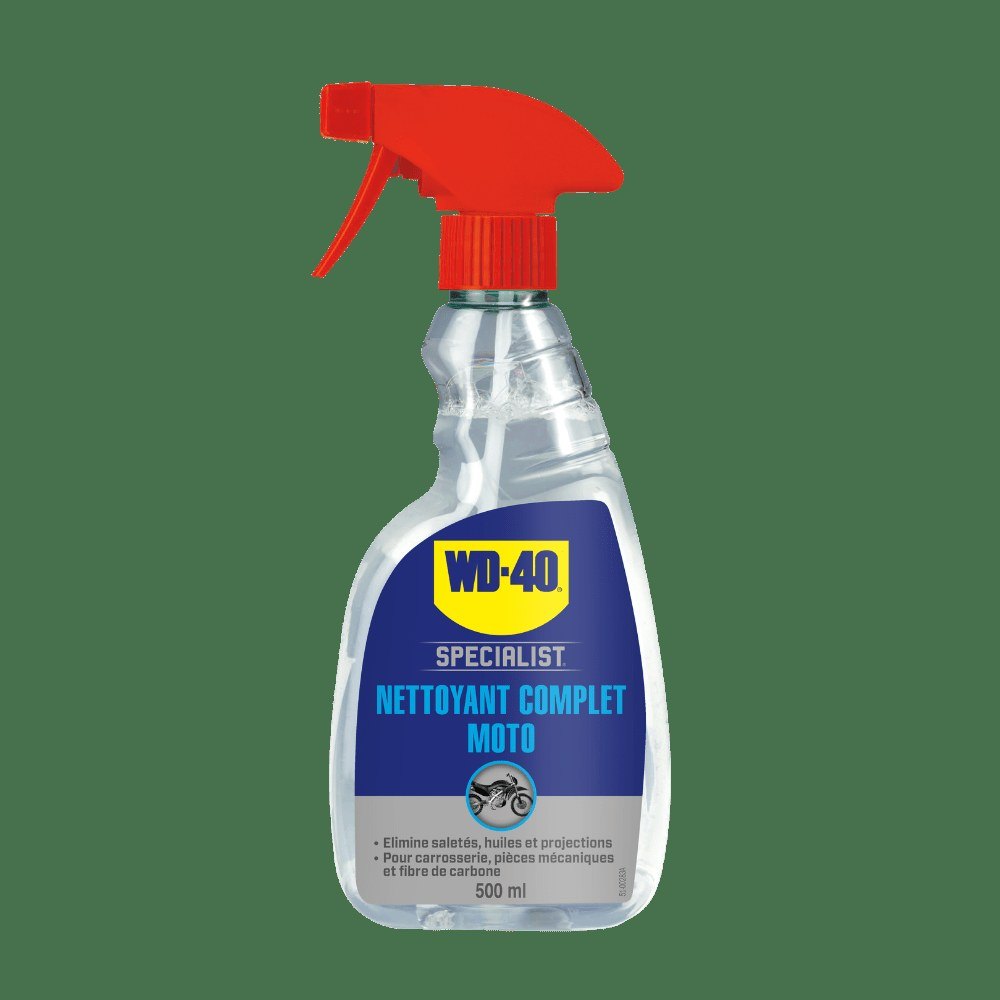
- WD-40 Trigger Pro for doing all the wheels quickly
- a non-scratch wheel brush and an old toothbrush
- a bucket of water with car shampoo
- clean microfibre cloths
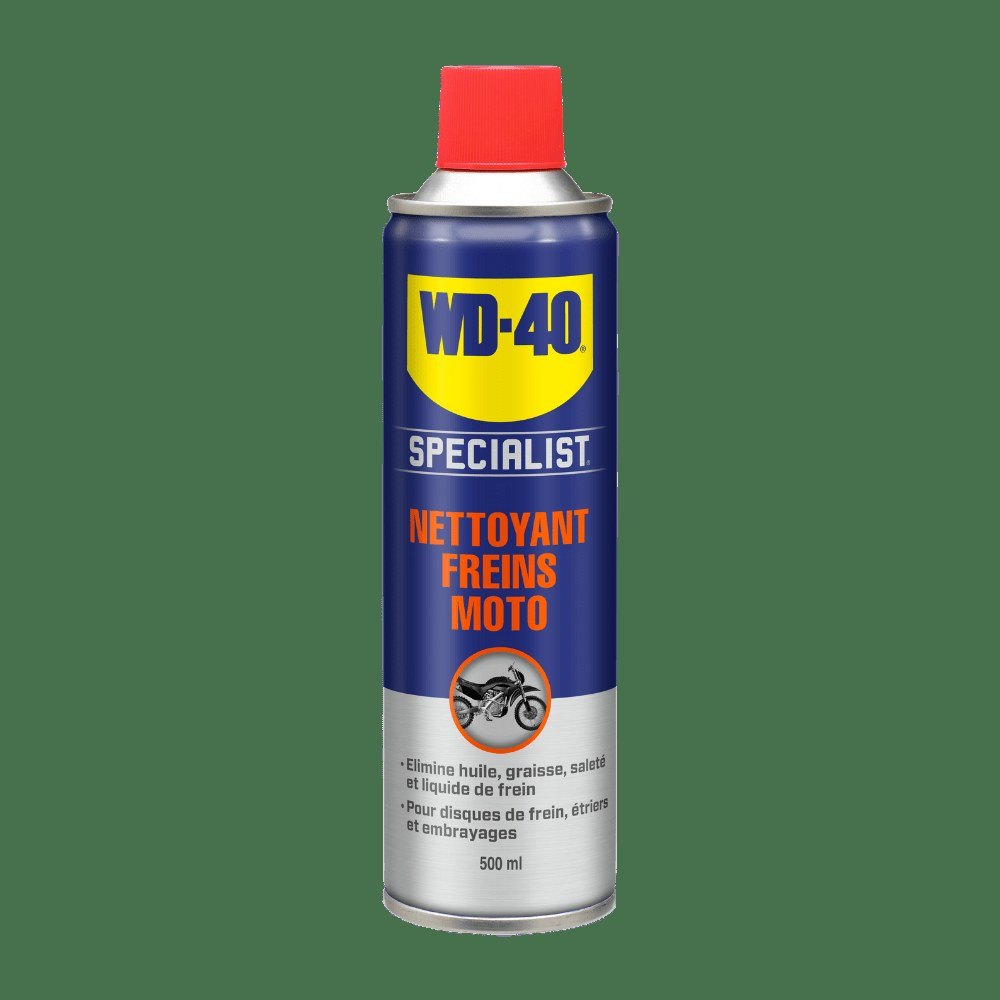
Important: WD-40 reduces friction, so it must not get onto brake discs, pads or tyre tread. If it does reach the brakes, clean them thoroughly with a dedicated brake cleaner and test the brakes at low speed. Do not treat wheels that are still hot from driving.
Step 1
Identify the wheel type and inspect
Pressed steel wheels are strong and inexpensive but rust easily. Alloy wheels look better but are sensitive to harsh chemicals and lacquer damage. WD-40 Multi-Use is compatible with steel, aluminium and painted wheels, but on wheels with an unusual finish test it on a hidden area first.
While you are there, check the tyres for cuts and bulges and make sure the valve caps and balance weights are in place.
Step 2
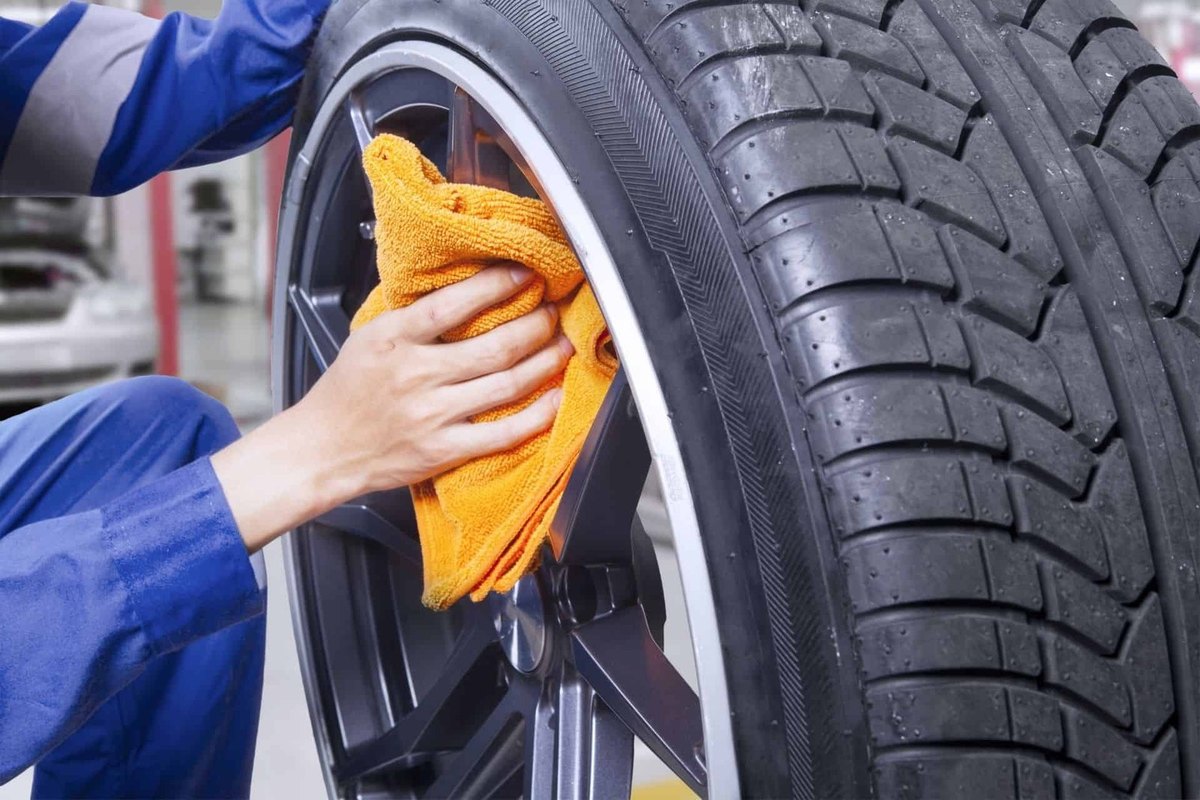
Wash with water and shampoo
Wait until the wheels are cool. Wet the wheel, scrub the tyre and wheel with soapy water, especially the grooves where brake dust gathers, and rinse. This removes sand and mud, but the greasy film usually stays.
Step 3
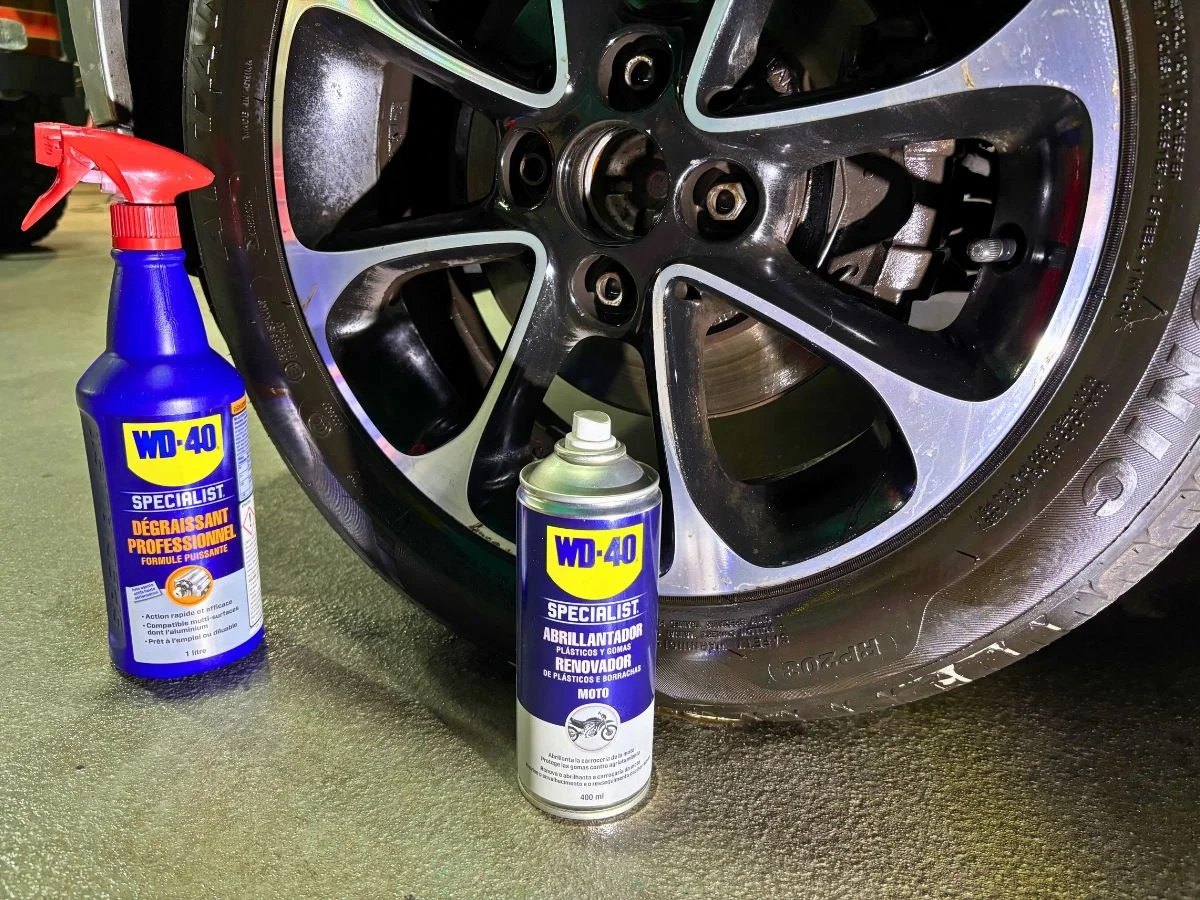
Shield the brakes
Slide a piece of cardboard or a folded cloth through the spokes so it covers the brake disc and calliper. That way the product only lands on the rim and spokes.
Step 4
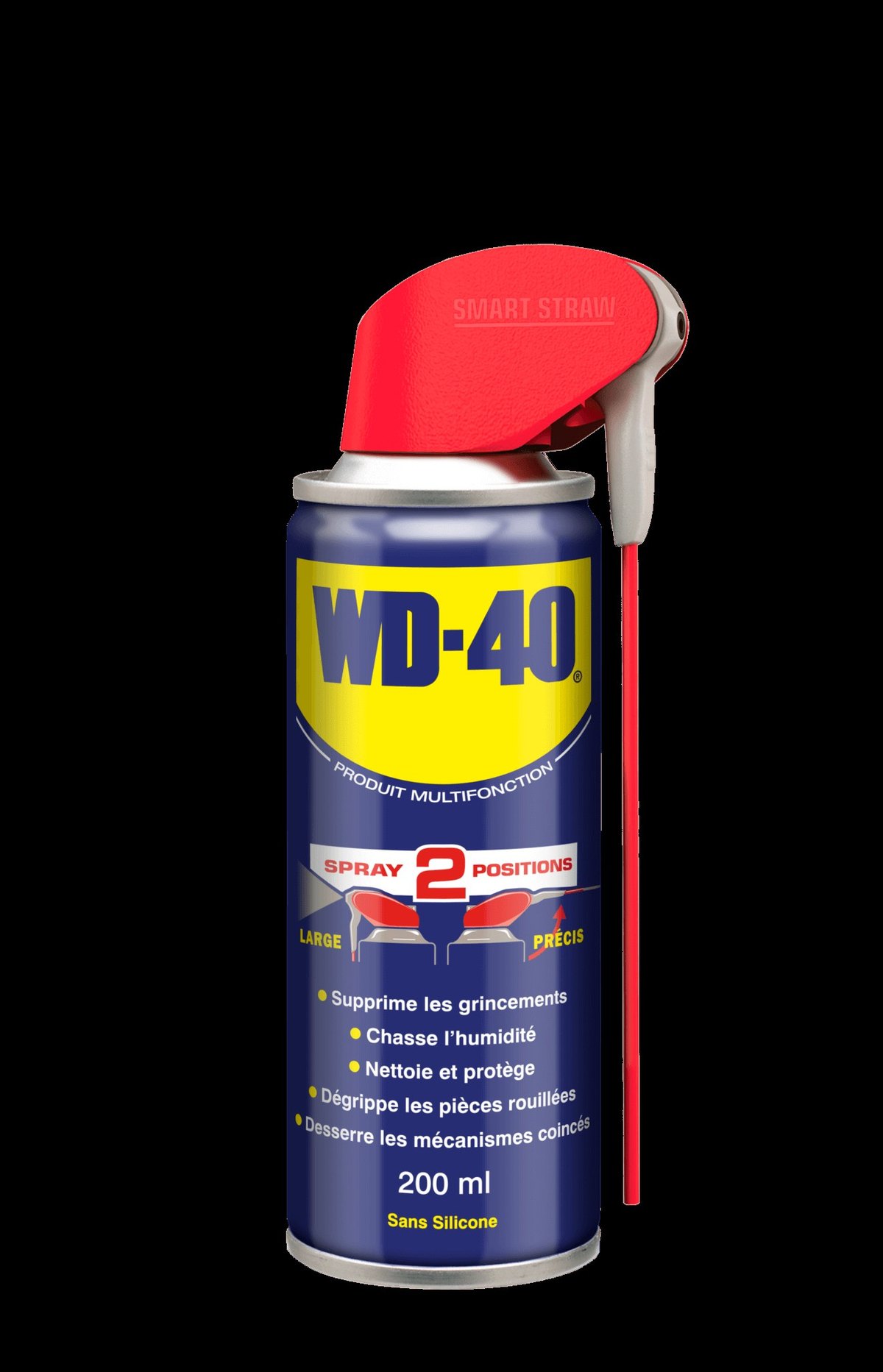
Spray WD-40 onto greasy marks
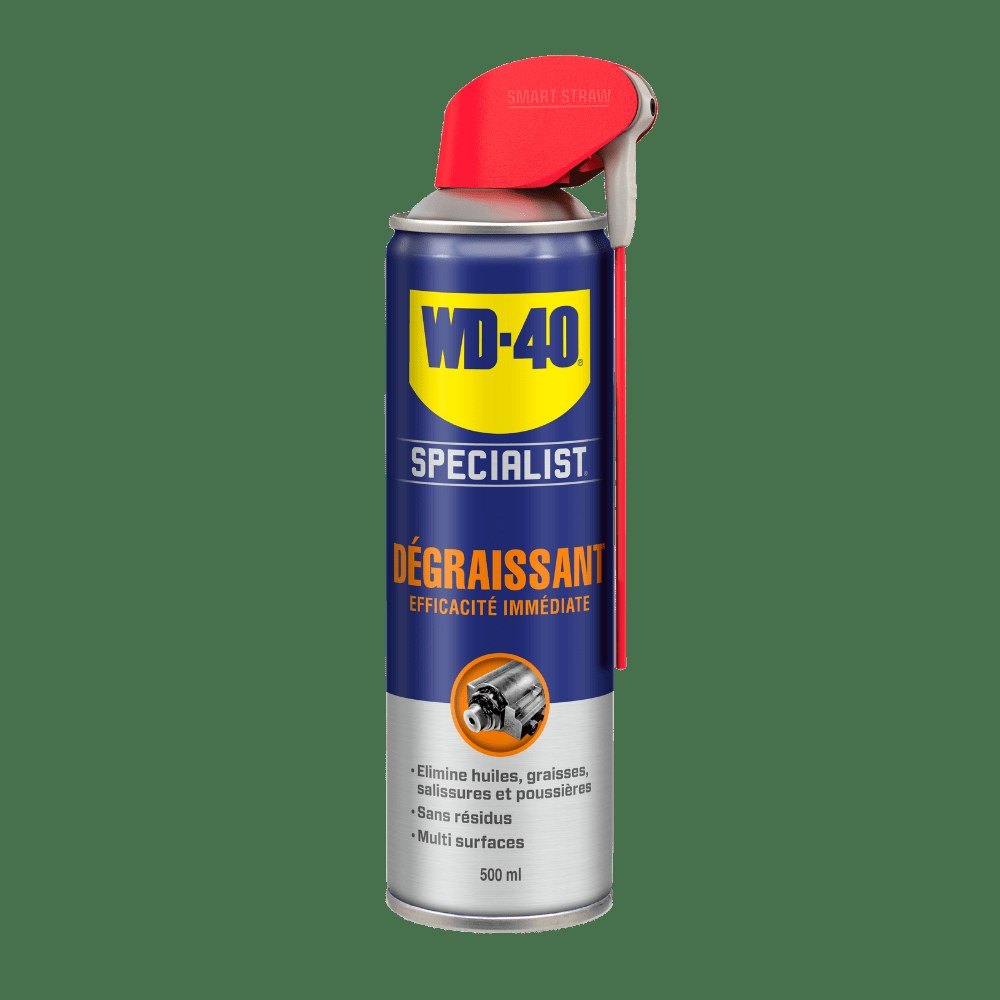
Shake the WD-40 Smart Straw can and spray the wheel generously in wide-spray mode. For corners, the recesses around the bolts and the inner barrel, flip up the straw for a precise jet. Leave it for a few minutes: it gets under the grease and oil and lifts them off the surface.
For four wheels or several cars, WD-40 Trigger Pro with its trigger is more convenient.
Step 5
Scrub with a brush
Work over the spokes and inside the rim with the wheel brush. Do not forget the wheel bolts or nuts and the holes around them. A toothbrush helps in tight spots, and if you have no brush, a cloth or paper towel will do.
Step 6
Wipe and repeat if needed
Wipe off the excess with a clean, dry cloth, taking the remaining dirt with it. A thin protective film stays on the wheel, repelling water and salt. Very dirty wheels may need 2-3 applications.
Before storing wheels for the season, also treat the bolt holes and mounting faces so no rust appears there by spring.
Tip: Soak wheel bolts that have seized over winter with
WD-40 Multi-Use 10-15 minutes before undoing them. When refitting the wheels, tighten the bolts with a torque wrench and do not over-lubricate the threads.
What next
Clean the wheels once a month, and in winter after every drive on salted roads as soon as you get the chance. Always do it in spring and autumn when changing to seasonal tyres.
These uses come from the experience of WD-40 users in many countries. Always follow the instructions and warnings on the product label.
More guides in «How to use».