A broken doorbell means missed couriers and visitors knocking on the door. Wired doorbells are usually not powered straight from the 230 V mains but through a small step-down transformer, so the outdoor button is safe to touch. The transformer usually sits in the consumer unit.
The main causes of failure are a worn or corroded outdoor button, a faulty chime, a failed transformer or a break in the wiring. Check each part in turn, starting with the simplest.
What you will need
Important: Before any work, switch off the doorbell circuit at the consumer unit. Work on 230 V mains wiring and any live measurements must be done by a qualified electrician.
Step 1
Clean the outdoor button
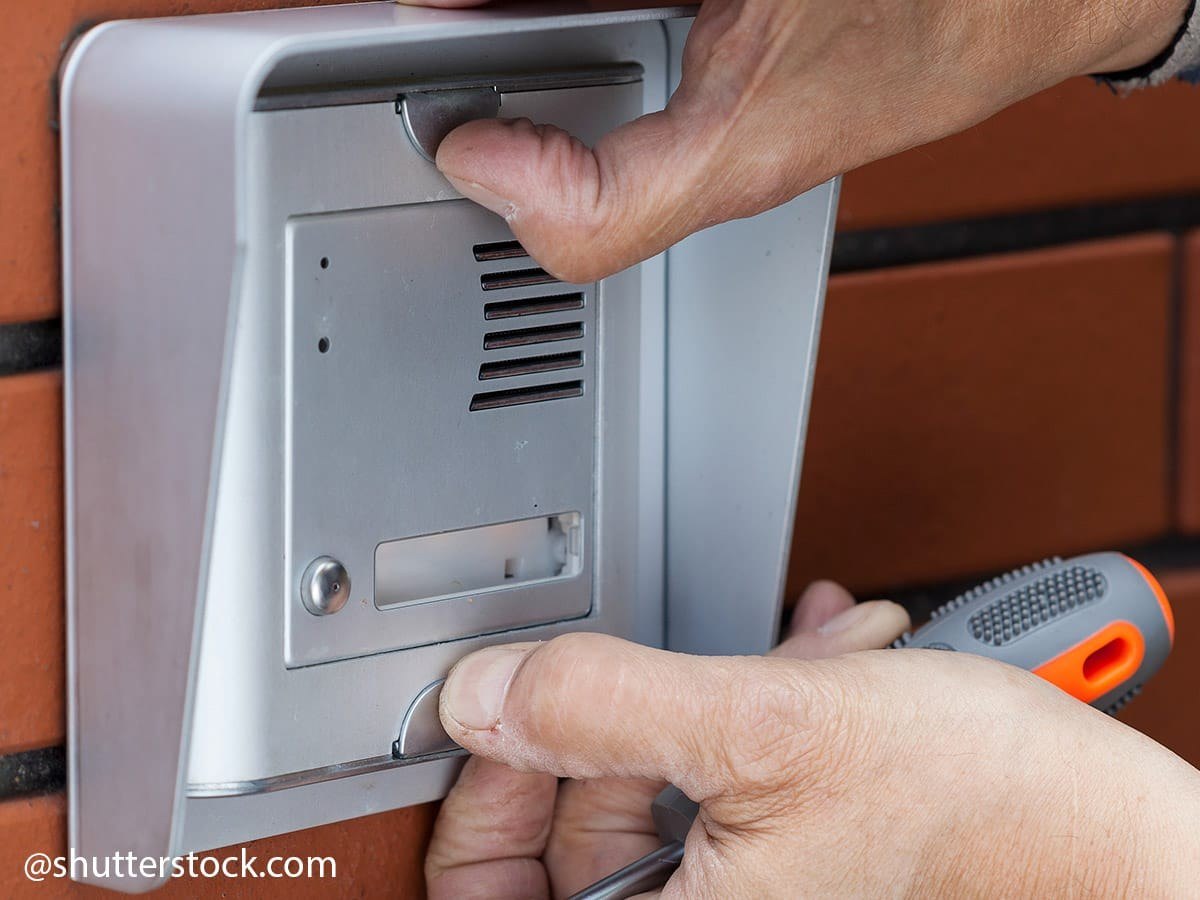
Switch off the power at the consumer unit. Undo the screws and remove the button or button panel. Vacuum or brush out dust, cobwebs, insects and nests, which often settle in these housings.
An outdoor button endures rain, snow and frost. If it is damp inside, dry everything thoroughly with a cloth.
Step 2
Refresh the button contacts
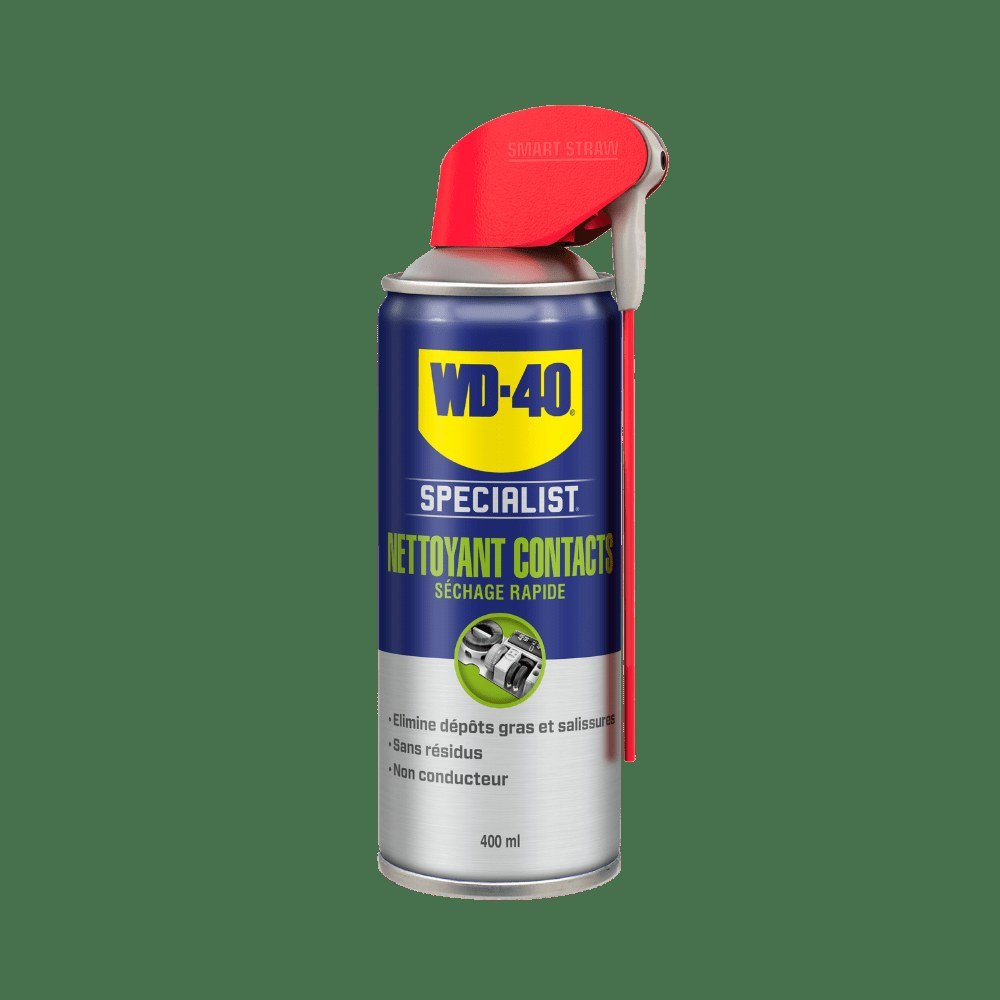
Check the terminals the two wires connect to: one may have come loose. Loosen the screws, remove the wires and spray WD-40 Specialist Contact Cleaner on the terminals and wire ends.
It removes condensation and oxide, reaches tight spots, dries fast without residue and restores conductivity. Refit the wires, tighten the terminals and test the bell before closing the button.

Step 3
Test the button itself
If the bell is still silent, test the button. Carefully disconnect the wires and briefly touch their ends together (the low voltage power must be on for this, so hold the wires only by their insulation). If the bell rings, the button needs replacing.
If not, reassemble the button and move on to the transformer.

Step 4
Inspect the transformer
With the power off, check the transformer in the consumer unit: the input and output wires must be firmly clamped in their terminals. Treat corroded terminals with WD-40 Specialist Contact Cleaner.
Checking whether the transformer delivers the right voltage needs a live meter test. That is a job for an electrician.

Step 5
Check the chime
If the transformer works but the bell stays silent, the chime may be at fault. With the power off, make sure the wires are seated in the chime terminals, disconnect them, treat with contact cleaner and reconnect.
If that does not help, an electrician can check whether voltage reaches the chime when the button is pressed. If it does, the chime is replaced.
Step 6
Look for a break in the wiring
If no voltage reaches the chime, the fault is in the circuit, at junction boxes or connections. Finding it requires live testing, so leave it to a professional.
With wireless doorbells, check the battery in the button instead and clean its contacts with the same cleaner.
Tip: In autumn, before the season of rain and frost, take the cover off the outdoor button, blow it out and treat the contacts with cleaner. Your doorbell will then cope with wet weather.
What next
Servicing the button once a year usually solves most problems. Metal screws and gate hinges near the doorbell can be protected from rust with WD-40 Multi-Use.
These uses come from the experience of WD-40 users in many countries. Always follow the instructions and warnings on the product label.
More guides in «How to use».