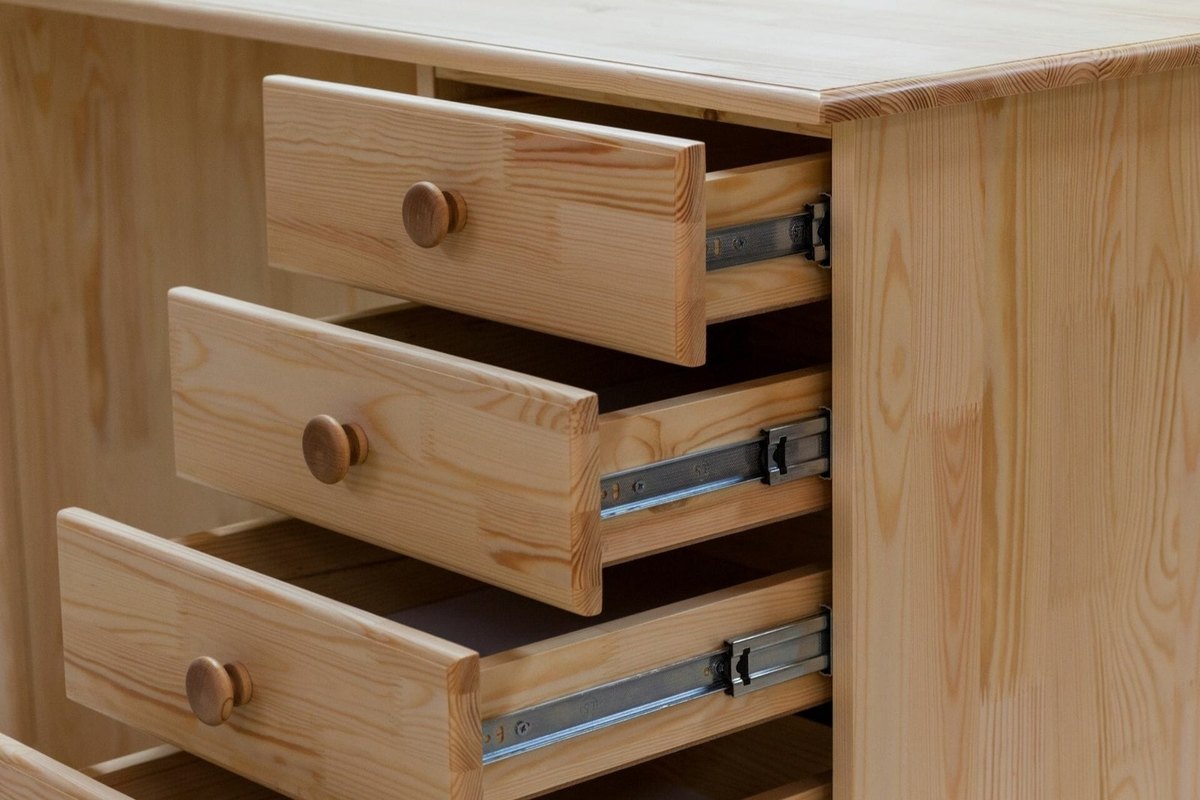
Drawers run on slides: one part is fixed to the drawer, the other to the cabinet. Most often these are rails with plastic rollers, while modern kitchens and office pedestals use telescopic runners on steel balls. In older furniture a drawer may simply slide wood on wood.
Drawers start to stick for three reasons: dust, crumbs and old, thickened lubricant on the runners, rust on metal rails in damp rooms, or wood that has swollen with moisture. With damp autumns and dry heating seasons, wooden furniture noticeably moves. Find the cause and work through the steps.
What you will need
Important: Do not yank a jammed drawer: you can pull off the front or break the rollers. Take out crockery, documents and heavy items first if you can reach them.
Step 1
Free a jammed drawer
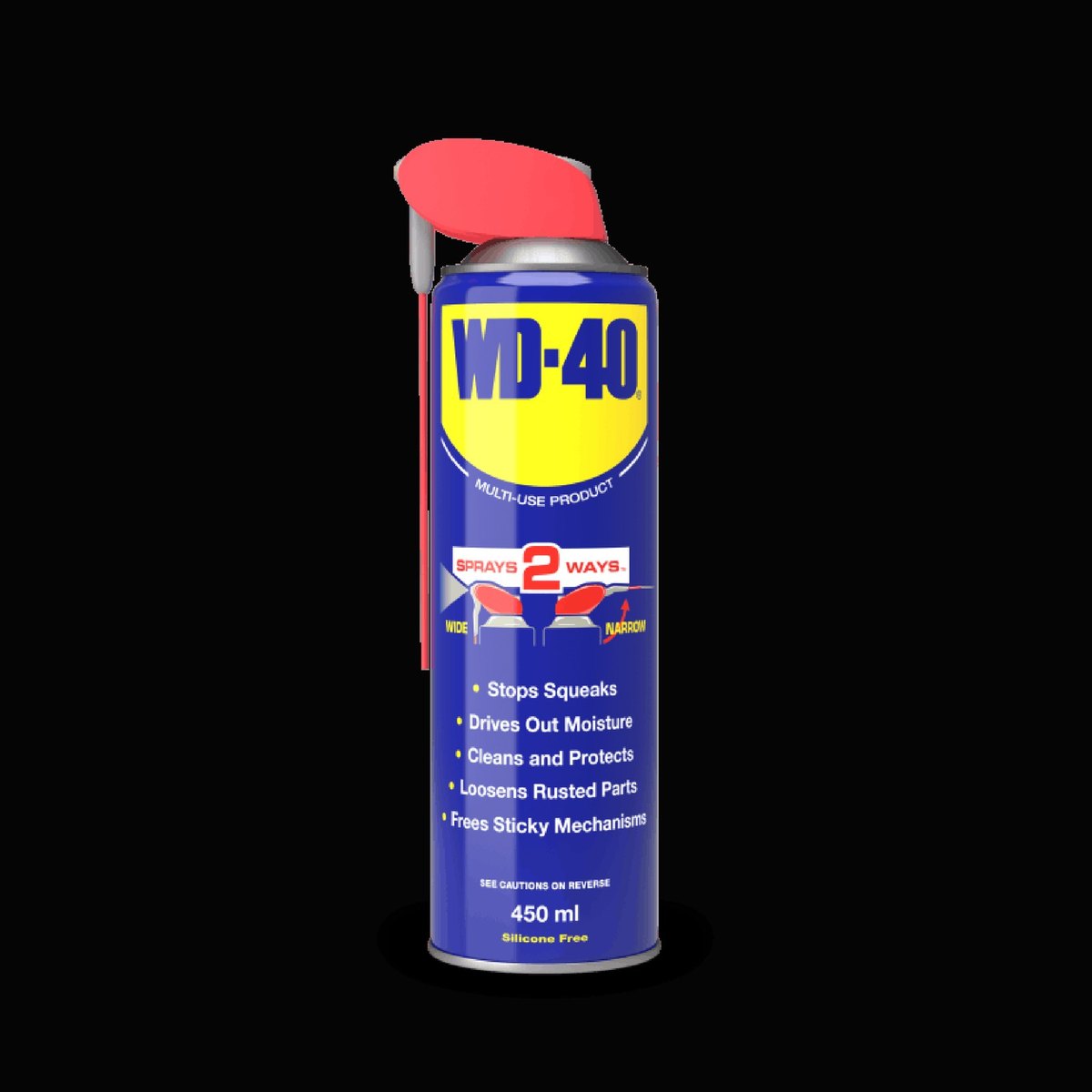
If the drawer will not open or moves in jerks because of rust or dirt, spray WD-40 Multi-Use onto the visible parts of the side runners. The thin straw of WD-40 Smart Straw reaches into the gap between drawer and cabinet.
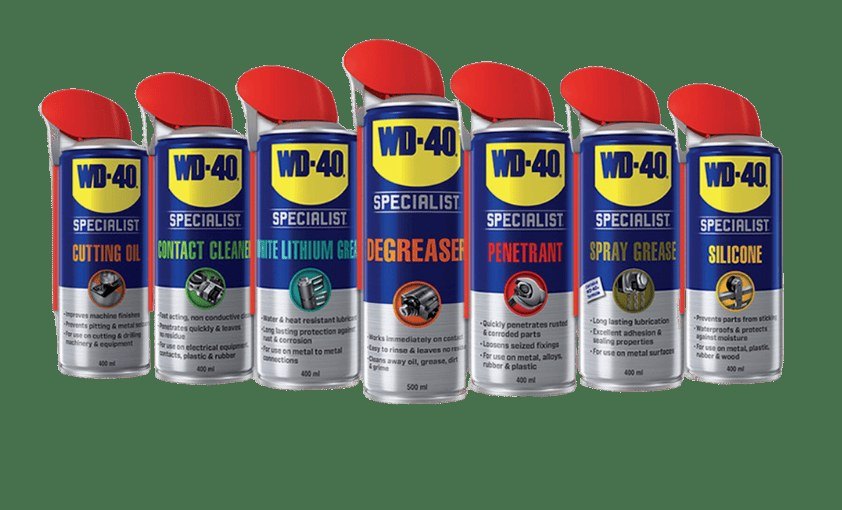
For rusted metal rails, WD-40 Specialist Penetrant works better. Wait 5-10 minutes, then gently rock the drawer back and forth, gradually increasing the travel.

Step 2
Sand down swollen wood
If the runners are fine but the drawer rubs against the cabinet, the wood is the problem. Find the rubbing point: you will usually see shiny worn patches.
Sand that area with coarse paper, then fine. Check the drawer after each pass and stop as soon as it runs freely. Do not take off too much, as the wood will shrink a little again in summer.
Step 3
Clean the runners
Pull the drawer right out and remove it. Most runners have a release catch you press to free the drawer.
Vacuum the rails and rollers to remove crumbs and dust. Wipe the runners with a soapy sponge and dry them well. Dissolve old thickened lubricant and grime with WD-40 Multi-Use and wipe dry with a microfibre cloth.
Step 4
Lubricate the runners
Apply a small amount of WD-40 Multi-Use to metal rails and the ball cages of telescopic runners. It reduces friction and leaves a thin film that protects against moisture and corrosion.
For plastic rollers and wooden runners, WD-40 Specialist Silicone is the better choice: it is safe on plastics, does not swell wood and attracts very little dust.
Step 5
Work it in and remove the excess
Refit the drawer and open and close it fully several times so the product spreads to all moving parts. You will feel the difference straight away.
Wipe off any excess with a dry cloth, especially in kitchen and linen drawers, so no lubricant gets onto crockery or fabrics.
Tip: Overloading also makes drawers stick and bends the runners. Keep heavy pans, tools and files towards the back and do not exceed the load the runners are rated for.
What next
Lubricate runners once a year, or every six months in kitchens and garages where there is more grease, dust and damp. The same approach works for sliding wardrobe doors, and WD-40 Specialist Silicone is handy for those too.
These uses come from the experience of WD-40 users in many countries. Always follow the instructions and warnings on the product label.
More guides in «How to use».