A window that rises in jerks, creeps slowly or stops halfway is a common problem, especially on cars a few years old. Usually the culprit is not the motor or regulator but the tracks: dust, sand and grime pack into the rubber channels, and the rubber itself dries out over time and drags on the glass.
Road salt, wet snow and mud make it worse: in winter the glass also freezes to the seals and the window motor works at its limit. Regular cleaning and lubrication of the channels takes the load off the mechanism and restores smooth movement in a few minutes.
What you will need
- a soft brush or a vacuum with a crevice tool
- a microfibre and a thin cloth you can wrap around a plastic trim tool
- glass cleaner
- WD-40 Specialist Silicone for rubber channels and seals
- WD-40 Smart Straw for metal door hinges and locks
Important: With electric windows, keep your fingers clear of the gap between glass and frame while the glass moves. Keep silicone off the windscreen and wiper blades, as it leaves smears. Test the product on a hidden area of interior plastic first.
Step 1
Lower the glass and clean the channels
Lower the window fully. Go along the rubber channels on both sides and across the top of the frame with a brush or vacuum. Wrap a damp microfibre around a thin plastic trim tool and wipe the channels to remove sand and grit: these scratch the glass and slow it down. Wipe the top edge of the glass too. Let everything dry.
Step 2
Apply silicone lubricant
Apply a thin coat of WD-40 Specialist Silicone into the rubber channels on both sides and along the top of the frame. For precision, spray it onto the cloth on the trim tool and run it along the channel. Do not overdo it: a few short bursts are enough. Silicone cuts friction, repels water, stops the rubber drying and cracking, and prevents the glass freezing in winter.
Step 3
Wait a few minutes
Do not start running the window up and down straight away. Give the product a few minutes to spread over the rubber and into the joints.
Step 4
Spread the lubricant and test
Raise and lower the window 5-6 times so the lubricant spreads evenly along the channel. The glass should move smoothly, without jerks or squeaks. If it is no better, repeat the treatment. Clean the glass with glass cleaner to remove any silicone smears.
Step 5
Treat the door seals
While you are at it, wipe WD-40 Specialist Silicone along the rubber door seals all round: the doors will not freeze shut in winter and the rubber stays supple longer. Treat the door hinges, check straps and locks with WD-40 Smart Straw through the thin straw so they do not squeak or rust.
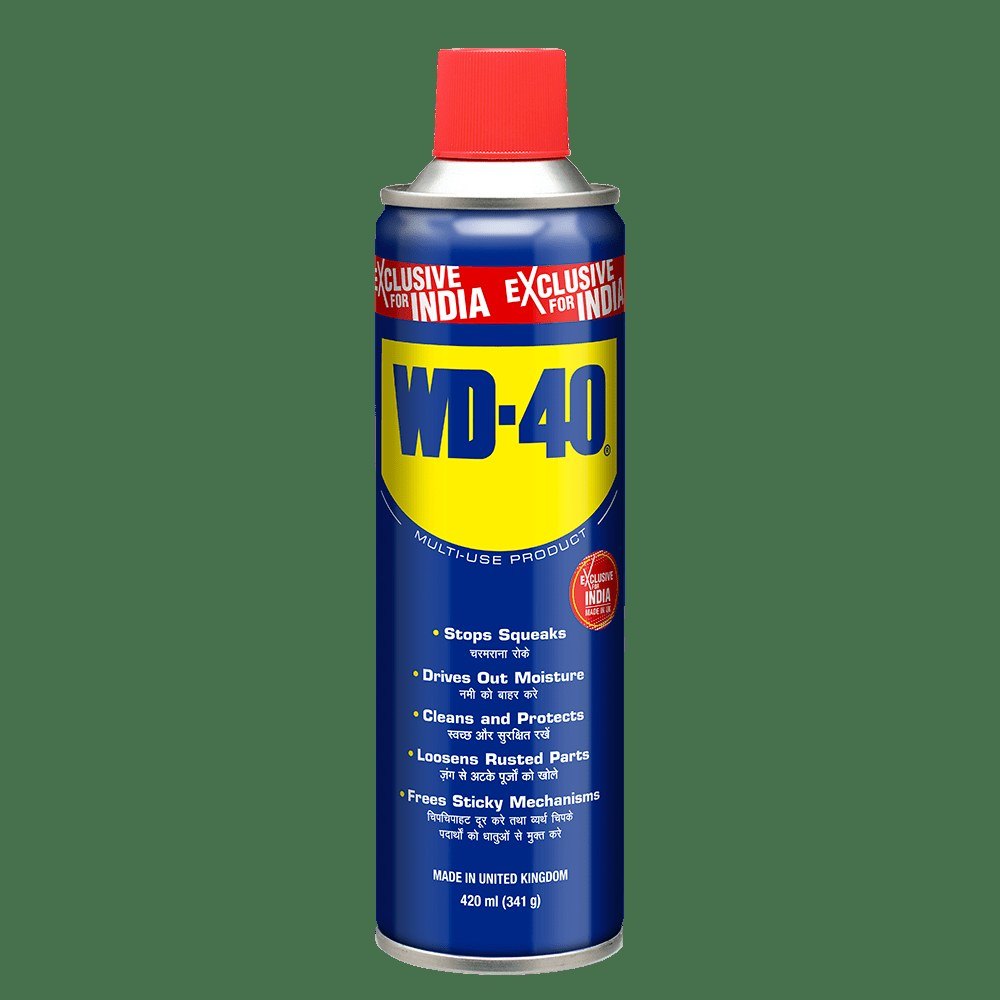
Tip: If the glass is still very stiff after treatment, the motor whines or you hear clicking inside the door, the regulator itself is at fault. Do not hold the switch down when the window sticks, as you may burn out the motor. Take the car to a garage. For general care of metal parts, keep
WD-40 Multi-Use in the garage.
What next
Treat the channels and seals twice a year: in autumn before the frosts and in spring after winter, when you wash off the road salt. Your window regulators will last longer and the glass will not freeze.
These uses come from the experience of WD-40 users in many countries. Always follow the instructions and warnings on the product label.
More guides in «How to use».