An old car sitting in the garage, or a classic that has waited years for attention, can return to the road. Many restoration jobs do not need a workshop: removing rust, preparing the body for paint, fitting new wheels or refreshing the interior can be done on your own or with a friend.
Restoration takes time, but the result is worth it. The key rule is plan first, tools second. In a climate with damp winters and road salt, rust and metal protection deserve special attention.
What you will need
Important: Paint and use solvents only in a well-ventilated space, wearing a respirator and safety glasses. Never apply lubricants to brake discs, pads or tyres.
Step 1
Make a plan and prepare the workspace
Inspect the whole car and list what needs work: body, wheels, interior, individual parts. Decide on the order. Replace worn body parts before painting, otherwise you will waste paint doing the job twice.
Step 2
Strip parts and replace worn ones
Remove everything that would get in the way of painting: lights, trim strips, washer jets, hubcaps, wipers, bumpers. This keeps the parts clean and reveals hidden rust spots.
Old nuts and bolts often seize. Apply WD-40 Specialist Penetrant, give it a few minutes to work into the thread, then undo them. Replace parts that are beyond repair with new or good used ones.
Step 3
Remove rust
Take off most of the rust with a scraper, then finish with a wire brush. Degrease the surface with solvent so the rust converter can do its job.
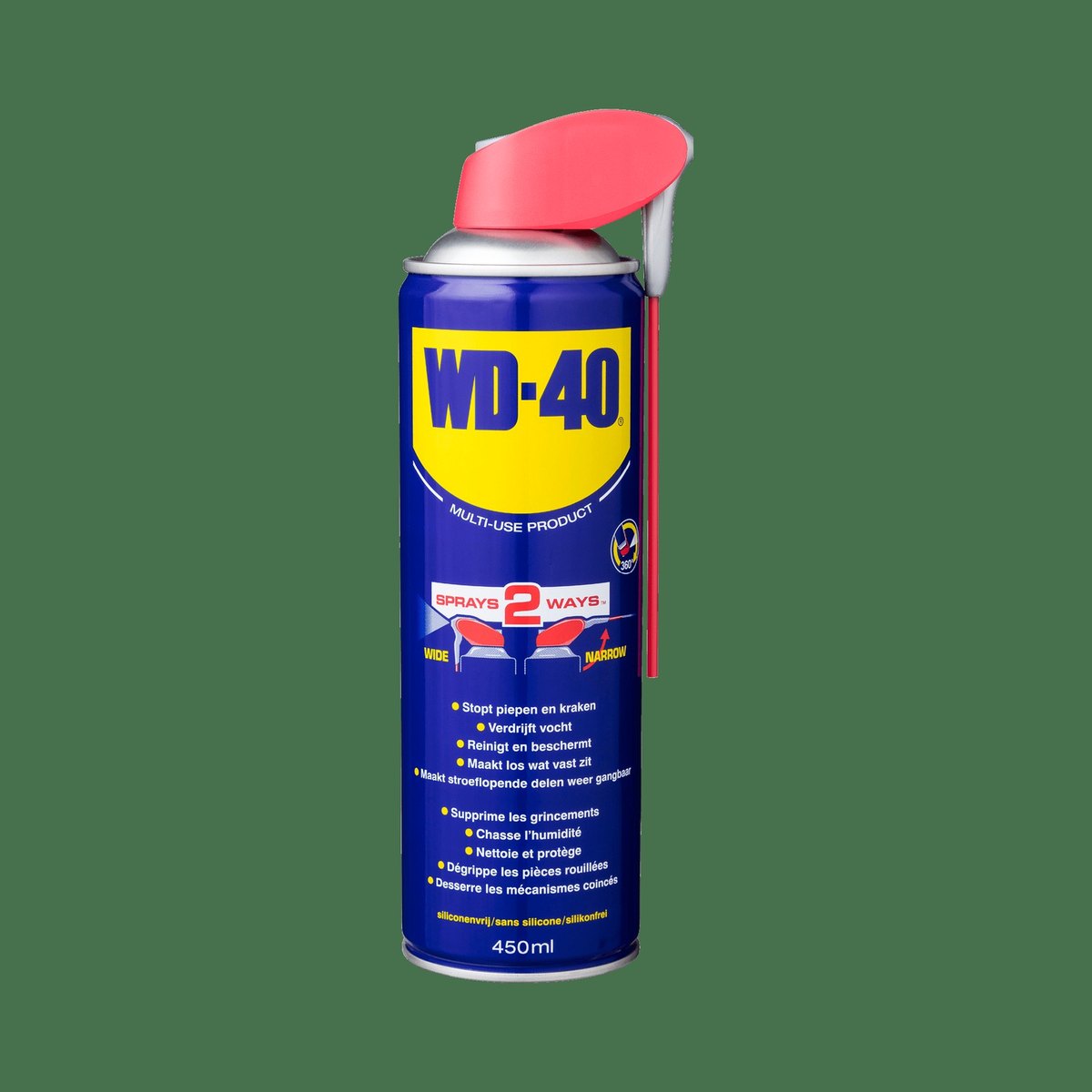
Brush on the converter, add a second coat if needed, and leave it for a day. It also works as a primer for paint. Treat hidden cavities that will not be painted with WD-40 Smart Straw through the thin straw: it displaces moisture and protects the metal.
Step 4
Prepare the body and paint
Wash the car thoroughly, without hot wax. Sand the old paint with P400-P600 paper on a block so the new coat adheres better. Wipe the surface with silicone remover to take off dust and grease.
Paint with a roller or spray gun. When spraying, keep about 30 cm from the surface to avoid runs, and always wear overalls and a respirator.
Step 5
Replace or repair the wheels
New wheels change the look of a car instantly. Make sure size and fitment match the old ones. Pre-treat seized wheel bolts with WD-40 Specialist Penetrant.
Clean rust off the hubs before fitting. Do not lubricate wheel bolt threads, and tighten them with a torque wrench to the car maker's specification.
Step 6
Refresh the interior and lubricate mechanisms
Clean fabric upholstery with a dedicated cleaner or water with washing-up liquid, scrub gently with a soft brush and blot dry. Treat leather with a care product and vacuum the interior.
Lubricate door hinges, check straps and locks with WD-40 Specialist White Lithium Grease. Treat door and boot rubber seals with WD-40 Specialist Silicone so they do not dry out or freeze shut in winter.
Tip: Photograph each assembly before stripping it and keep fasteners in labelled bags.
What next
After the restoration, check the body for new rust once a season, especially after a winter of road salt, and treat hidden cavities with WD-40 Multi-Use. Hinges and locks need lubricating about twice a year.
These uses come from the experience of WD-40 users in many countries. Always follow the instructions and warnings on the product label.
More guides in «How to use».