When servicing a car, motorbike, garden machinery, furniture or workshop equipment, you often find a nut, hinge or linkage that is seized and also tucked away behind a panel, under a housing or next to the engine. The usual culprits are built-up dirt, moisture, oxidation or simply years without lubrication.
In these cases you need precision: no unnecessary dismantling, no flooding the surrounding area and no wasted product. A correctly aimed spray is what matters most.
What you will need
Important: Let the engine cool before working near it, and switch off the power near electrics. Wear safety glasses when spraying upwards or into tight spaces. Keep products off brake discs, pads and drive belts.
Step 1
Locate the point to treat
Work out exactly what is stuck: a nut, hinge, linkage, slide or recessed mechanism. Light the area well with a torch and brush or wipe off surface dirt so the product reaches the metal rather than a layer of dust.
Step 2
Set up precise application
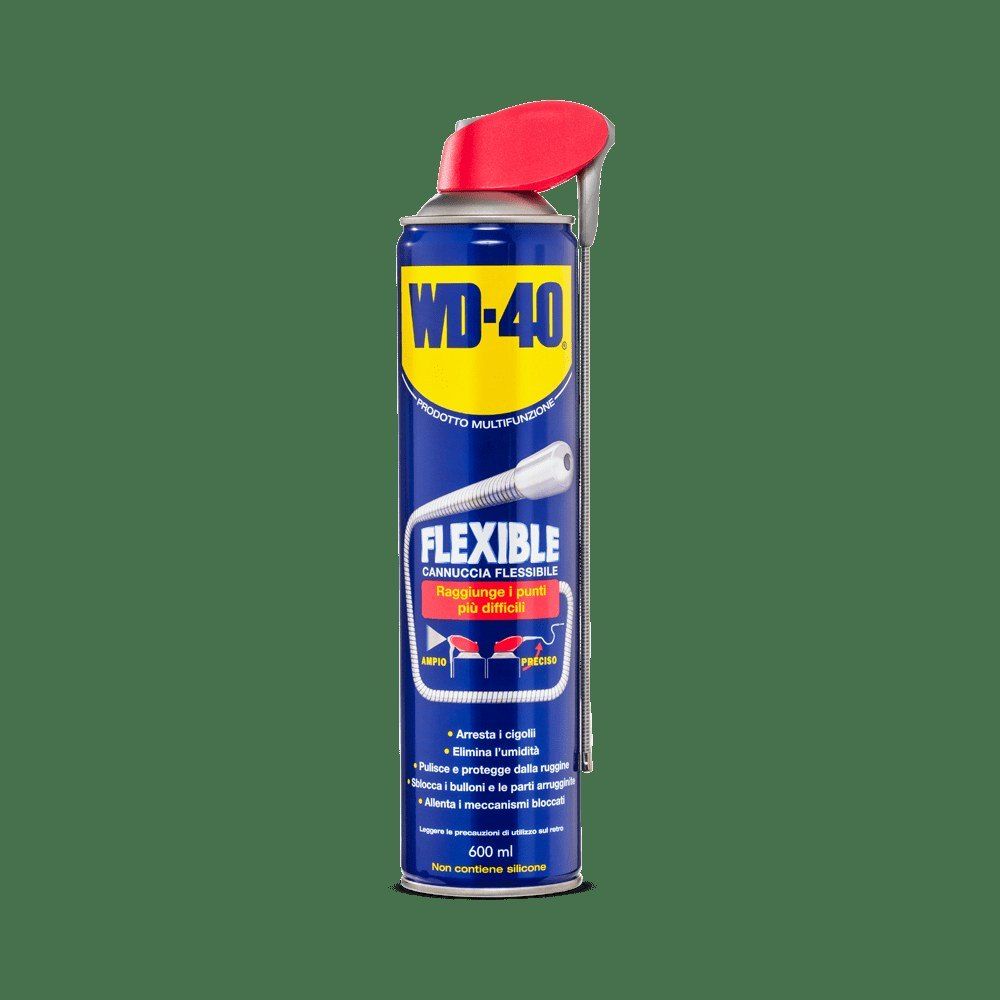
On WD-40 Smart Straw, flip the straw up for a precise jet and aim it straight into the gap. If the spot is hidden behind a panel, under furniture or between closely packed parts, WD-40 Flexible is easier: its bendable straw can be shaped to the angle you need and holds that shape while you spray.
Step 3
Apply the product
Spray a small amount directly onto the problem area, keeping the jet steady. On hinges, slides and linkages, apply along the zone of movement.
For seized nuts and bolts, WD-40 Specialist Penetrant is the better choice: it works its way into threads and under rust. Give it a few minutes, and with heavy corrosion reapply and wait longer before reaching for the spanner.
Step 4
Work the mechanism
Slowly move the treated part to spread the lubricant evenly. With a nut, tighten it slightly first and then undo it, which helps break the rust. If movement is still stiff, apply a little more and repeat.
Step 5
Remove the excess
Wipe off surplus product with a clean cloth, especially near plastic panels, rubber parts and fabric. Leave the area clean, as excess lubricant attracts dust and dirt.
Tip: Always fold the straw down between uses and store the can upright. That way the product comes out as a precise jet next time, without spattering.
What next
Check hard-to-reach parts that work in dirt and moisture, such as linkages under a car or mechanisms on garden machinery, every spring and autumn. A preventive spray takes a minute and saves you from rounded nuts and lengthy dismantling.
These uses come from the experience of WD-40 users in many countries. Always follow the instructions and warnings on the product label.
More guides in «How to use».