Autumn downpours, slush and de-icing salt on city roads are harder on a bike than any summer trail. Water washes lube out of the chain, salt settles on sprockets, bolts and cables, and after a few weeks of neglect the drivetrain turns orange.
If you keep riding through winter, a few simple habits will make your rides safer and keep the parts in good shape until spring.
What you will need
Important: Keep WD-40 and lubricants off brake discs, pads and the braking surface of the rims. Check the brakes before every ride: stopping distances get longer in the rain.
Step 1
Do a safety check before riding
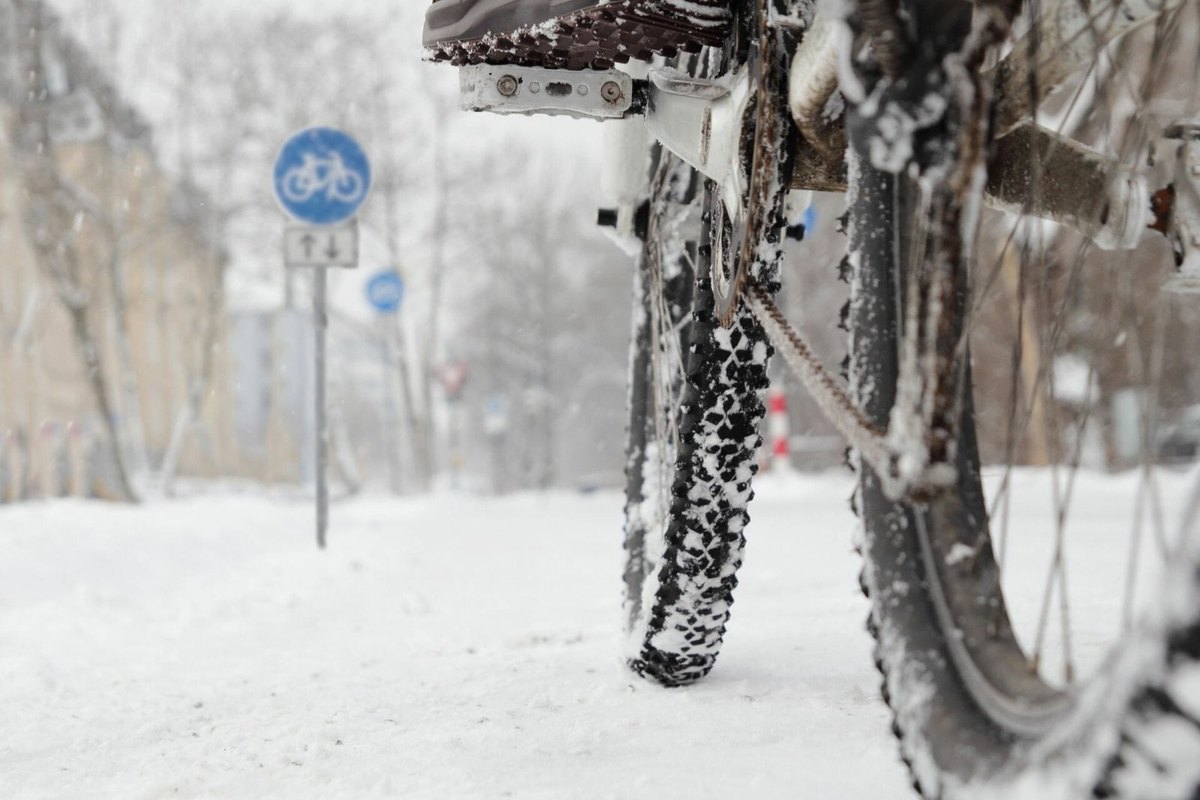
Make sure the front and rear lights work and are charged, the tyre tread is not worn and the brakes stop the bike firmly. It gets dark early in winter, so add reflectors to your clothing and bike. On snow and ice, lower the tyre pressure slightly, within the range on the sidewall, for better grip.
Step 2
Wash more often than in summer
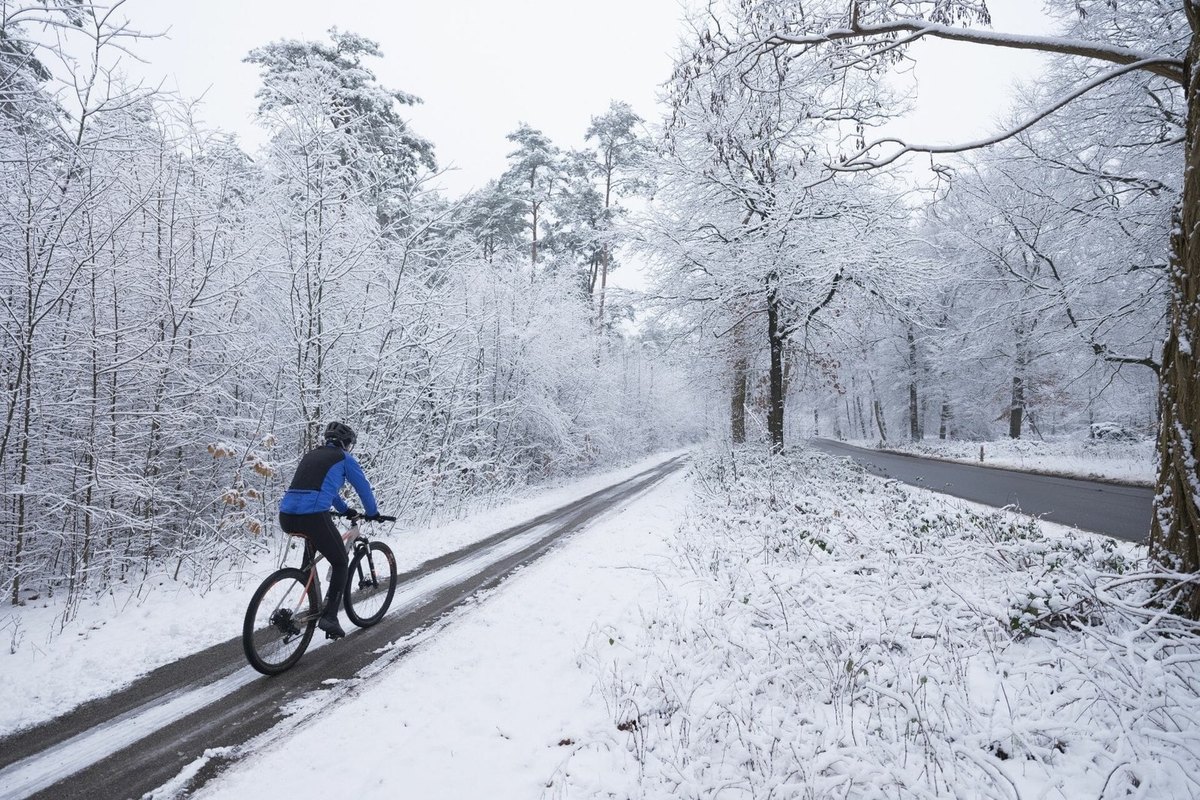
After rides on salted roads and through puddles, rinse the dirt off with warm water and a sponge before the salt dries. Work from top to bottom and use brushes around the bottom bracket, derailleurs and brakes. Avoid strong water pressure near bearings. Dry the bike thoroughly afterwards.
Step 3
Drive moisture out of the metal
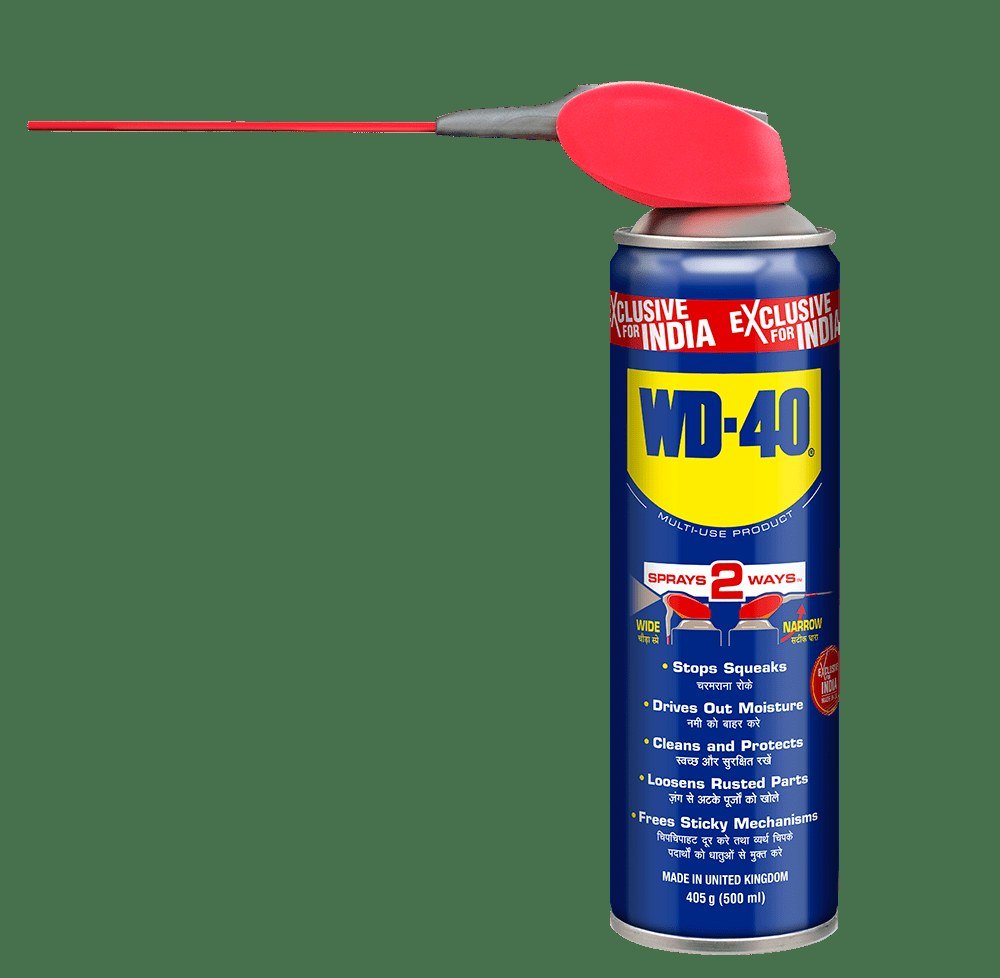
After washing or a wet ride, treat bolts, cables where they enter the housing, derailleur pivots, spoke nipples and chrome parts with WD-40 Smart Straw. It displaces water and leaves a thin anti-rust film. Wipe off the surplus with a dry rag in circular motions. Cover the brakes with a rag.
Step 4
Degrease the chain
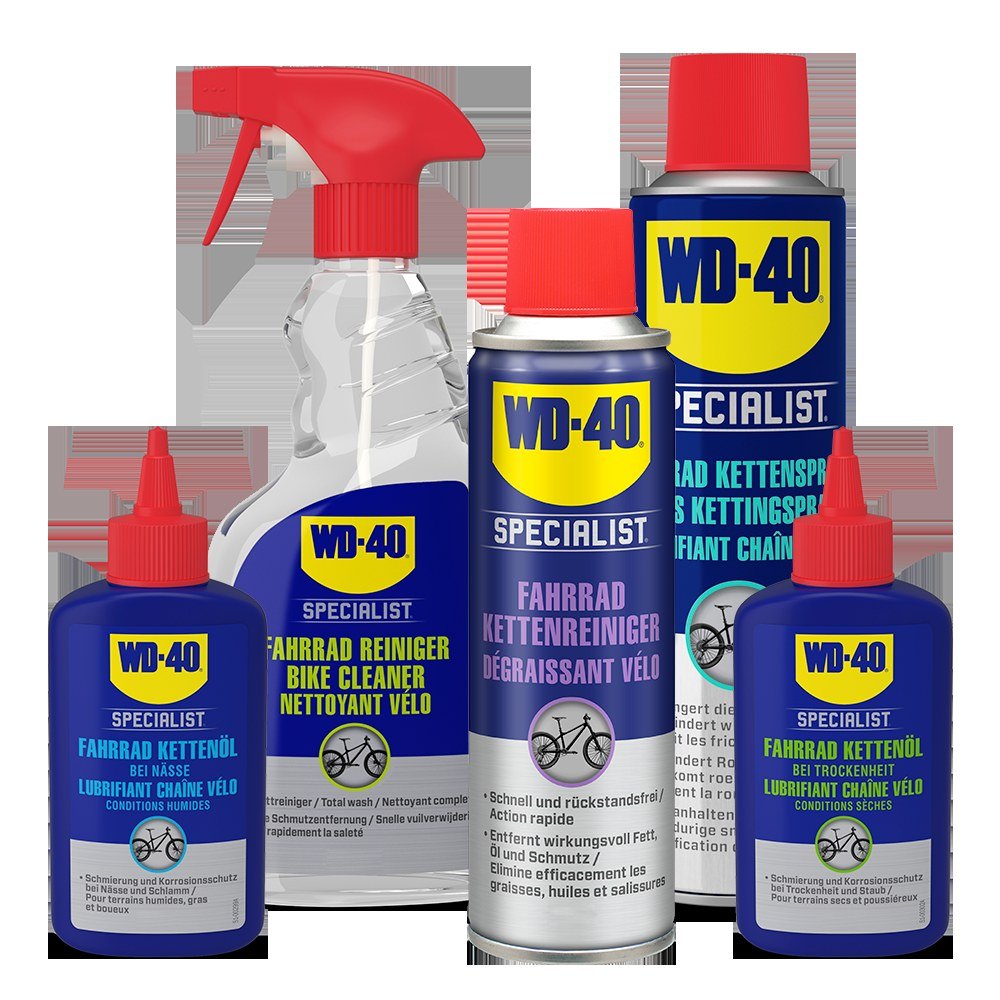
Before switching to winter lube, remove the old lube along with the grit and salt. Apply WD-40 Bike Degreaser to the chain while turning the pedals, scrub with a brush, rinse and let it dry completely.
Step 5
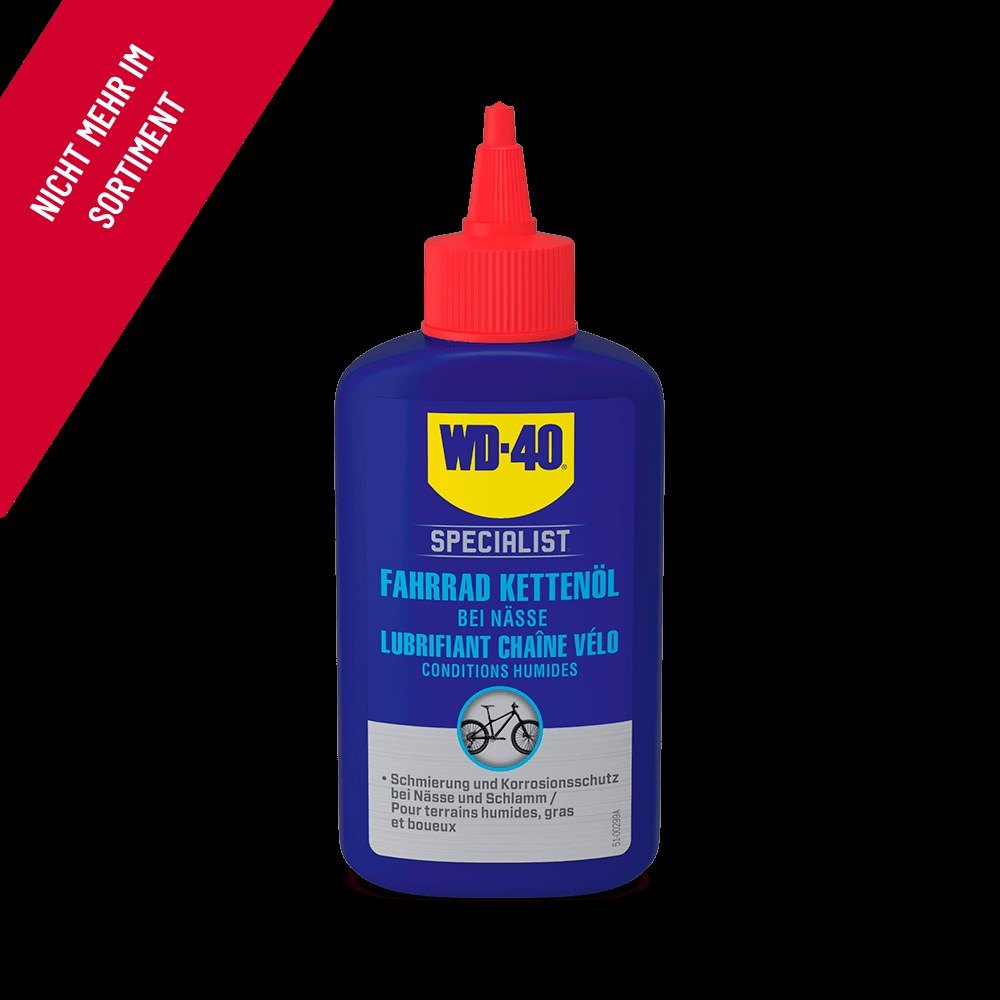
Lube the chain with wet lube
Apply WD-40 Bike Wet Chain Lube to the inside of each link. It is made for rain and snow: it resists wash-off and protects against corrosion. Then turn the pedals and shift through all the gears so the lube spreads over the sprockets, and wipe off the excess.
Step 6
Store it properly and see a mechanic when needed
Do not leave the bike on a balcony under the snow: a dry storeroom, hallway or a cover is better. If something squeaks, shifting misbehaves or the brakes feel weak and you are not sure why, take the bike to a mechanic before a small fault becomes an expensive repair.
Tip: Fit full-length mudguards. They shield not only you but also the bottom bracket, derailleur and chain from spray, so far less water and salt reaches the drivetrain.
What next
During the wet and salty season, wipe the chain after every wet ride and degrease and lube it weekly or every 100-150 km. In spring, give the drivetrain a full clean and switch back to dry lube.
These uses come from the experience of WD-40 users in many countries. Always follow the instructions and warnings on the product label.
More guides in «How to use».