Older timber windows and French doors often use a classic cremone bolt: a central handle driving two metal rods, one upwards and one downwards. Turning the handle pushes the rods apart so their ends engage in metal keepers on the fixed frame. The rods are held by guide plates screwed to the sash.
Over the years the mechanism clogs with dust, the rods are buried under layers of paint, and the handle becomes stiff, slips or jams. This can almost always be cured by dismantling, cleaning and lubricating, with no need for new hardware.
What you will need
Important: Never force a jammed handle: the cast body of old cremone bolts is brittle and can crack. Lubricate the mechanism first and give the product a few minutes to work.
Step 1
Dismantle the bolt
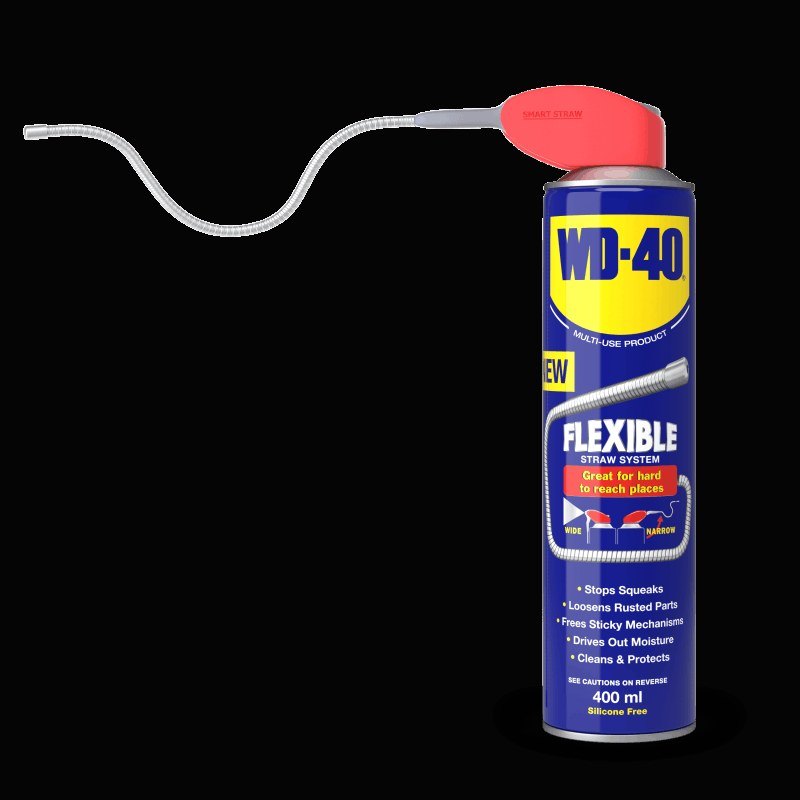
Unscrew the metal guide plates that hold the rods on the sash and remove the handle. The rods are then free and can be taken out. If the screws are seized or clogged with paint, spray them with WD-40 Smart Straw, wait a few minutes and clear the paint from the slots so the screwdriver does not slip.

Step 2
Clean up the rods
Lightly sand the rods with fine paper, especially the lower part that rubs against the sash. The aim is to remove paint applied after the hardware was fitted. Sand back to the metal only, without removing any of it.
Step 3
Lubricate the handle mechanism
Brush the handle mechanism thoroughly to remove dust and old, thickened grease. Then lubricate it with WD-40 Multi-Use so the handle turns easily, paying particular attention to where the mechanism connects to the rods. The thin straw of Smart Straw reaches inside the housing without further dismantling.

Step 4
Lubricate the rods and guides
Treat the guide plates and the lower part of the rods that rub against the sash with WD-40 Specialist Silicone. The silicone film reduces friction and wear, dries to the touch quickly and does not collect dust the way heavy grease does. Do not forget the metal keepers on the frame where the rod ends engage.
Step 5
Reassemble and test
Fit the rods, mount the handle and screw the guides back in place. Turn the handle several times: the rods should move smoothly and engage firmly in the keepers. Wipe any excess product off the timber with a cloth.
Tip: If the window does not pull in tightly, check the keepers on the frame: they often end up out of line as the timber shrinks. Moving a keeper by a few millimetres is sometimes all it takes for the sash to close snugly again.
What next
Treat the mechanism with WD-40 Multi-Use once a year, ideally in autumn before the cold, when windows are shut more tightly. When repainting the frames, always remove the hardware or mask it with tape.
These uses come from the experience of WD-40 users in many countries. Always follow the instructions and warnings on the product label.
More guides in «How to use».