An electric soldering iron consists of an insulated handle, a heating element and a copper tip. Three types are common at home: the soldering gun, whose tip heats up within seconds of pressing the trigger; the temperature-controlled soldering station with a separate control unit; and the heavy copper iron with a large head for tinning big parts and plumbing work.
The most vulnerable part of any iron is the tip. It oxidises, burns, collects flux residue and gradually transfers heat less well. Regular care extends tip life and keeps your joints clean and reliable.
What you will need
Important: Apply aerosol products only to a completely cold iron that is unplugged: they are flammable. Let them evaporate fully before switching on, and work in a ventilated room.
Step 1
Clean a removable tip
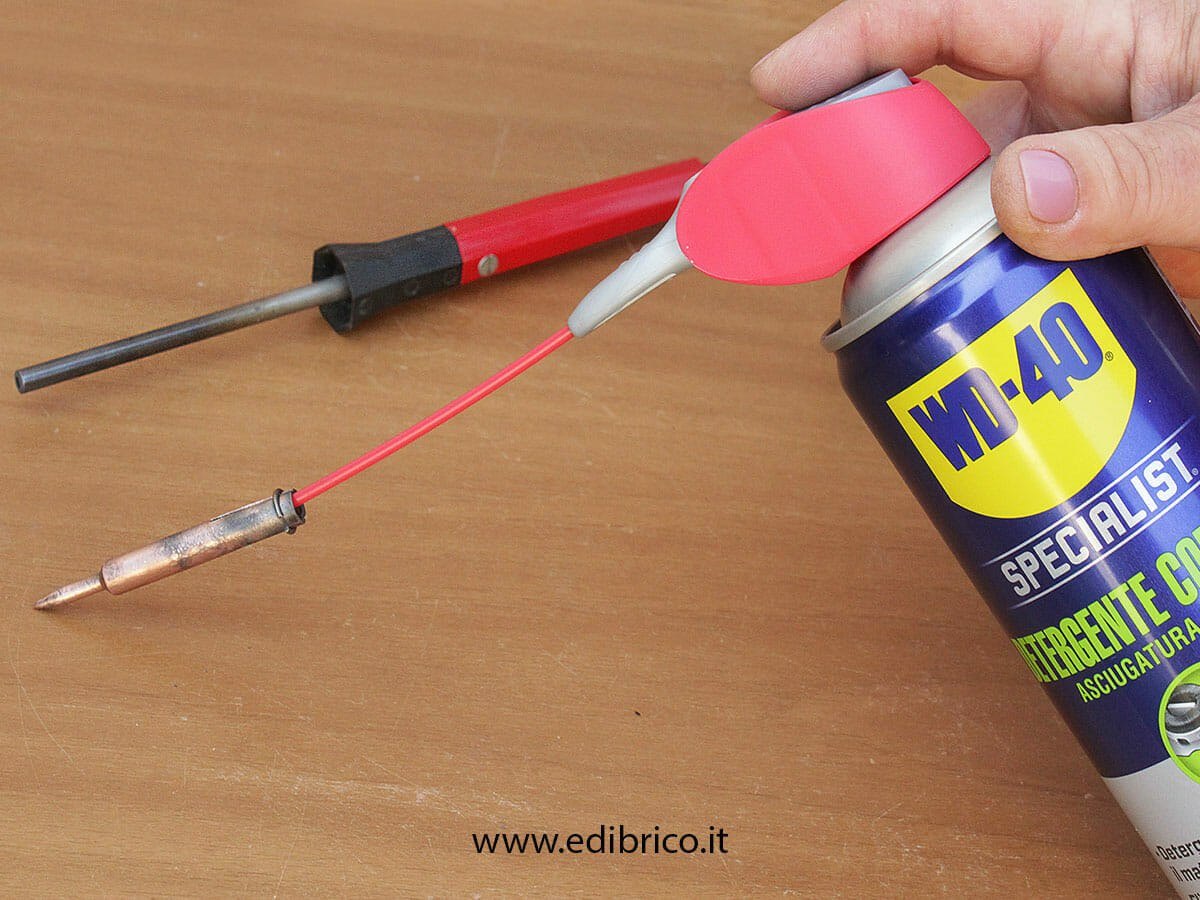
The most common tips are conical or screwdriver shaped and slide into the heater tube. Remove the cold tip and clean off old solder, flux and carbon with brass wool or a brass brush. Rub badly burnt areas lightly with fine abrasive paper, removing no more of the plating on the point than necessary.
Before refitting, treat the socket with WD-40 Specialist Contact Cleaner: it removes oxides and dust, evaporates quickly and improves thermal contact between tip and heater. Wait until it is completely dry.
Step 2
Free a tip held by a screw
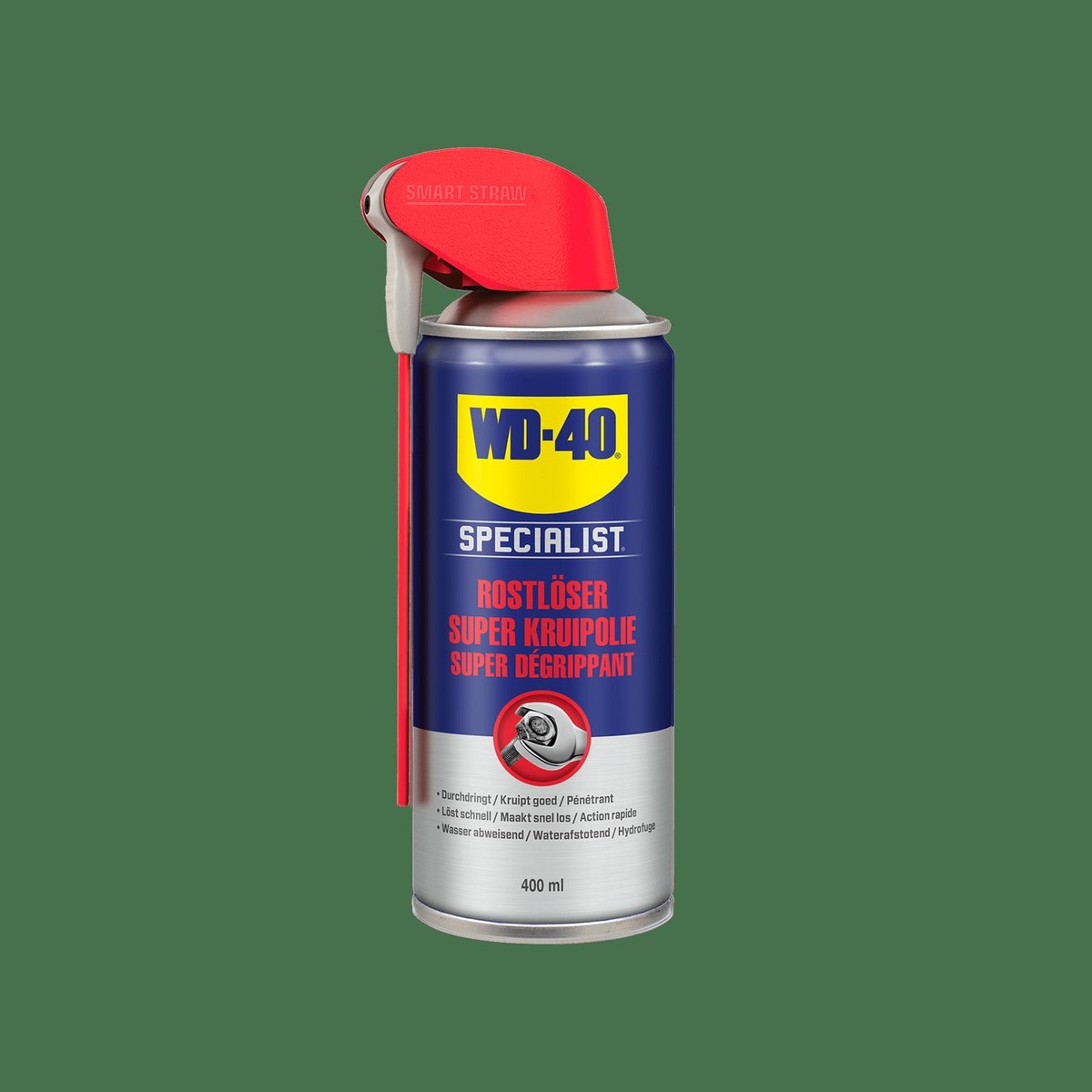
Flat and heavy tips are often inserted into the heater tube and held by a set screw. Constant heat makes the screw and tip seize. If the screw will not turn, put a drop of WD-40 Specialist Penetrant on it while the iron is cold, wait a few minutes, loosen the screw and twist the tip out. Wipe off any residue.
Step 3
Service a soldering gun
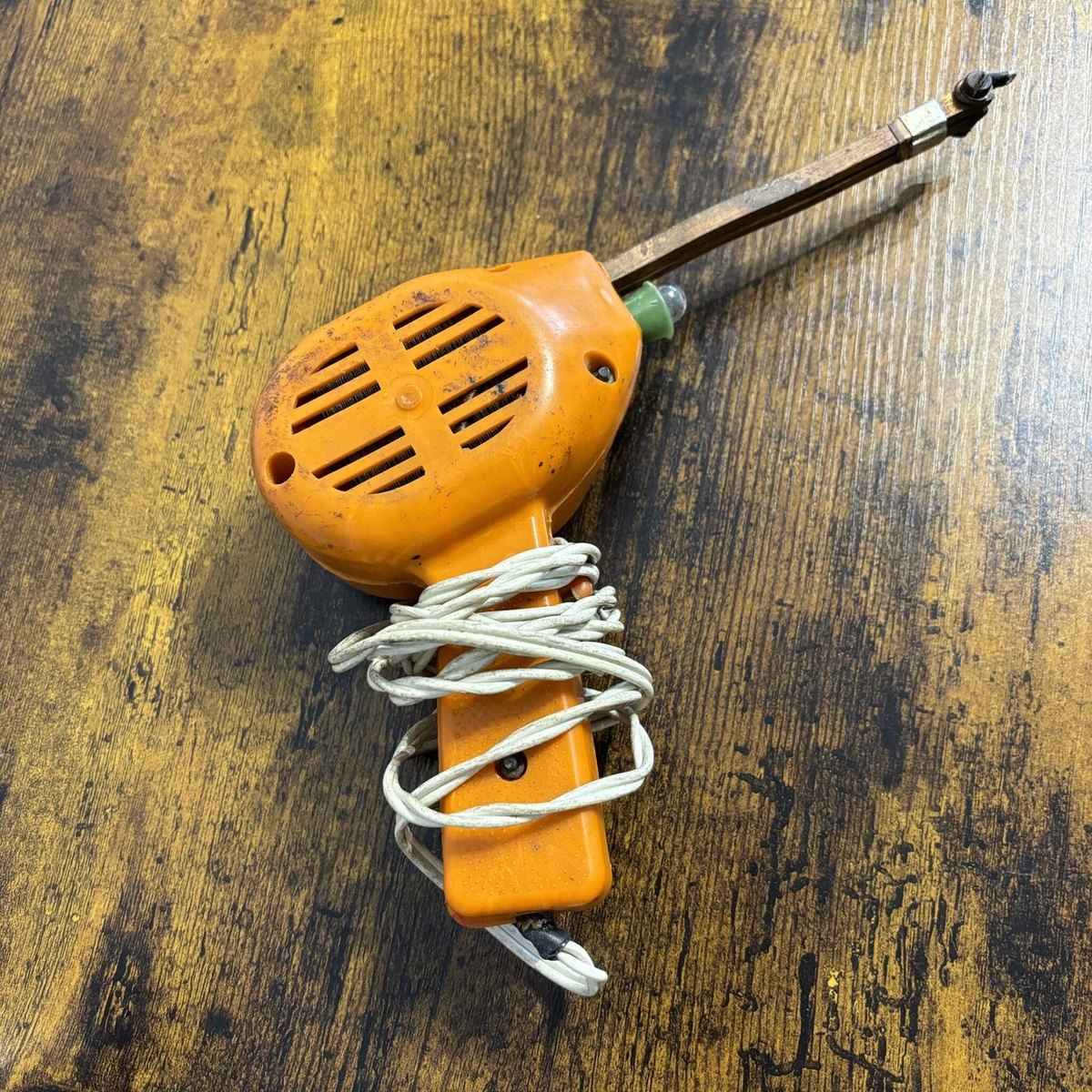
A soldering gun tip is a bent wire loop clamped in its holders by two nuts. Undo the nuts, clean the tip with a brush and abrasive paper and refit it. These tips wear quickly, so a thinned or burnt one is best replaced straight away.
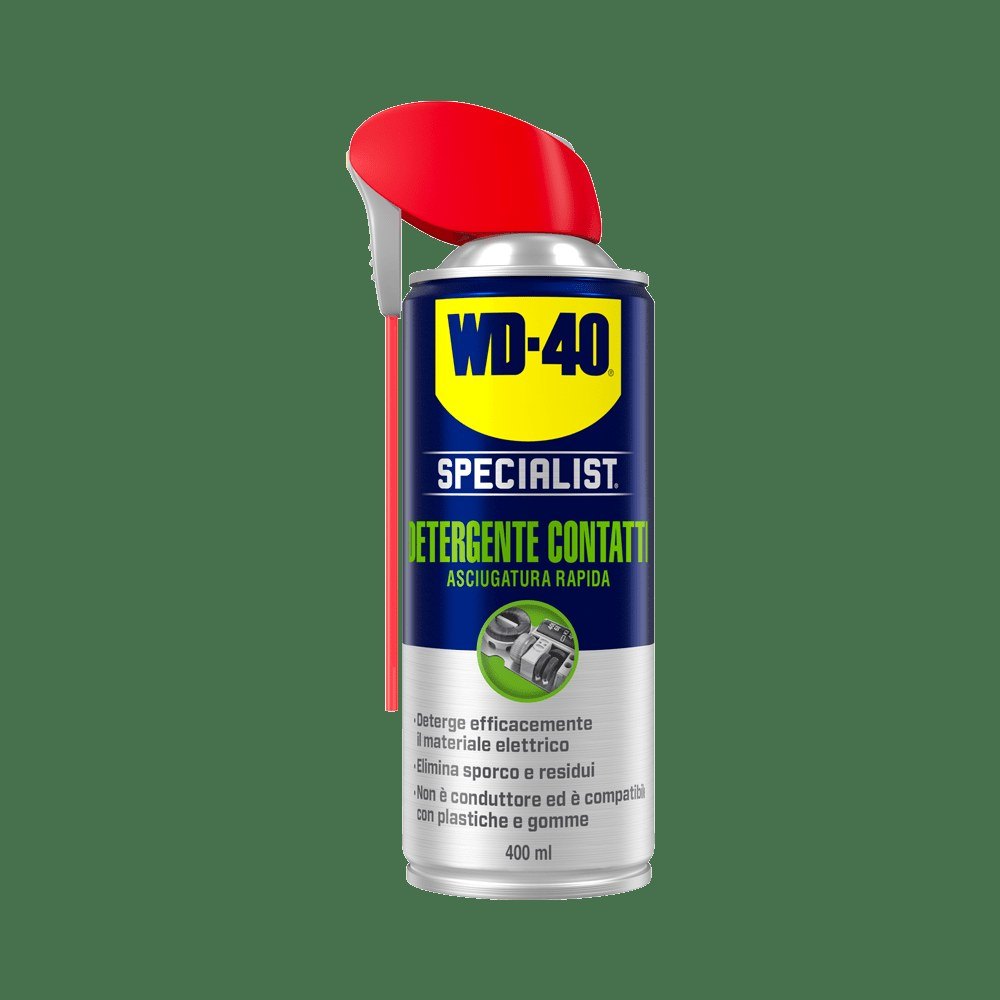
Clean the clamping points with WD-40 Specialist Contact Cleaner: a clean contact gives steady heating and does not burn.
Step 4
Look after a copper iron
Keep a copper iron switched on only as long as the work requires, so the element does not overheat. After soldering, while the tip is hot, wipe off excess tin with a rag or paper. If the tip has blackened before next use, remove the oxide with a smooth-cut file, heat it and tin it immediately with fresh solder. You can also dip the hot tip into a dedicated tip tinner to clean it.
Step 5
Care for the cable, contacts and storage
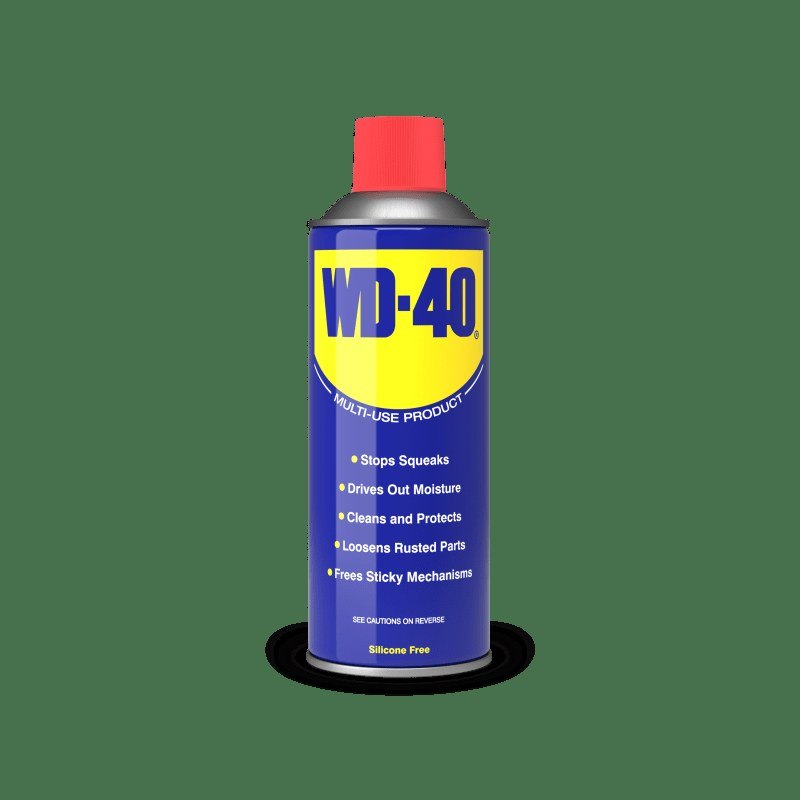
Wipe the cable and body with a cloth dampened with WD-40 Multi-Use: it removes dust and greasy dirt and helps keep the insulation supple. Treat the metal stand and external metal parts the same way against rust, then wipe them dry. Clean the plug and soldering station connectors with WD-40 Specialist Contact Cleaner.
Before long storage, tin the hot tip with a fresh layer of solder: the tin protects the copper from oxidation. Store the iron somewhere dry.
Tip: While working, wipe the tip on a damp sponge or brass wool before every joint, and never leave a hot iron without solder on its point: a well-tinned tip lasts many times longer.
What next
Clean the tip after every session, and once a year, even if the iron has been idle, check the cable, contacts and tip fixing. The same WD-40 Specialist Contact Cleaner is useful for maintaining other power tools in the workshop.
These uses come from the experience of WD-40 users in many countries. Always follow the instructions and warnings on the product label.
More guides in «How to use».