An aluminium ladder is light and does not rust like steel, but without care it soon loses its looks and, more importantly, its reliability. Building dust, paint, lime and moisture get into the hinges and locks, a white oxide bloom forms on the profile and the sections of an extension ladder start to stick.
Servicing takes half an hour and you never need to climb the ladder: it is all done from the ground. A clean ladder with working locks is safer to use.
What you will need
Important: Never apply any lubricant to rungs, platforms or rubber feet, as they will become slippery. If product gets onto a rung, degrease it thoroughly with soapy water and dry it.
Step 1
Open out and wash the ladder
Open the ladder on firm, level ground. You do not need to stand on it: every step is done from the ground. Hose the ladder down and wipe off the dust with a damp cloth.
If it has been stored outdoors or used on site, scrub off dried mortar and dirt with a stiff brush. Let the ladder dry completely before the next step.
Step 2
Treat the dirty areas
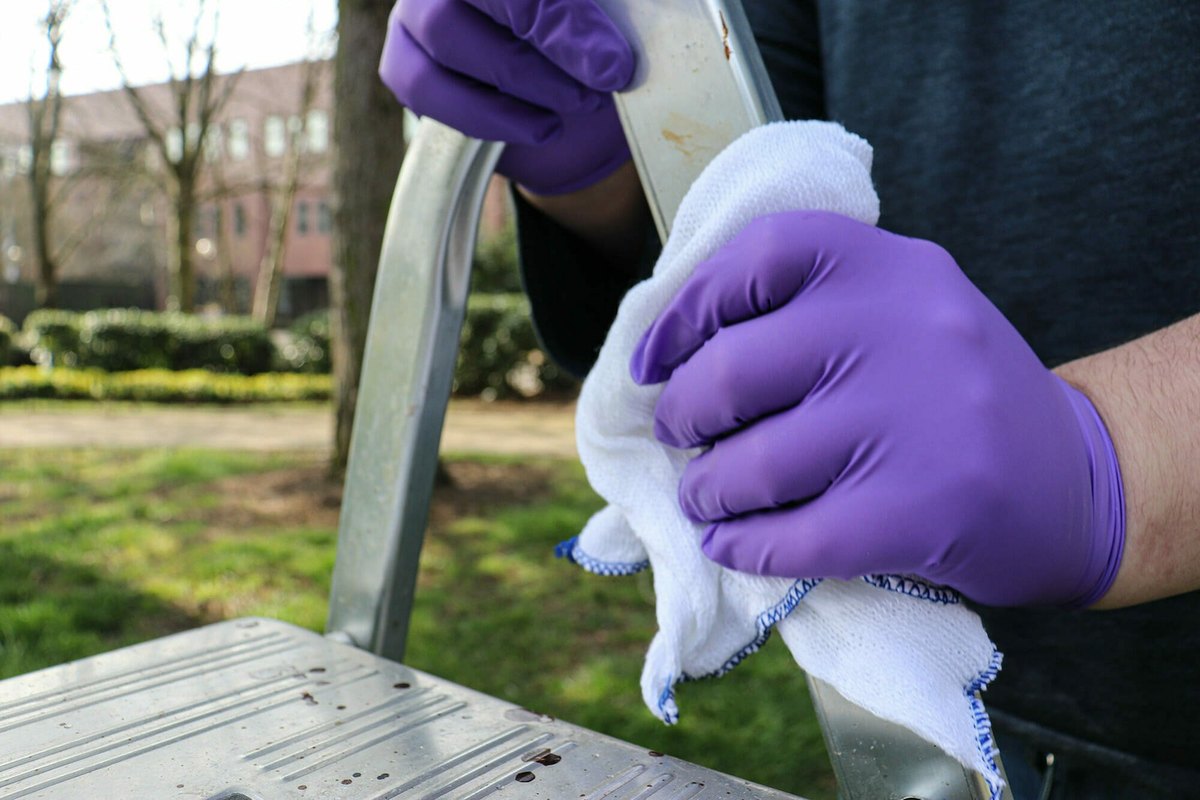
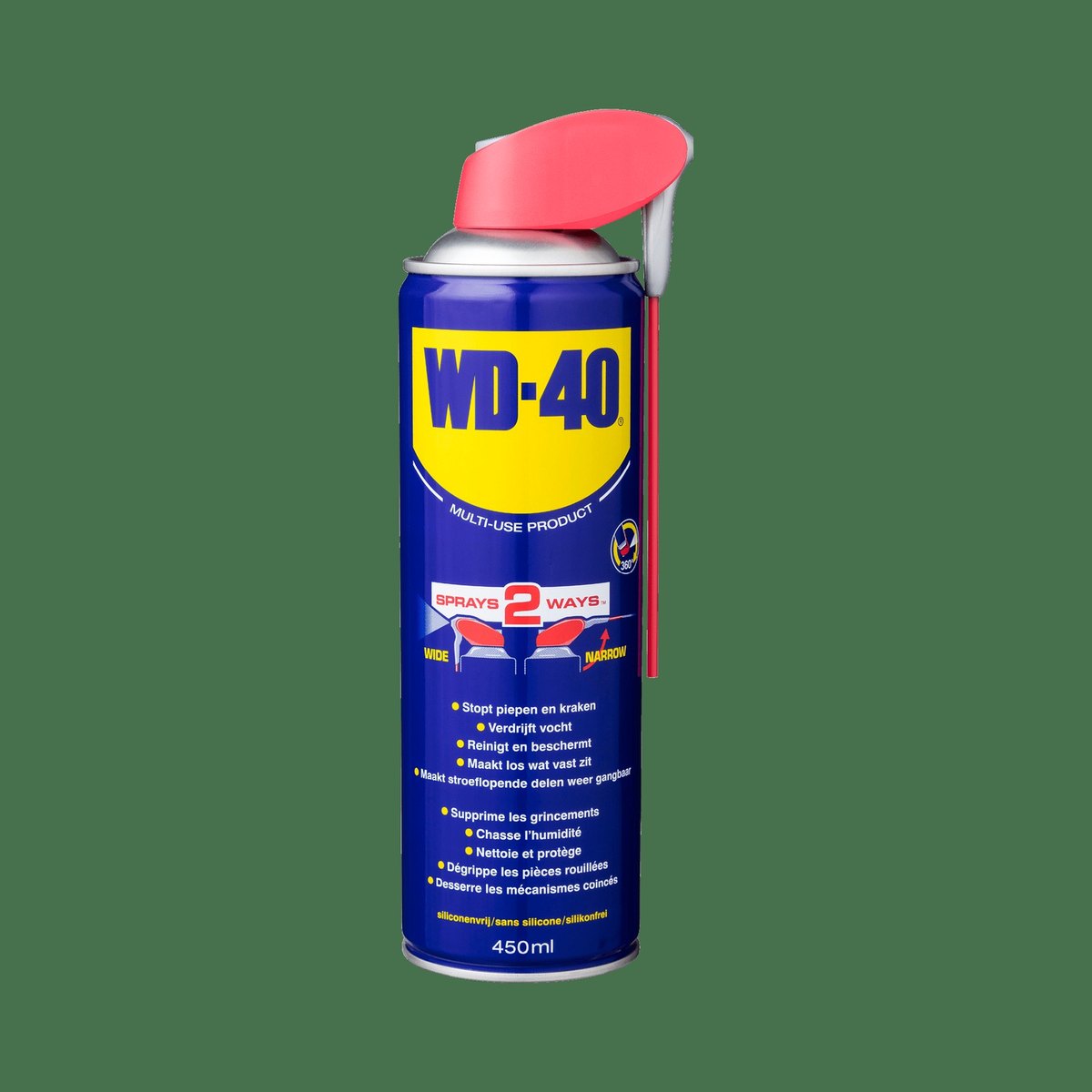
Moisten a microfibre cloth with WD-40 Multi-Use and wipe the dirty parts of the stiles: tape residue, paint, grease marks and white oxide bloom. Do not spray onto rungs, plastic caps or rubber. Leave for 5-10 minutes to soften the dirt.
Step 3
Remove deposits and rust from metal parts
The steel parts of a ladder (rivets, bolts, hinges, hooks) can rust. Wipe them with the cloth and use the brush where there is a deposit. The product displaces moisture and leaves a protective film, so corrosion returns much more slowly.
Step 4
Lubricate hinges and locks
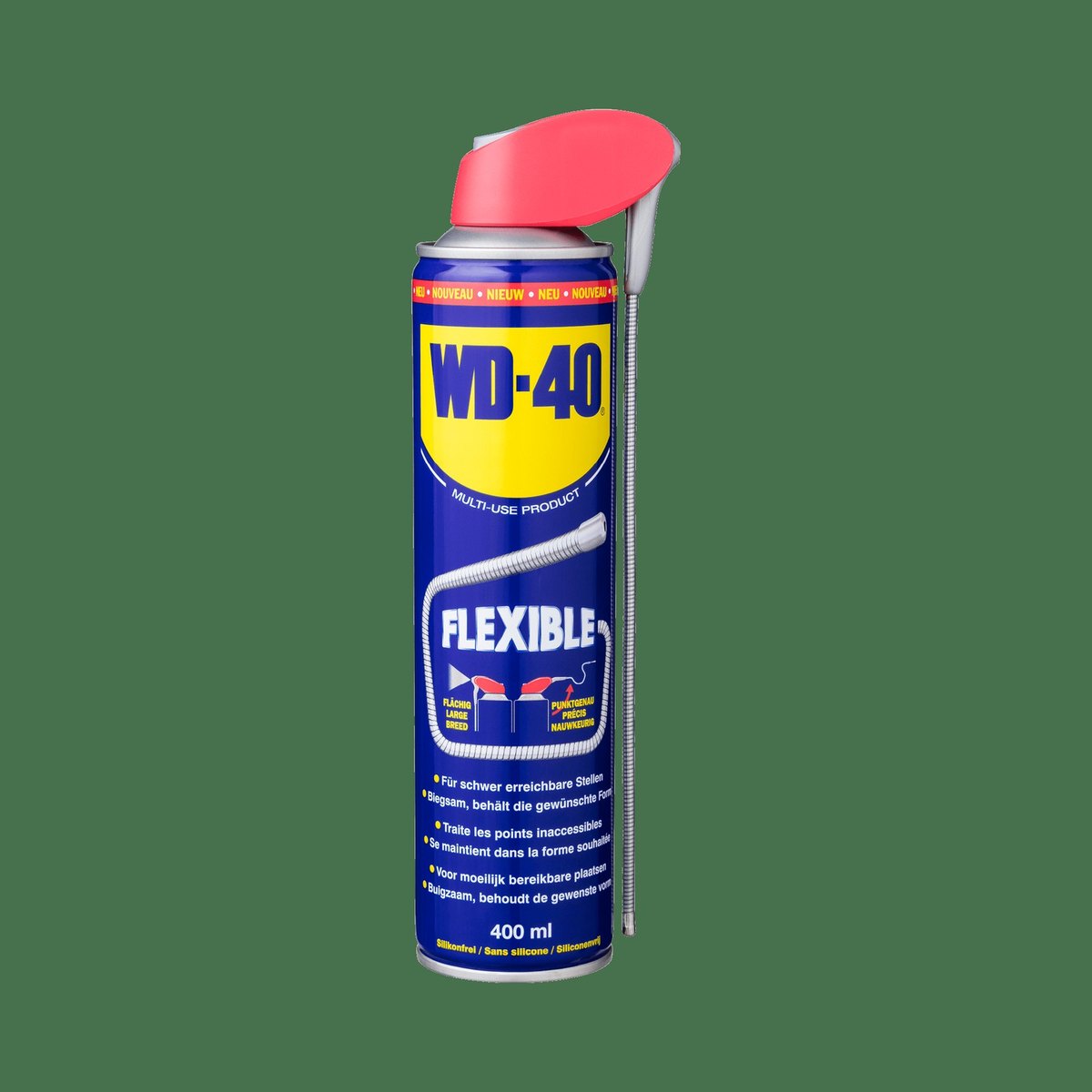
Use the narrow straw of WD-40 Smart Straw to apply the product to hinges, spring locks and section catches. Fold and unfold the ladder several times: the mechanism should move freely and click firmly into each locked position.
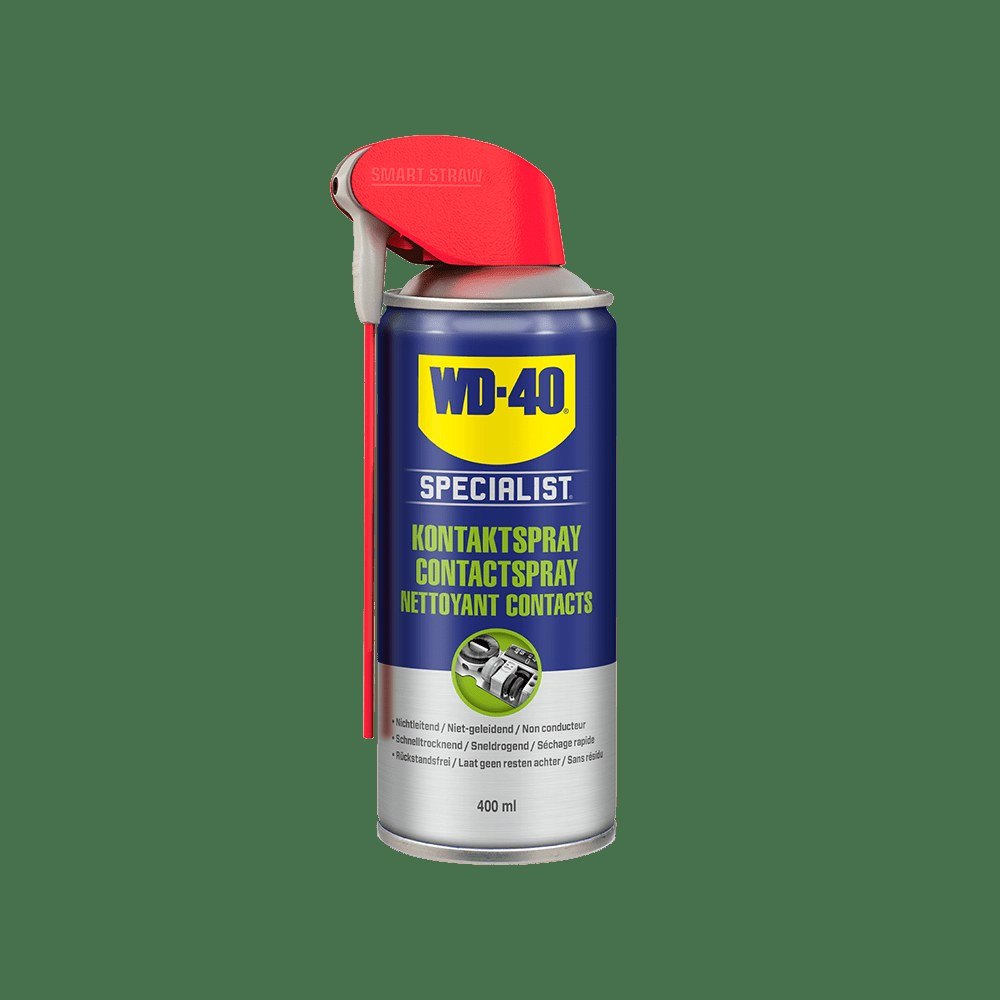
Treat the guides of the extension sections with WD-40 Specialist Silicone: silicone gives an easy glide and attracts less dust.
Step 5
Wipe off the excess and dry
Wipe surplus product from every treated area with a clean cloth or kitchen paper. Check once more that the rungs are clean and dry. Let the ladder dry before using it.
Tip: After every job on a building site, wash off dust and mortar straight away: dried lime and cement attack the anodised finish of aluminium much faster than ordinary dirt.
What next
Store the ladder somewhere dry and enclosed rather than outdoors. Wash it after dirty jobs and treat the hinges and locks with WD-40 Smart Straw every few months or as soon as the mechanism feels stiff.
These uses come from the experience of WD-40 users in many countries. Always follow the instructions and warnings on the product label.
More guides in «How to use».