An e-bike needs closer care than a standard bike, even over the same distance. It is heavier, so the chain, sprockets and brake pads wear faster. The motor and battery are well protected, but moisture, mud and winter road salt slowly reach the connectors, and the control unit, display and wiring dislike pressurised water and stray lubricant.
There is a quick routine before and after every ride, and a thorough service at the end of the season or twice a year. Consider your model: mid-drive or hub motor, battery in the frame or on the rack.
What you will need
Important: Switch the system off and remove the battery before washing or working on the drivetrain. Never use a pressure washer: the jet forces water into bearings, the motor and connectors.
Step 1
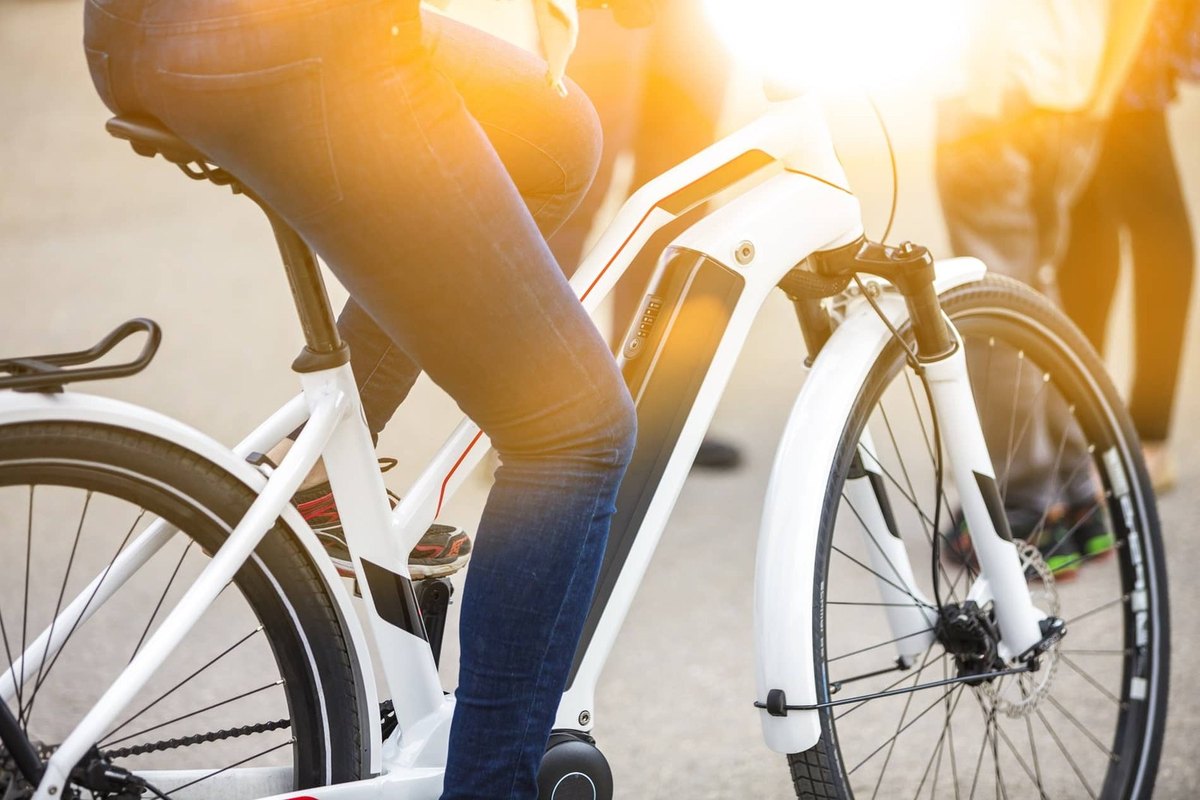
Wash the bike without pressure
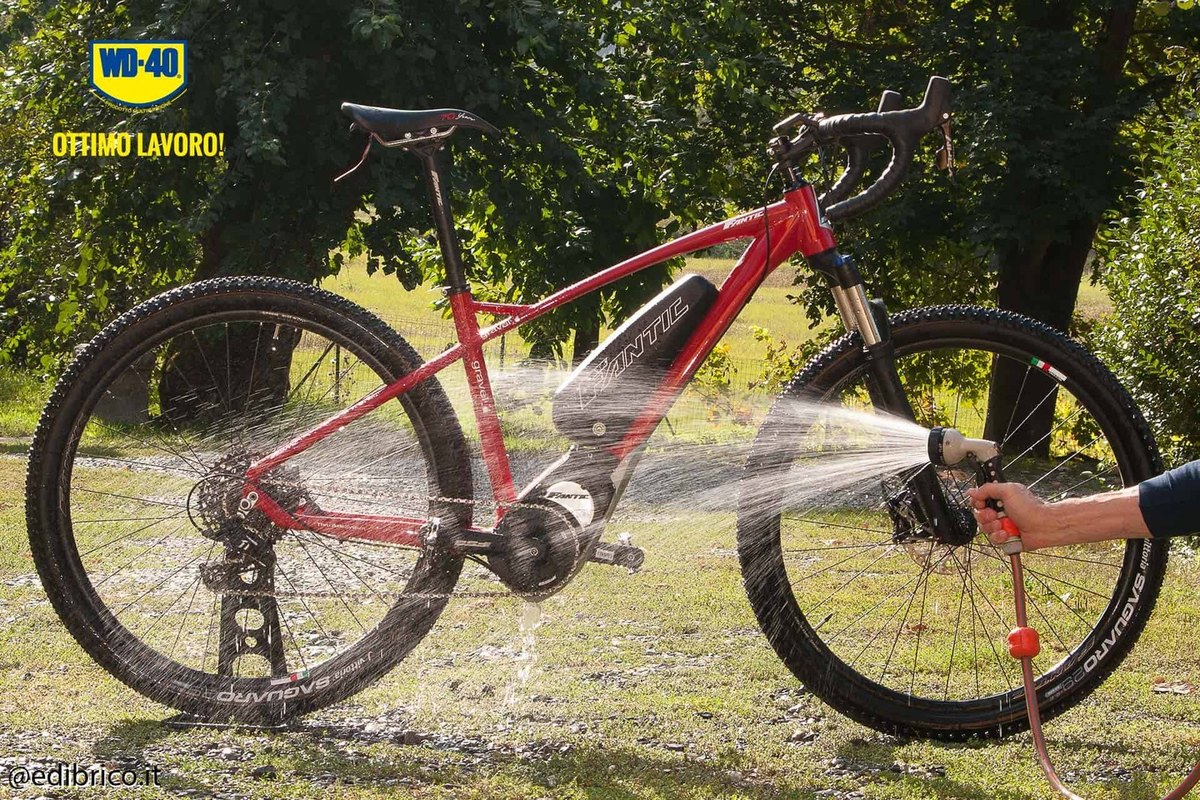
Remove the battery and cover the frame connector if there is a cap. Rinse a very dirty bike first with a gentle hose to soften the mud.
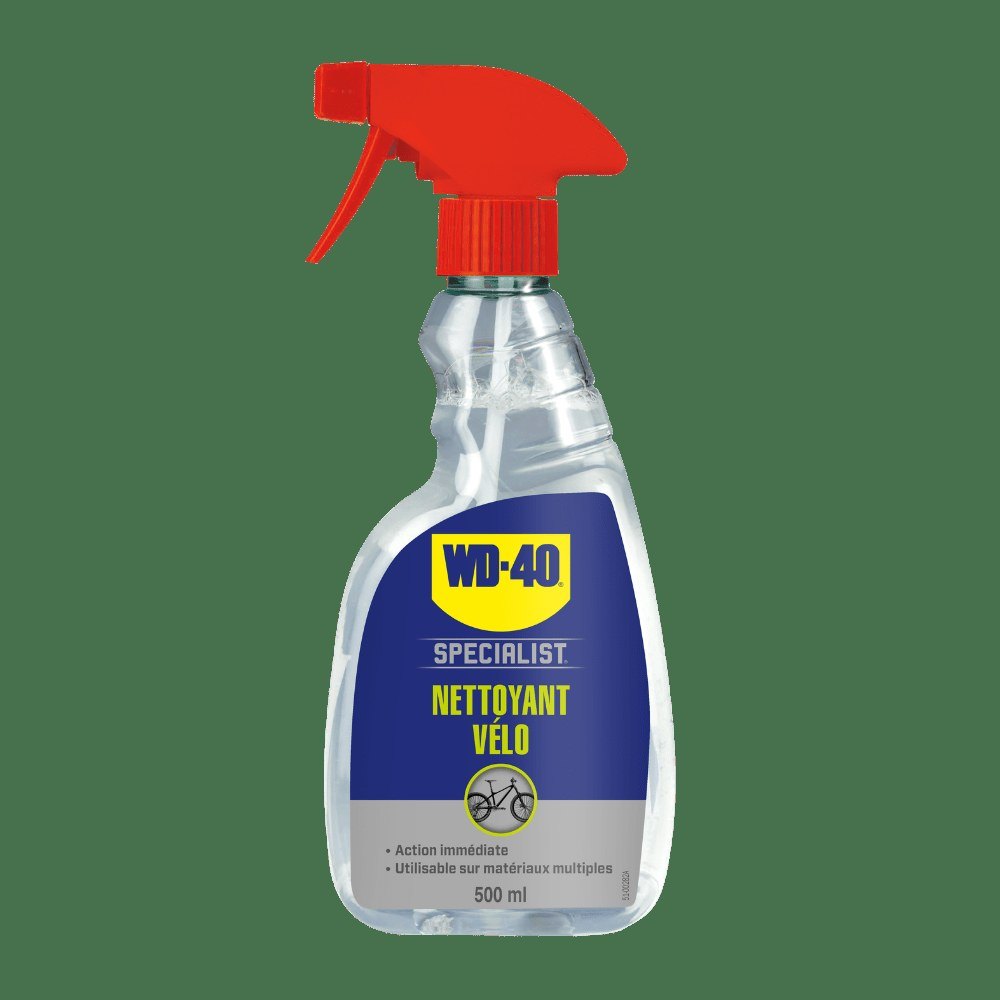
Apply a mild cleaning agent, leave it for a few minutes, work it in with a brush, then rinse with clean water. Dry thoroughly, especially around the motor, display and battery cradle.
Step 2
Clean and lubricate the chain
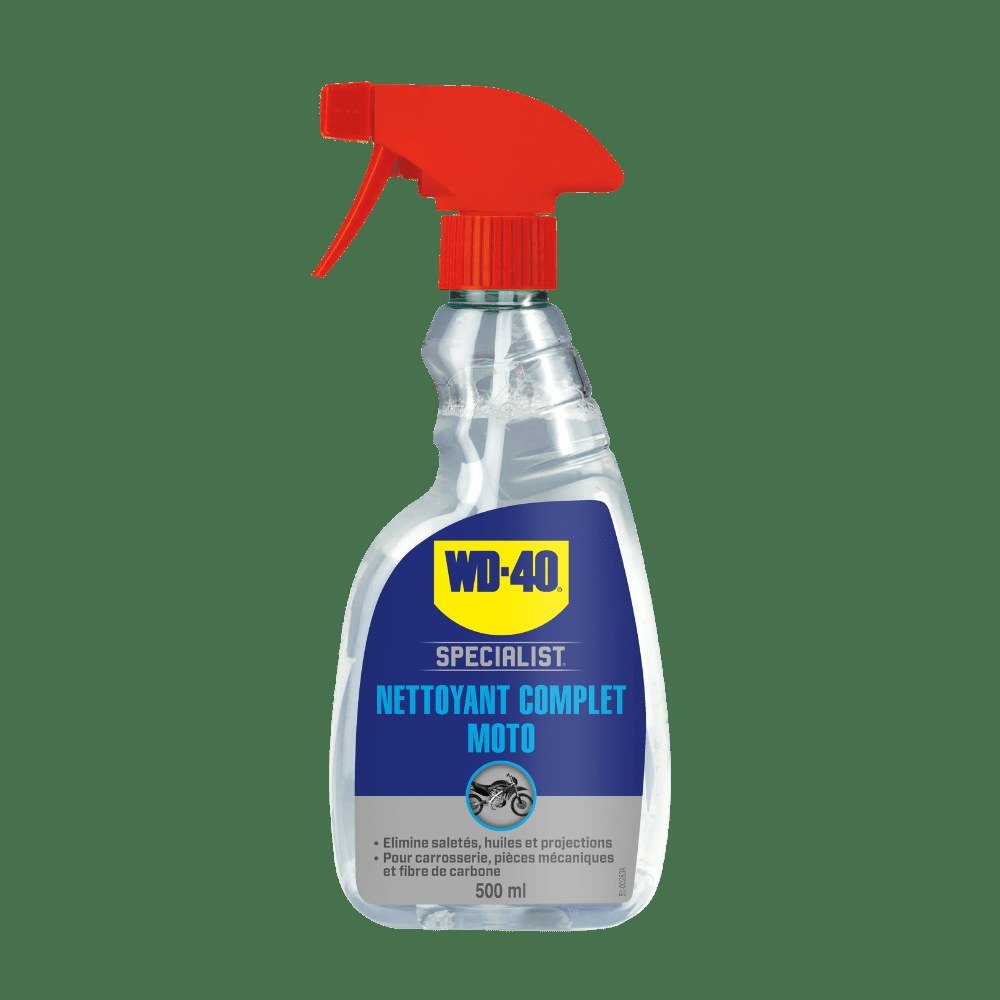
Put the bike on a stand. Apply WD-40 Bike Degreaser to the chain while back-pedalling and scrub the links and sprockets. Wipe the chain dry.
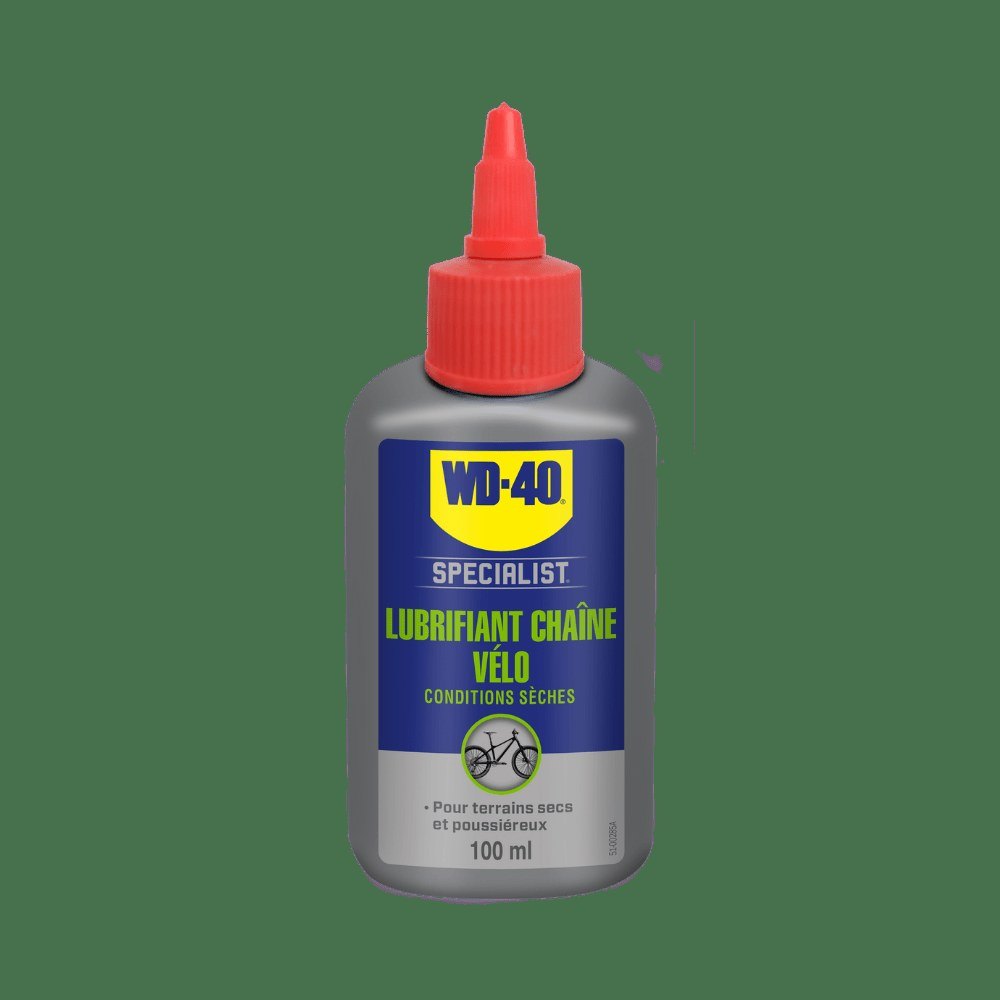
Then apply WD-40 Bike Wet Chain Lube to the top run of the chain while turning the pedals slowly. This thicker lubricant lasts longer in the rain and reduces chain noise. Shield the brake rotors, motor and battery housing with a cloth. Wipe off the excess after a few minutes.
Step 3
Protect metal parts from moisture
After washing or riding on wet or salted roads, apply a little WD-40 Multi-Use to bolts, derailleur springs, cable ends where they leave the housing and the kickstand. It displaces moisture and protects against rust. Wipe off any excess straight away.
Step 4
Check the brakes and tyres
Because of the extra weight, e-bike brakes work harder. Inspect the cables or hydraulic lines, check pad thickness and clean the pads with a stiff brush. Never let any lubricant reach the rotors or pads.
Inflate the tyres to the pressure shown on the sidewall. Under-inflated tyres increase rolling resistance, so the motor uses more energy and the battery drains faster.
Step 5
Update the software
Manufacturers regularly release control unit updates that improve how motor support is delivered. Check the manufacturer's app or ask your workshop to install them during a service.
Step 6
Look after the motor and battery contacts
The motor needs no special maintenance, and serious faults are a job for the manufacturer's service. The battery contacts, however, should be checked regularly. Remove the battery and apply WD-40 Specialist Contact Cleaner to the terminals and cradle contacts: it dissolves dirt, grease and condensation and dries without residue. Refit the battery once everything is dry.
Tip: In winter, do not leave the battery in a cold stairwell or on a balcony. Store it indoors somewhere dry and charge it at room temperature.
What next
Do the quick routine after every wet ride and a full service at least twice a year, before the season and before winter storage. For small jobs on the road, a pocket-size WD-40 100 ml is handy to carry.
These uses come from the experience of WD-40 users in many countries. Always follow the instructions and warnings on the product label.
More guides in «How to use».