A built-in wardrobe or walk-in closet brings together a lot of hardware: drawer runners, sliding door rollers, hinges, lift mechanisms, pull-down rails and often LED lighting. Air circulates poorly inside, so dust and moisture build up faster than in the room.
The result is familiar: drawers judder, sliding doors rumble and jam, hinges squeak and the lighting flickers. Here is how to look after a wardrobe so everything runs quietly and smoothly.
What you will need
Important: Before working on the lighting, always switch off its power (unplug the power supply or turn off the circuit breaker). Apply products precisely, cover clothes and shelves, and wipe off excess immediately so nothing marks fabric or chipboard.
Step 1
Clean out the dust thoroughly
Dust is the main enemy of a built-in wardrobe. Vacuum shelves and corners, ideally keeping the vacuum body outside the wardrobe, or use an antistatic duster that holds dust rather than moving it around.
Once a year take everything out and wipe the structure down with a household cleaner. Check the walls for mould and signs of condensation at the same time.
Step 2
Lubricate the drawer runners
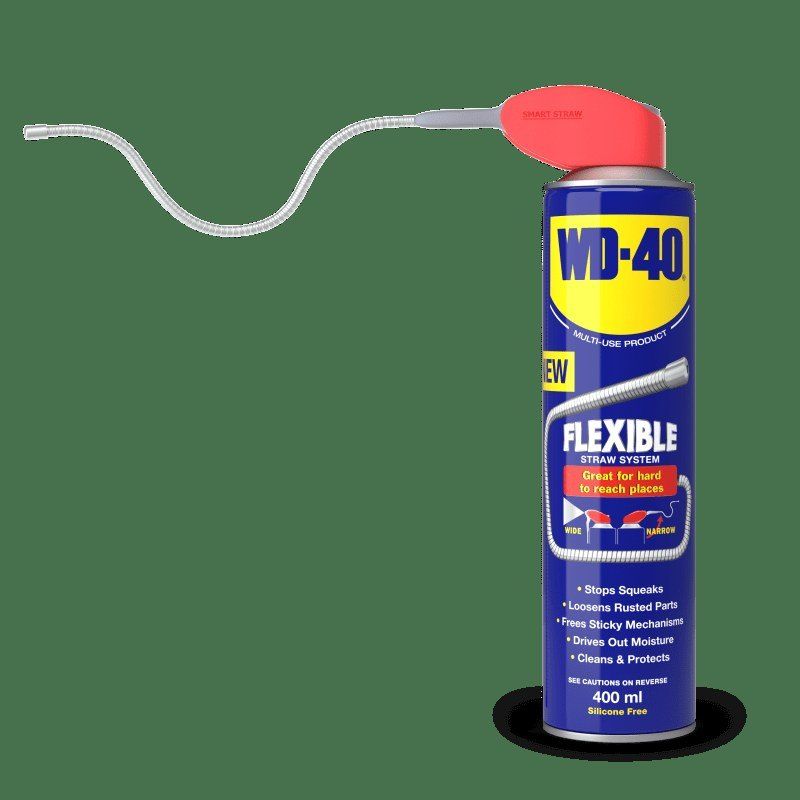
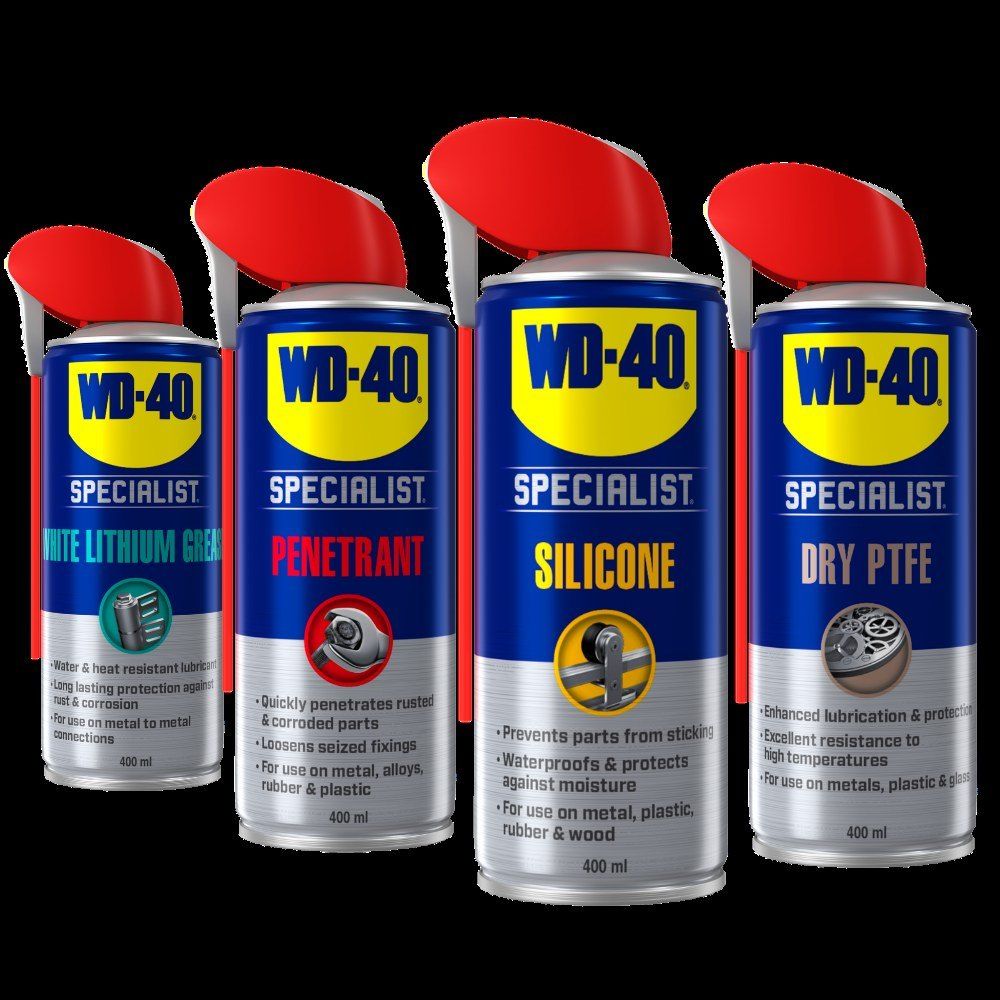
Drawers run on pairs of metal profiles with rollers or ball bearings. With frequent use they become stiff and jerky. Pull the drawer out, wipe dust from the runners and apply WD-40 Specialist Silicone to the profiles and rollers, then open and close the drawer several times.
Silicone dries quickly, does not attract dust and is safe on metal and plastic.
Step 3
Look after sliding doors and rollers
Vacuum the bottom track of the sliding doors: grit in it is the main cause of rumbling. Apply WD-40 Specialist Silicone to the rollers and the top track and slide the doors back and forth a few times.
Treat the wheels of pull-out baskets, trolleys and castor units the same way so they do not squeak.
Step 4
Hinges and lift mechanisms
If doors sag and catch the frame, adjust the hinge screws. Then lubricate the hinges: WD-40 Specialist Silicone is enough for ordinary furniture hinges, while loaded lift-up door hinges, telescopic rails and lift mechanisms are better served by WD-40 Specialist White Lithium Grease, which does not run and lasts a long time.
Step 5
Revive the LED lighting
If a section of lighting flickers or will not come on, switch off the power, separate the strip connectors and give them a short burst of WD-40 Specialist Contact Cleaner. It dissolves dirt, dust and oxidation, evaporates quickly without residue and is safe on plastic and rubber.
Once dry, reconnect everything and switch the power back on. If the fault persists, replace the strip or the power supply.
Step 6
Deal with damp and mould
A built-in wardrobe on an external wall often sweats in autumn and winter in our climate. If mould spots appear, take everything out, treat the affected areas with a mould remover according to its instructions and let everything dry completely.
To prevent it, leave a gap between the back panel and the wall, air the wardrobe regularly, use moisture absorbers and never put away clothes that are not fully dry.
Tip: Avoid thick general-purpose grease on drawer runners: it collects dust and eventually turns into a sticky paste. A dry silicone film lasts much longer.
What next
Dust every week or two, lubricate runners, rollers and hinges every six months, and do a full clean with a damp check once a year. For squeaky interior doors, keep WD-40 Multi-Use to hand.
These uses come from the experience of WD-40 users in many countries. Always follow the instructions and warnings on the product label.
More guides in «How to use».