Rust forms wherever metal is in constant contact with moisture and oxygen. Metal front doors, garage doors and gates have a hard life: autumn rain, wet snow, temperature swings that cause condensation and salty slush thrown up from the road in winter. Corrosion first spoils the look, then eats into the metal and weakens the structure, hinges and locks.
The most reliable protection takes a few steps: remove existing rust, neutralise what remains, paint the surface and maintain the moving parts regularly.
What you will need
Important: Wear glasses and gloves when stripping rust. Only paint a degreased surface: after using WD-40, wipe the area with solvent, otherwise the paint will not bond properly. Work in a ventilated area away from naked flames.
Step 1
Inspect the door and assess the damage
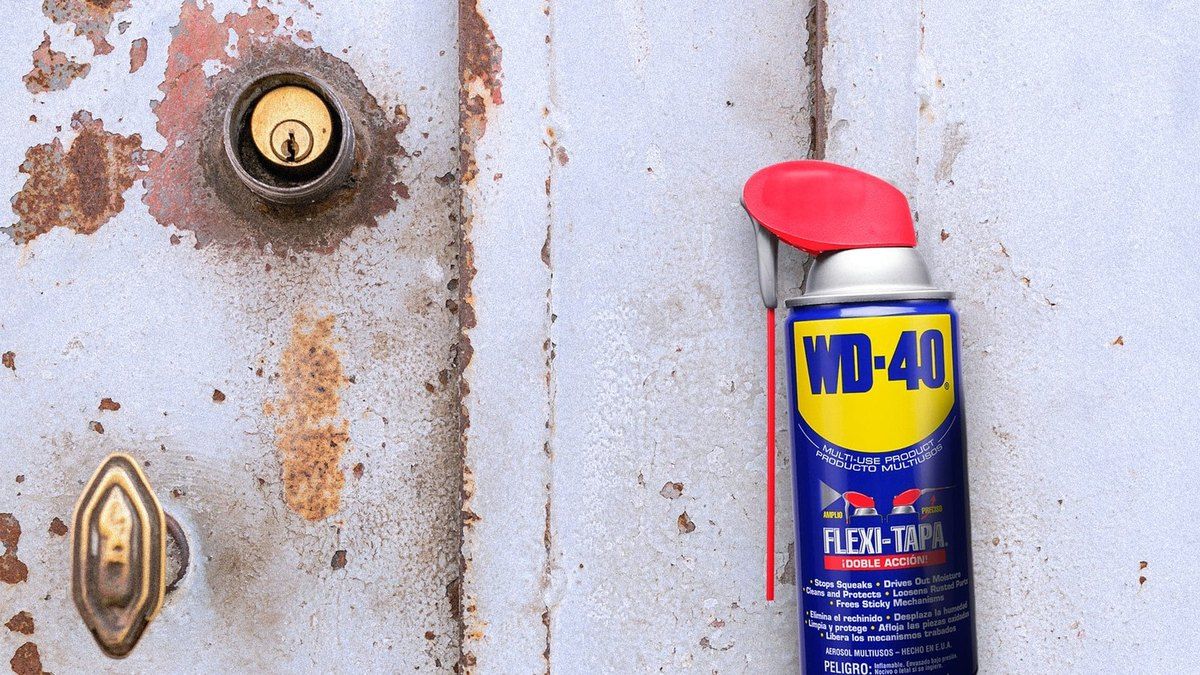
Check the bottom of the door, the corners, welded seams and the areas around the hinges and lock, where water lingers longest. Small orange spots can be treated locally; if paint is flaking over large areas, it is better to strip the whole leaf.
Step 2
Remove existing rust
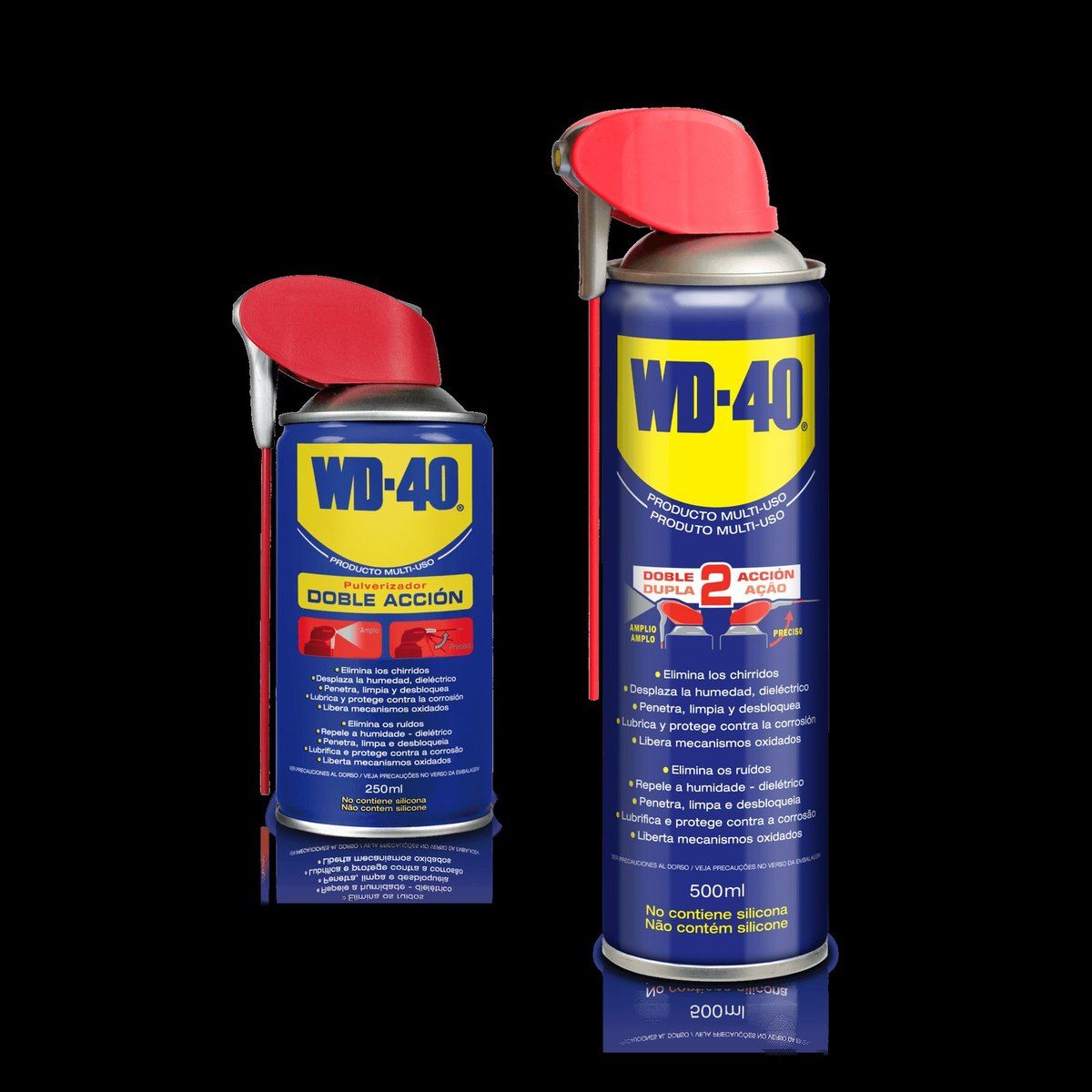
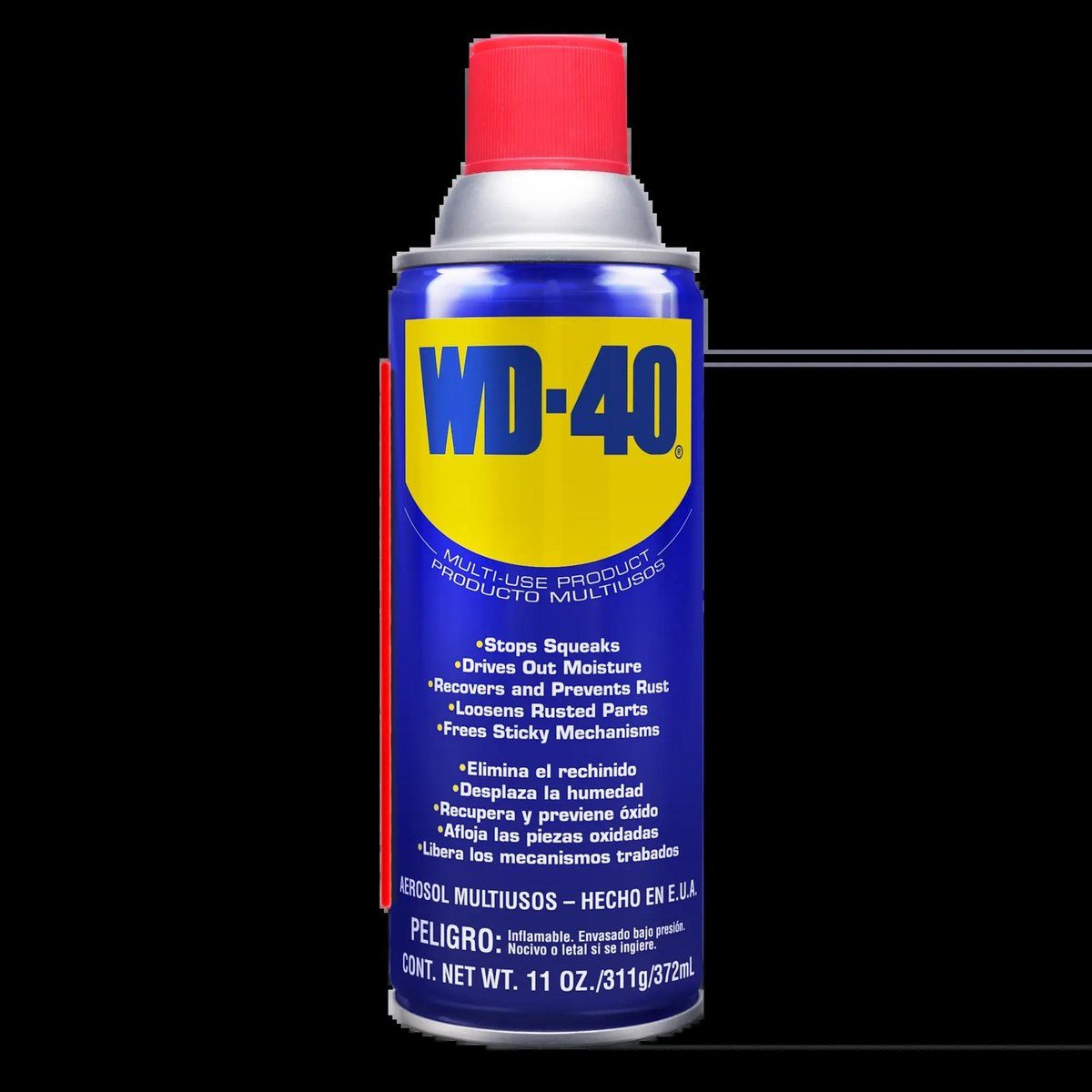
Use a wire brush or fine sandpaper to take off loose rust and flaking paint. Then apply WD-40 Trigger Pro or WD-40 Multi-Use: it softens remaining corrosion, lifts dirt and drives moisture out of the pores of the metal. Wipe the surface with a rag.
If bolts or hinges are seized, treat them with WD-40 Specialist Penetrant and wait a few minutes before undoing them.
Step 3
Apply rust converter
Where traces of corrosion remain, apply a rust converter strictly according to the manufacturer's instructions. It turns rust into a stable layer that stops spreading. Degrease the surface with solvent first.
Step 4
Paint the surface
Once the converter has dried, apply an anti-corrosion primer and then metal paint evenly over the whole treated area. Paint in dry weather above freezing, never in the rain, and do not forget the edges and bottom of the door.
Step 5
Protect hinges, locks and fixings
Paint cannot protect moving parts. Using the WD-40 Smart Straw, treat the hinges, bolts, lock cylinder, fixings and any unpainted metal. The product leaves a thin water-repellent film, and the hinges will stop squeaking too.
Step 6
Check the door regularly
Twice a year, in autumn before the cold and in spring after the snow melts, inspect the door. A fresh rust spot takes minutes to deal with before it creeps under the paint. After winter, wash road salt and mud off the bottom of the door.
Tip: After washing a gate or door, treat the gaps between leaf and frame and the bottom edges with WD-40: water sits there longest, and that is where rust appears first.
What next
Treat hinges and locks with WD-40 Multi-Use every 1-2 months in the cold season and once a season in summer. For large gates or several properties, the WD-40 Trigger Pro with its trigger sprayer is more convenient.
These uses come from the experience of WD-40 users in many countries. Always follow the instructions and warnings on the product label.
More guides in «How to use».