You clipped a bollard in the car park, someone opened a door into yours at the shopping centre, or a lorry kicked up gravel. A scratch on the bodywork is the first thing you notice, and it lowers the price when you come to sell.
To be honest, no spray will make a deep scratch vanish. But WD-40 Multi-Use is good at removing paint transfer from another car and makes fine scratches in the clear coat less visible. For more serious damage there are touch-up pens, polishing and local respraying. Below we show how to judge the depth and what to do in each case.
What you will need
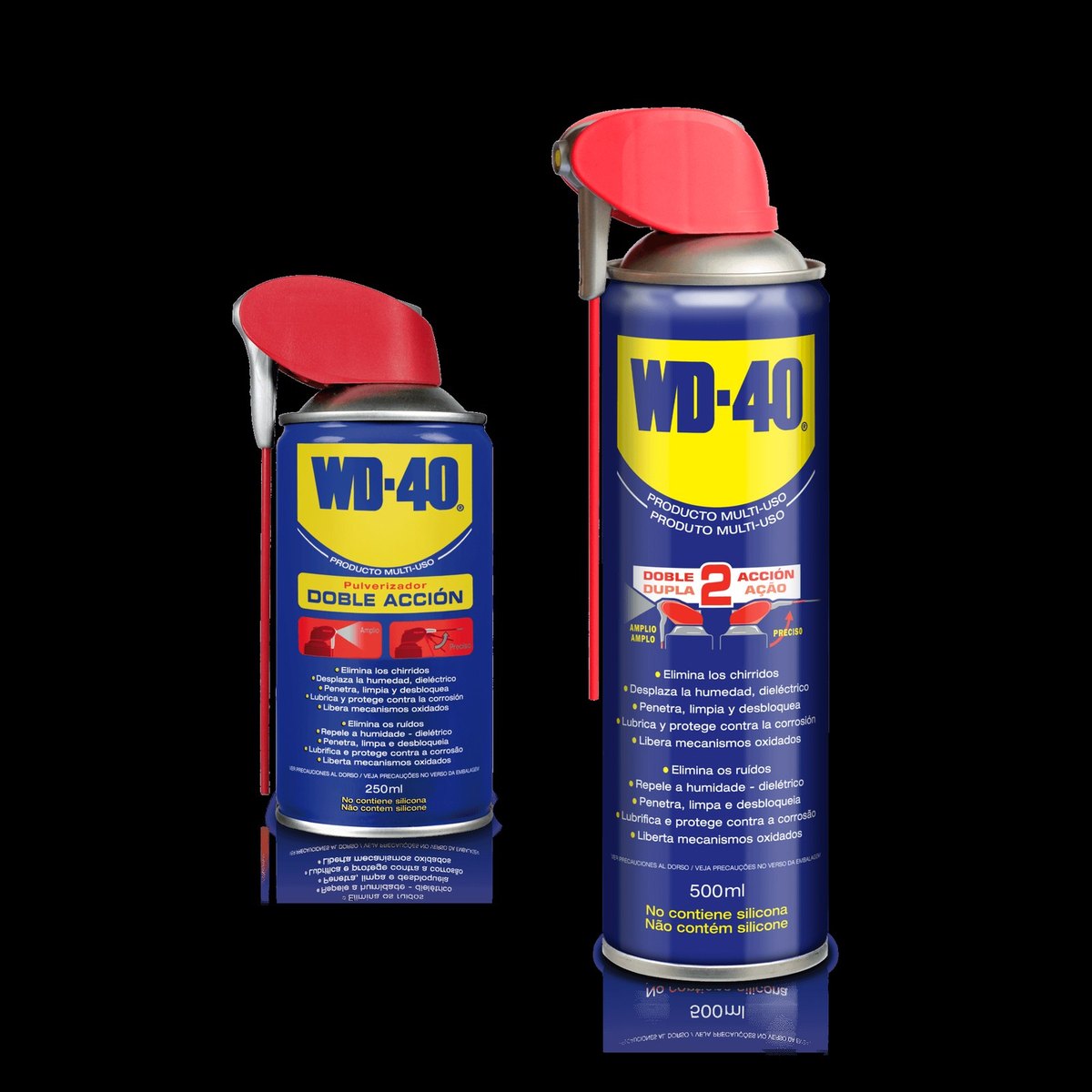
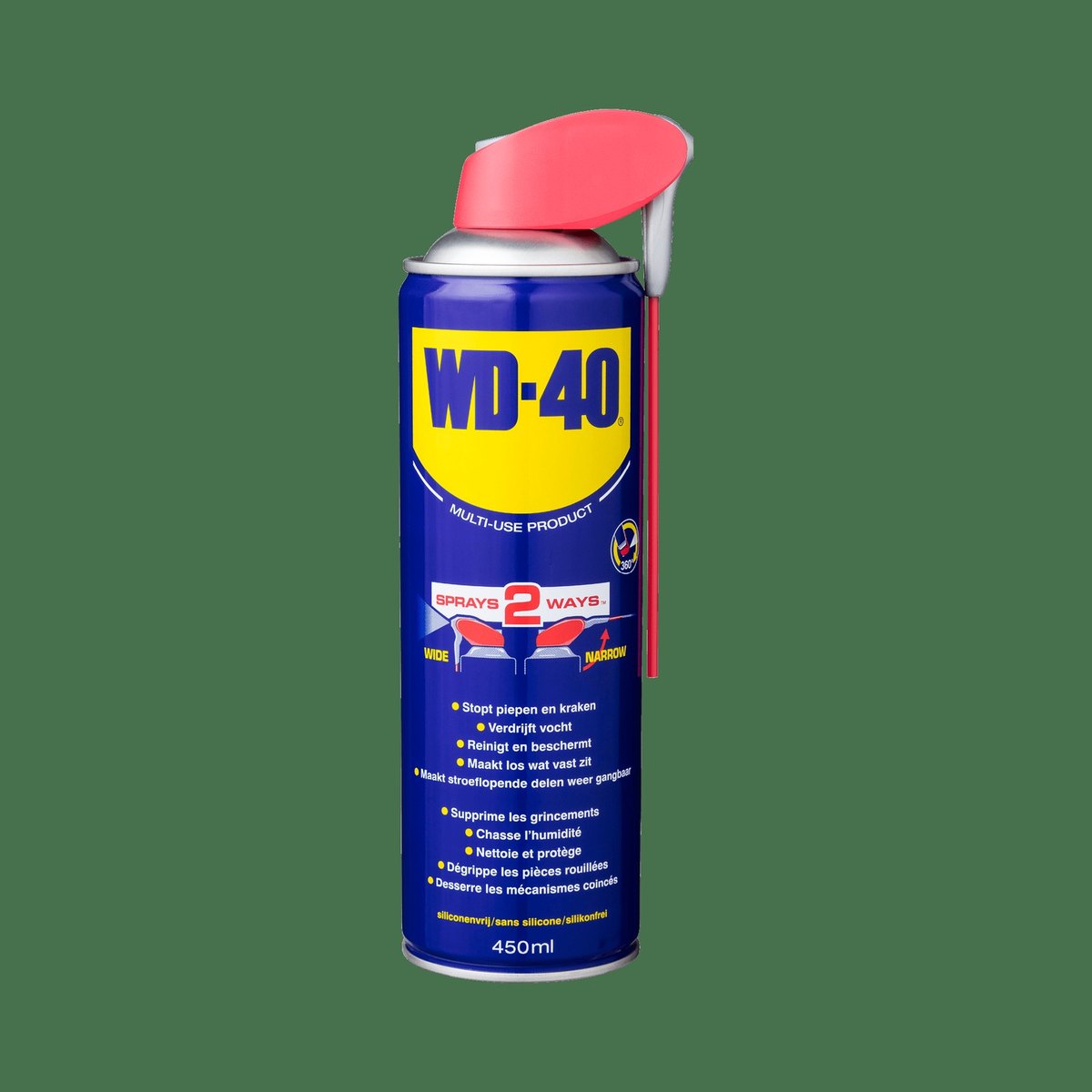
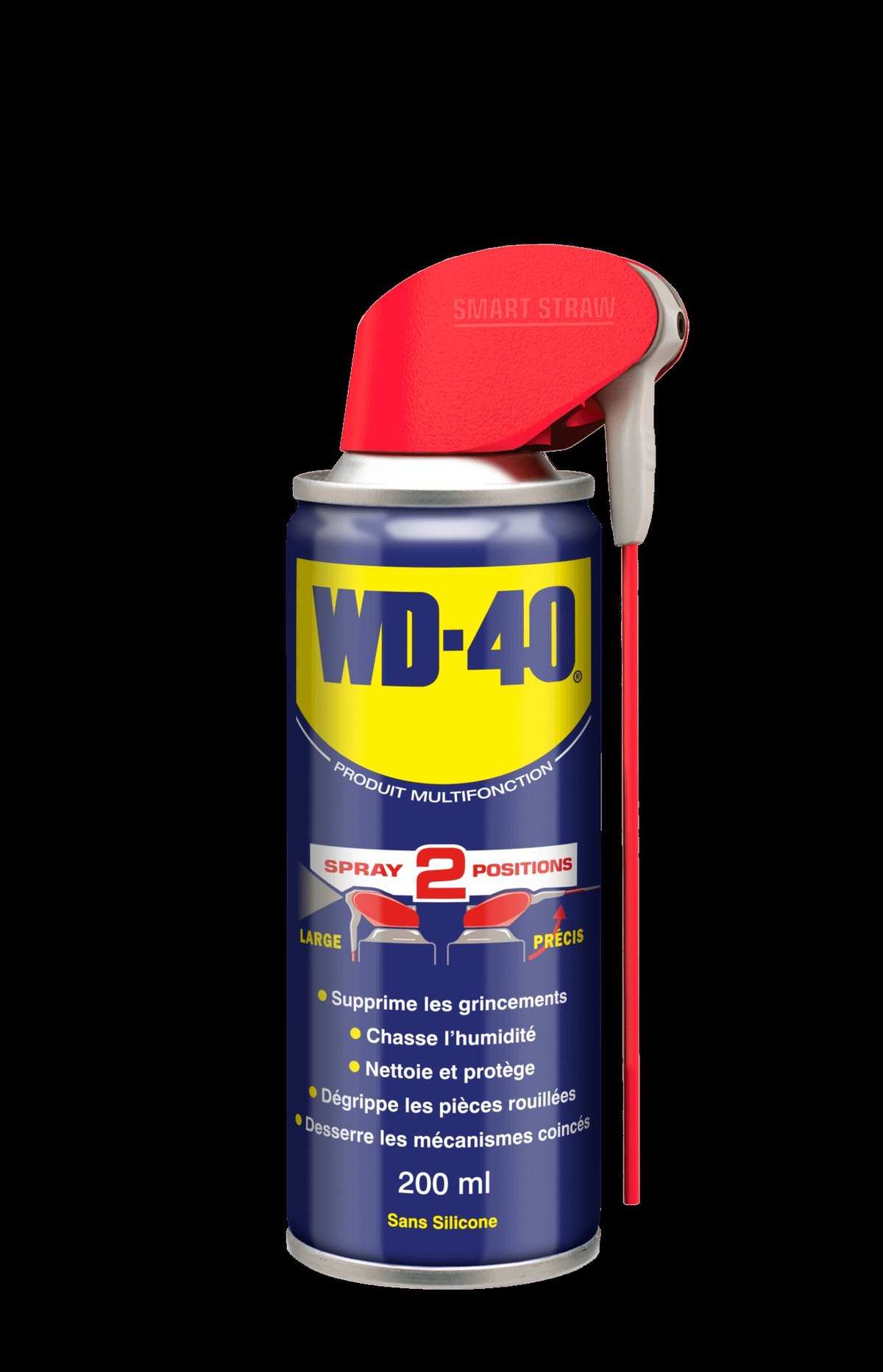
- WD-40 Smart Straw 420 ml or WD-40 Multi-Use
- Two or three clean microfibre cloths and a soft sponge
- A bucket of water and car shampoo
- A touch-up pen or paste in your car's colour
- Polishing compound and, optionally, a machine polisher
- Fine sandpaper, masking tape and colour-matched paint (for deep scratches)
Important: On matte paint, never rub hard or polish: you will leave permanent glossy patches. If WD-40 brings no improvement, do not keep repeating it: the scratch is deeper than it looks.
Step 1
Wash the area and judge the depth
Wash around the scratch with car shampoo to remove grit and dust, then dry it. Dirt in the scratch not only hides how bad it is but also scratches the paint further.
Run a fingernail across the scratch. If it does not catch, only the top clear coat is damaged. If it catches, or you can see primer or metal, you will need touch-up paint.
Step 2
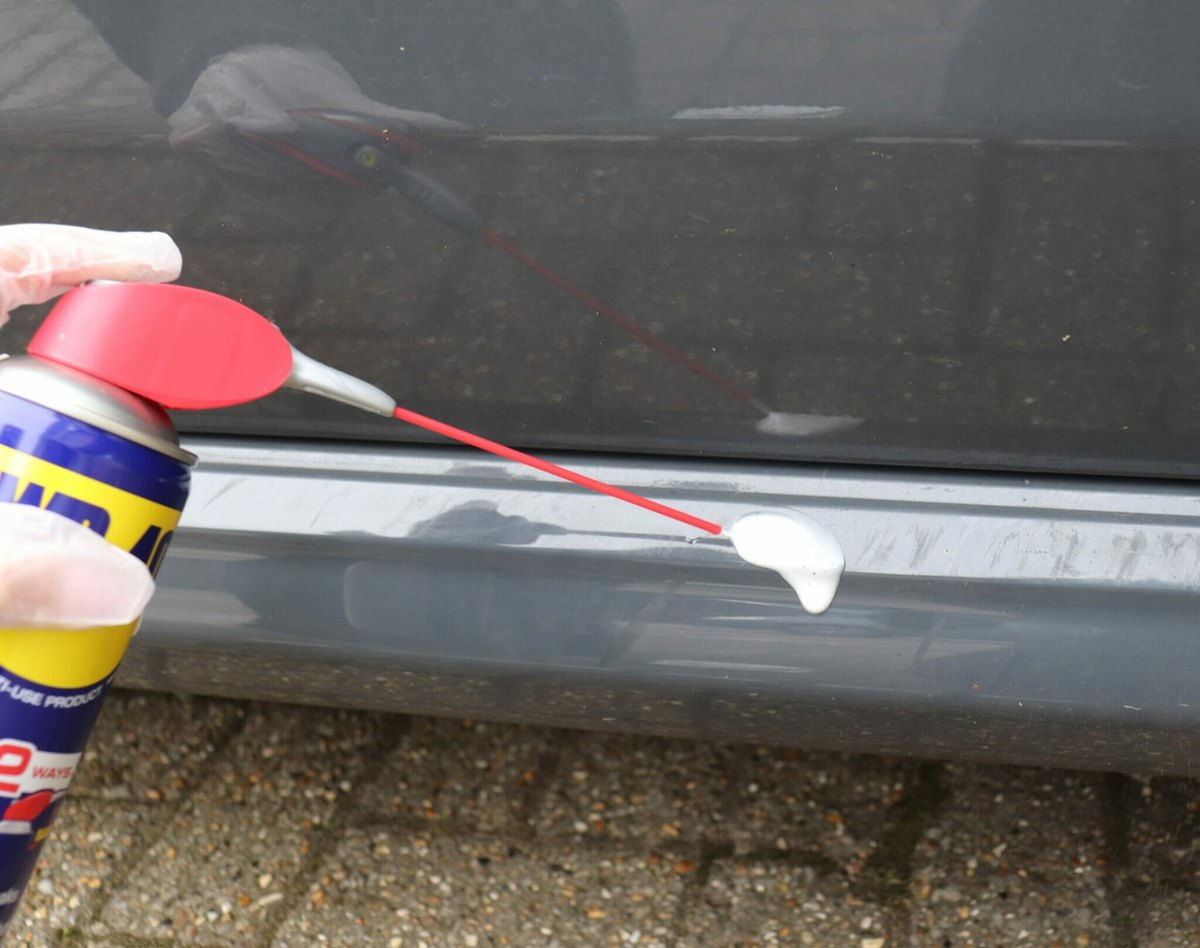
Apply WD-40 to surface marks
Spray WD-40 Smart Straw onto the dry surface. The straw lets you treat just the scratch rather than half the door. Wait a few minutes.
Step 3
Buff with a soft cloth
With a dry, clean microfibre cloth, wipe off the product and the transferred paint using gentle circular movements. Check the result from different angles in good light.
Paint transfer from a light touch often disappears completely. Fine scratches will be less visible, and a coat of wax afterwards makes the effect last longer.
Step 4
Small scratches: touch-up pen
If your nail catches but the scratch is narrow and short, use a touch-up pen or paste in your car's colour. Find the paint code on the plate in the door frame or under the bonnet.
Step 5
Medium scratches: polishing
Scratches in the clear coat that have not reached the colour layer can be polished out. Start with a fine compound by machine or by hand, wipe and check. If the mark is still visible, repeat with a more abrasive compound.
Step 6
Deep scratches: sand and paint
If primer or metal is showing, the area needs sanding with fine paper, masking off with tape and painting in thin coats of colour-matched paint, followed by clear coat and polishing.
This takes experience. If you are unsure, go to a body shop, especially on large panels or pearlescent colours.
Step 7
Protect bare metal from rust
If you cannot repair the scratch straight away, do not leave the metal exposed. In winter, road salt and moisture will turn it into a rust spot within weeks.
Spray a little WD-40 Multi-Use onto the scratch and wipe it in with a dry cloth. The thin film displaces moisture and protects the metal until the repair. Reapply after every wash.
What next
After the repair, wash the car regularly and renew the wax every 1-2 months. WD-40 Smart Straw is also handy for removing tree sap, tar and stickers and for protecting door locks and hinges from moisture and freezing.
These uses come from the experience of WD-40 users in many countries. Always follow the instructions and warnings on the product label.
More guides in «How to use».