Chrome on bumpers, grilles, trim strips, mirrors and wheels makes a car look good and protects the metal underneath. But the plating has micro-pores, and through them moisture and winter road salt reach the steel. That is how orange specks appear, later growing into patches and blisters.
The sooner you remove the bloom, the better the chance of saving the chrome. Bicarbonate of soda, vinegar and soapy water work slowly and unevenly, whereas a penetrating lubricant softens rust in minutes and leaves a protective film behind.
What you will need
- WD-40 Multi-Use
- soft cotton or microfibre cloths
- superfine steel wool (0000) or a soft brass brush
- clean water, car shampoo
- gloves
Important: When treating wheels, keep the product off brake discs, pads and tyres. An ordinary steel wire brush scratches chrome, so use only the finest steel wool or a brass brush with no pressure. Test chrome-effect plastic parts on a hidden area first.
Step 1
Wash and dry the part
Wash off dust, sand and salt with car shampoo, otherwise abrasive particles will scratch the chrome while you clean. Dry with microfibre.
Inspect the part: pinpoint rust comes off easily, but blistering or peeling chrome needs repair or replating.
Step 2
Apply WD-40 to the rusty areas
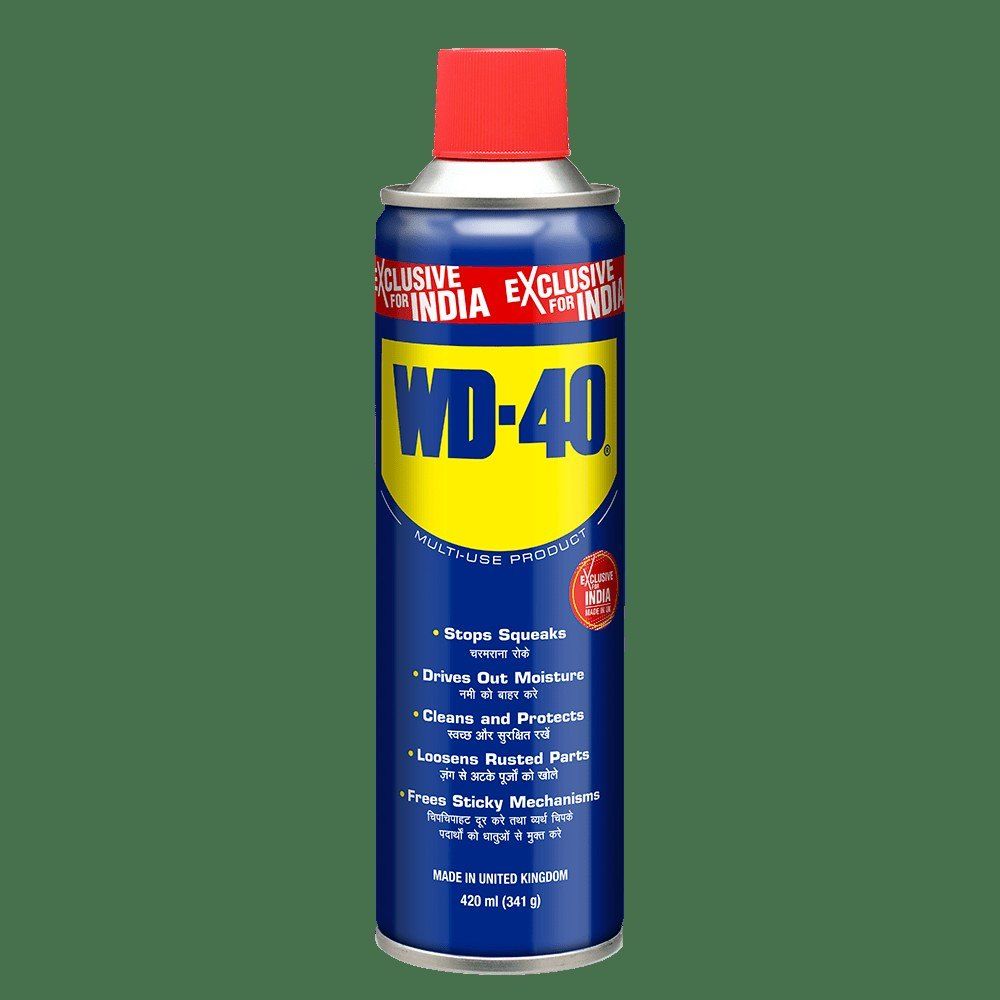
Carefully apply WD-40 Multi-Use to the affected spots. Do not overdo it: just enough to cover the rust fully, as any excess will only run onto paint and plastic.
Near wheels, cover the brake and tyre with a cloth.
Step 3
Let it work
Leave it for 8-10 minutes to work under the rust and loosen its grip on the plating. Give old, stubborn rust longer or a second application.
Avoid working in direct sun on hot metal, as the product will dry faster.
Step 4
Gently remove the rust
Go over the treated area with fine steel wool or a brass brush using light strokes and no pressure. The softened rust comes away quickly while the chrome beneath stays intact.
Wipe off the residue with a clean cloth and repeat if necessary.
Step 5
Rinse and protect the chrome
Rinse the part with clean water and dry it. Once dry, put a little WD-40 Multi-Use on a cloth and wipe a thin coat over the chrome: the film repels water and slows new rust.
Treat seams, trim clips and grille gaps with WD-40 Smart Straw through its thin straw, as that is where moisture lingers longest.
Tip: The best time to treat chrome is autumn, before the first road salt, then again after every winter wash. A thin film on chrome costs far less than replating.
What next
In winter wipe chrome parts after every wash; in summer once a month is enough. A compact WD-40 200 ml is easy to keep in the boot for a quick treatment after driving on salted roads.
These uses come from the experience of WD-40 users in many countries. Always follow the instructions and warnings on the product label.
More guides in «How to use».