Children love modelling with plasticine, but tidiness is rarely on their minds. Bits end up on the table top, chair legs, cupboard doors and in the grooves of laminate. Plasticine contains oils and wax, so you cannot simply wipe it away: it smears and leaves a greasy mark.
Do not scrape it off with a knife or scrub it with a hard scourer. Below is a method that dissolves the oily base of the plasticine so it lifts off without harming the finish.
What you will need
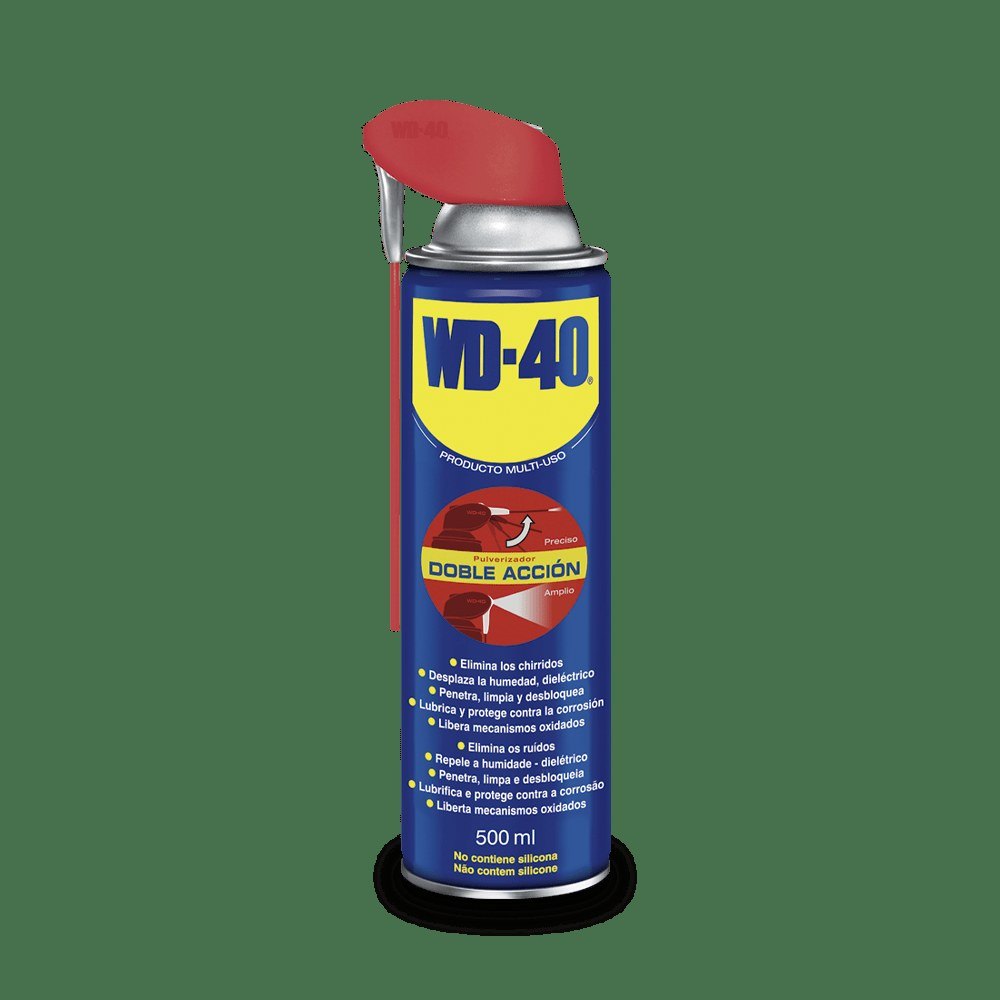
- WD-40 Smart Straw for precise application
- or WD-40 Multi-Use for larger marks
- an ice cube in a bag
- a plastic spatula or an old bank card
- a damp cloth with a drop of detergent
- a microfibre cloth and furniture wax
Important: This method is for hard surfaces: finished wood, laminate, plastic and metal. On upholstery and fabric the product may leave a mark. Test it on a hidden area and ventilate the room.
Step 1
Remove the bulk of the plasticine
Hold an ice cube in a bag against the plasticine for a few minutes. Chilled plasticine hardens and comes away from the surface more easily. Lift it with a plastic spatula and remove everything that comes off without effort. A thin greasy layer will remain in the pores and grooves.
Step 2
Apply WD-40
Shake the can well and apply the product to the remaining plasticine. For small marks, joints and textured areas, WD-40 Smart Straw with its thin straw puts the product exactly where it is needed. For a larger area, WD-40 Multi-Use works well.
Step 3
Let it take effect
Leave the product for about 30 minutes. In that time it penetrates the plasticine, dissolves its oily base and loosens it from the surface. That way you will not need to rub and will not damage the varnish.
Step 4
Lift off the softened plasticine
Work carefully with the plastic spatula in one direction, along the grain on wood. Softened plasticine gathers easily into small lumps. Pick it out of grooves and joints with a cotton-wrapped toothpick.
Step 5
Clean the surface
Wipe the area with a damp cloth and a drop of detergent to remove the last of the plasticine and lubricant. If a mark is still visible, repeat the treatment. Then dry the surface.
Step 6
Bring back the shine
For wooden furniture, finish by putting a little wax on a microfibre cloth and working it in with circular movements to avoid streaks. Let it dry in a ventilated room and buff with a clean cloth.
Tip: Give children a fixed place for modelling: a plasticine board or an oilcloth on the table. Any plasticine left on the board comes off the same way in a minute.
What next
The sooner you remove plasticine, the easier it is: a fresh layer lifts almost instantly. WD-40 Smart Straw with its thin straw also helps with stickers and felt-tip drawings on hard surfaces.
These uses come from the experience of WD-40 users in many countries. Always follow the instructions and warnings on the product label.
More guides in «How to use».