An orange stain in the bath rarely means it is time for a new one. Most often it comes from shaving foam cans, metal shelves, drips from a rusty mixer or iron-rich water that stains the enamel near the drain over the years. It is worse when the enamel has chipped and the cast iron or steel itself has started to rust.
Most stains respond to household remedies, and the metal parts of the bath are worth cleaning and protecting at the same time so the stains do not come back.
What you will need
Important: Do not use abrasive powders, steel wool or bleach-based cleaners together with acids. On acrylic baths, keep acid contact short and test on a hidden area. WD-40 makes the bath surface slippery, so always wash the base with washing-up liquid after any treatment.
Step 1
Find the cause of the stain
Work out where the rust comes from: a can left on the rim, shelves, drips from the mixer or the drain. If the enamel has chipped and metal shows, stains will keep returning until the chip is repaired with an enamel repair kit. Remove all metal items from the rim.
Step 2
Lift stains with lemon and salt
Mix half a glass of lemon juice with salt into a thick paste and spread it over the stain. Leave it for a few hours, then wipe with a soft sponge and rinse. For fresh stains, vinegar is enough: soak a paper towel, lay it on the stain for an hour and wipe.
Old stains may need 2-3 rounds, but this method is safe for enamel.
Step 3
Clean the drain and overflow
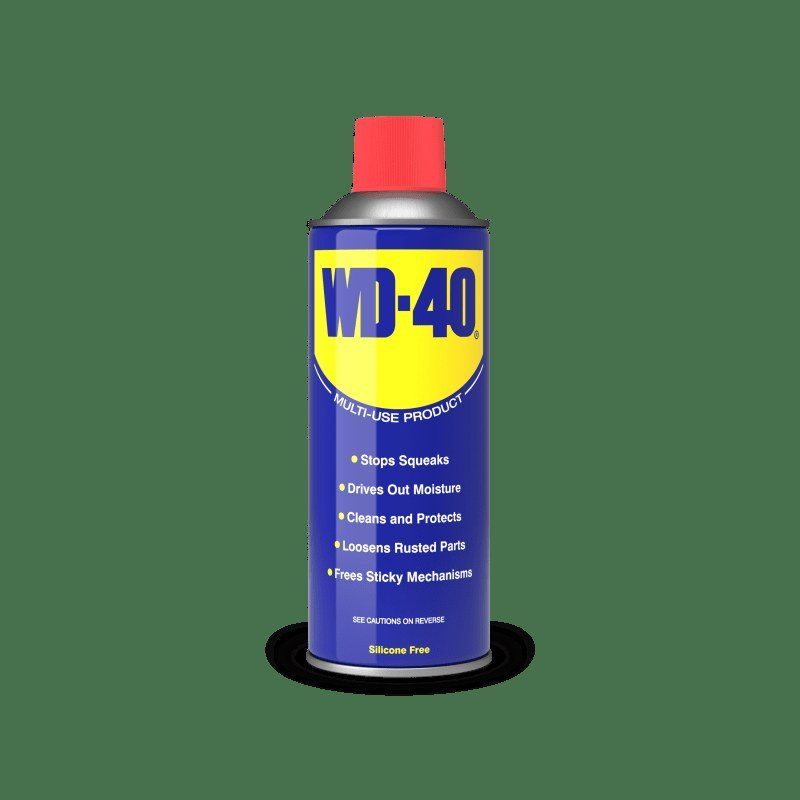
Chrome drain grilles, overflow covers and plugs often rust at the edges and in the threads. Apply WD-40 Multi-Use, wait a few minutes and clean with a nylon brush. The thin straw of the WD-40 Smart Straw reaches the screw and threads.
If the overflow screw has seized, soak it with WD-40 Specialist Penetrant and wait 10-15 minutes.
Step 4
Protect the metal parts
After cleaning, wipe the chrome parts dry and leave a thin film of WD-40 only where hands and feet do not touch: threads, screws, fixings, the plug chain. The film displaces moisture and holds back new rust.
Step 5
Check the feet and frame
A cast iron or steel bath stands on metal feet or a frame that live in damp air. Inspect them with a torch, brush off rust and treat them with WD-40. Adjustable feet will then turn easily if the bath ever needs levelling.
Step 6
Wash the bath
Finish by washing the whole bath with warm water and washing-up liquid so no acid or product remains. Rinse and wipe dry. The bath must be clean and not slippery before use.
Tip: Do not keep shaving foam cans or metal tins on the bath rim: they leave the most common rust rings. If your water is high in iron, an inlet filter will save hours of cleaning.
What next
Wipe the bath after use and check the drain, overflow and mixer once a month. The same WD-40 Multi-Use is handy for curtain rail fixings, shelves and the towel rail.
These uses come from the experience of WD-40 users in many countries. Always follow the instructions and warnings on the product label.
More guides in «How to use».