A cast iron flat iron, an old lock and key, grandmother's sewing machine, forged hinges or grandfather's tools from the attic often become a feature of the home. Yet decades in a shed or attic take their toll: the iron rusts and mechanisms seize.
The golden rule with old pieces is to remove only loose rust and interfere with the surface as little as possible. A dark, stable patina, forging marks and maker's stamps are part of the object's story. A penetrating lubricant softens the rust so you can avoid aggressive cleaning.
What you will need
- soft cotton cloth
- WD-40 Multi-Use
- soft brass brush; a wire brush for rough ironwork
- fine abrasive paper (carefully and only if needed)
- cotton buds, wooden toothpicks
- gloves
Important: Show any item of collector or museum value to a restorer before cleaning it: a heavy-handed clean lowers its value. Test the product on a hidden spot first. Keep brushes and abrasive paper away from paint, gilding, enamel and wooden handles.
Step 1
Inspect the piece and remove dust
Work out what it is made of: iron and cast iron rust, while bronze, brass and copper develop a patina that is usually left alone. Note any stamps, inscriptions and traces of paint.
Remove dust with a dry cloth. If the dirt is stubborn, wipe with a damp cloth and dry thoroughly.
Step 2
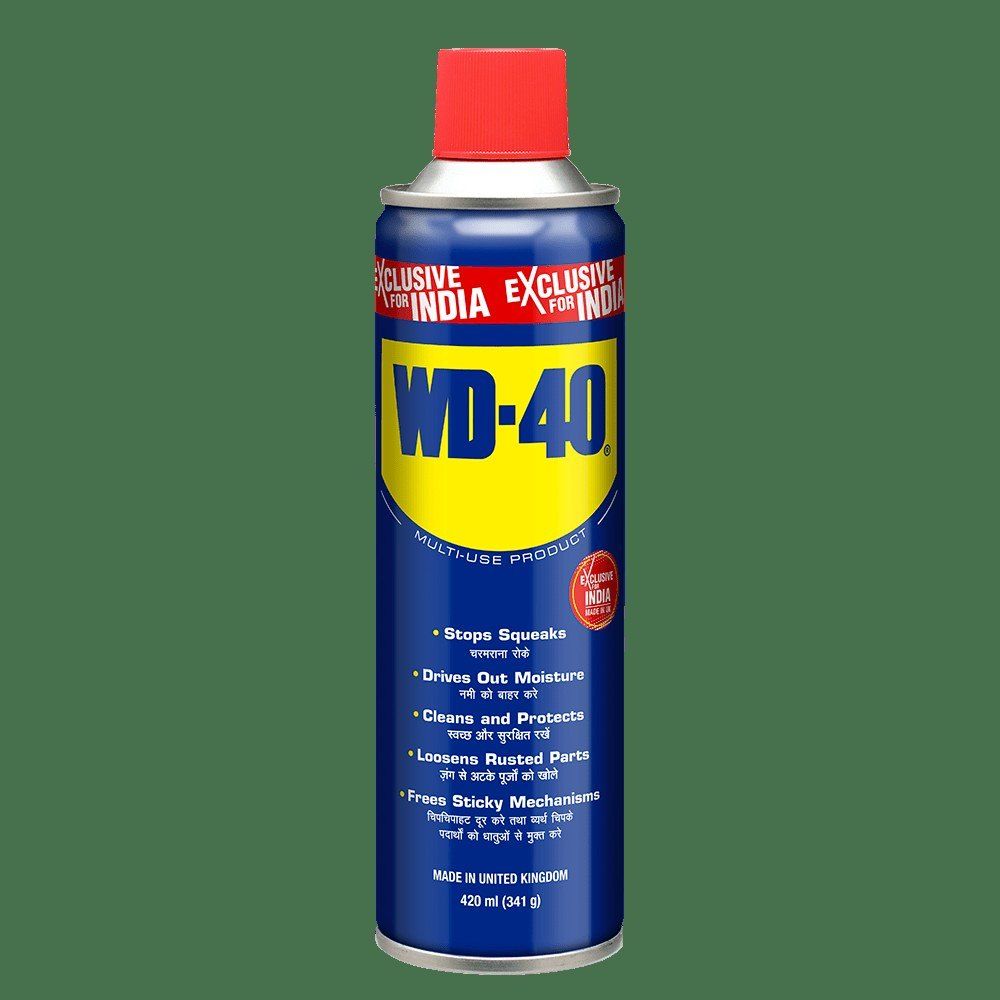
Apply WD-40 to the rusty areas
Carefully apply WD-40 Multi-Use to the affected spots so the rust is fully covered. More product does not mean better results.
Treat hinges, locks, screws and seized mechanisms precisely through the thin straw of WD-40 Smart Straw.
Step 3
Let it work
Leave the piece for 10 minutes so the product can work under the rust and loosen it. Old mechanisms that have not moved for years can be left for several hours or overnight and treated again.
Then gently try to move the parts without using excessive force.
Step 4
Remove the loose rust
Start with the gentlest tool: a brass brush, a cloth, a wooden toothpick for crevices. Use a wire brush only on rough forged iron with no decoration.
If the result is not good enough, repeat the treatment rather than scrubbing harder.
Step 5
Finish carefully and preserve
Remaining rust on smooth working surfaces, such as the sole of an iron or a tool blade, can be lightly sanded with fine paper. Do not sand decorated areas.
Finally wipe the piece with a cloth and a little lubricant and remove the excess: the thin film preserves the metal and brings out its texture.
Tip: Photograph the piece before and during the work. It makes it easier to stop in time, before you remove too much, and to keep the object's history intact.
What next
Store antiques in a dry room away from bathrooms and external walls where condensation forms. Wipe them with lubricant every six months. For a small collection, WD-40 200 ml is plenty.
These uses come from the experience of WD-40 users in many countries. Always follow the instructions and warnings on the product label.
More guides in «How to use».