A drop of superglue always lands in the wrong place: on your jeans, on the rug by the desk, on the workbench in the garage. Instant glue sets in seconds, and if you throw the item straight into the washing machine, the stain bonds even deeper into the fibres and becomes almost impossible to shift.
The good news is that small, fresh glue spots can be removed at home without harsh chemicals. WD-40 Multi-Use works its way under the glue film, weakens its grip on the surface, and the residue can then be lifted with a scraper or cloth.
What you will need
- WD-40 Multi-Use or WD-40 Smart Straw for precise application
- a plastic scraper or a blunt table knife
- clean cotton cloths or microfibre
- mild washing-up liquid and warm water
Important: Test the product on a hidden area of fabric or flooring first. Do not use it on skin: if glue gets on your fingers, soak them in warm soapy water. Work in a well-ventilated room.
Step 1
Lift glue from jeans and heavy fabrics
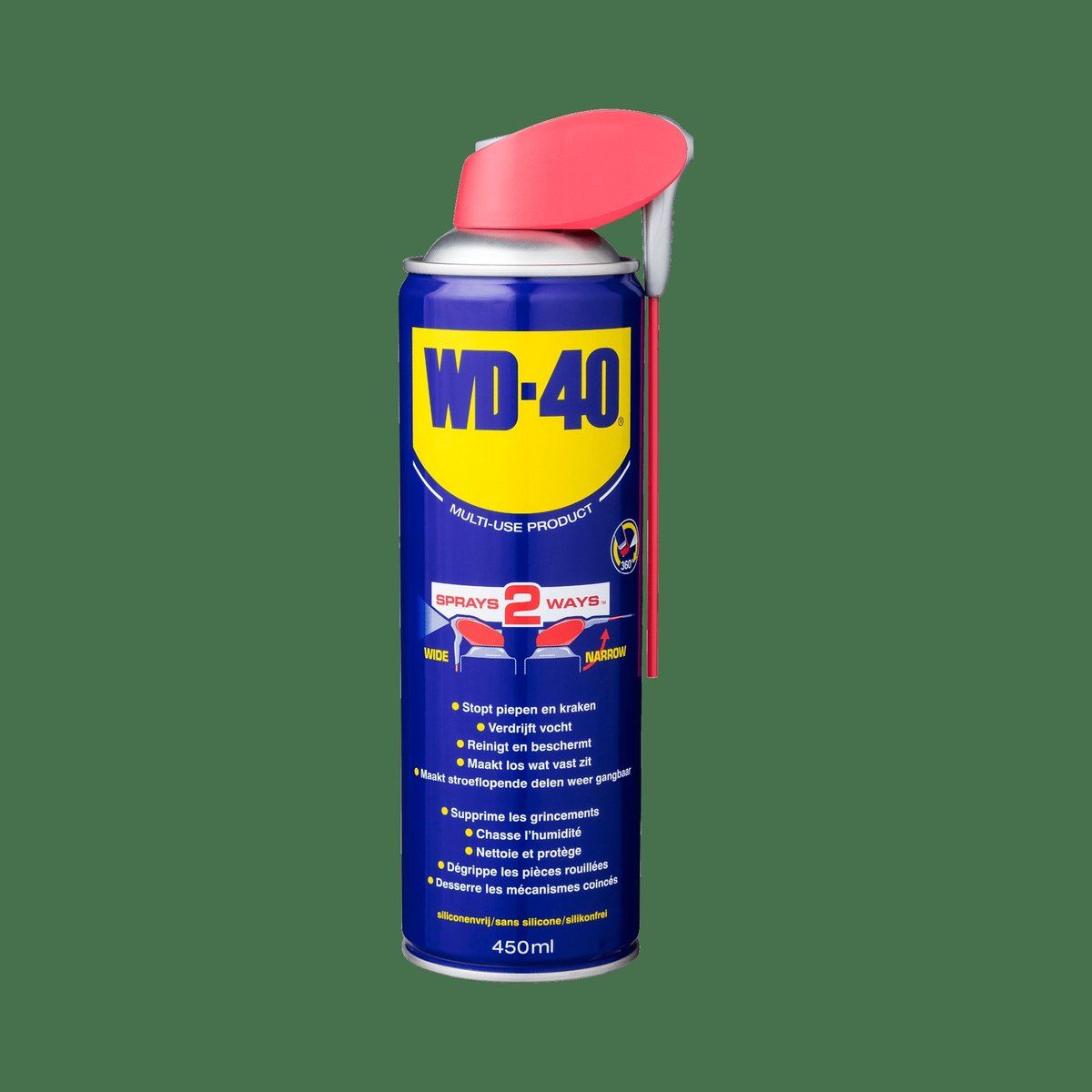
Do not wash the garment yet. Apply a little WD-40 Smart Straw directly onto the stain, holding the thin straw close to the fabric so you do not spray clean areas.
Wait 30-60 seconds for the product to get under the glue. Then gently scrape off the hardened crust with a blunt knife or plastic scraper. The edge must not be sharp, or you will damage the fibres.
Step 2
Wash the item after treatment
Once the glue is off, put a drop of washing-up liquid on the treated spot, rub it in with your fingers and wash the item as usual. This removes both the last of the glue and any greasy mark from the lubricant.
For a large or old stain, repeat the treatment two or three times before washing.
Step 3
Clear glue from lino and carpet
On floors the principle is the same: a little WD-40 Multi-Use on the spot, a short pause, then a gentle wipe with a cloth. Scraping lino or carpet pile is usually unnecessary and can scratch the surface or pull out fibres.
Afterwards wash the area with warm water and detergent and dry it thoroughly so the floor is not slippery.
Step 4
Clean dried glue off the workbench
Glue spots on a bench stop workpieces lying flat. Spray WD-40 Multi-Use onto the spot, let it work for a minute and lift the glue with a scraper. Wipe off what is left with a rag.
Step 5
Protect the work surface in advance
Prevention beats cleaning. Apply a thin coat of WD-40 Multi-Use to the metal or varnished bench top, let it soak in and wipe off the excess. This leaves a thin film that glue struggles to grip, and it also protects bare metal from damp in an unheated garage.
Tip: Keep a small
WD-40 200 ml can at hand for craft jobs: a drop of glue removed in the first few minutes comes off far more easily than one left overnight.
What next
After working with glue, wipe your tools and scraper with a lightly oiled cloth so no crusts build up. Refresh the protective film on the bench every few weeks or after each big clean-up.
These uses come from the experience of WD-40 users in many countries. Always follow the instructions and warnings on the product label.
More guides in «How to use».