After painting walls or a ceiling there are almost always drips on the tiles, even if the floor was covered with sheeting. The golden rule is not to put it off: wet paint wipes away with a damp cloth, while dried paint grips harder every day.
For dried spots, WD-40 Multi-Use helps: it creeps under the paint film, weakens its bond with the glaze, and the drip lifts off with a plastic scraper with no effort and no scratches.
What you will need
- Warm water with liquid soap
- Cotton rags
- Plastic scraper (razor blade only for smooth glazed tiles)
- White vinegar
- WD-40 Multi-Use, or WD-40 Trigger Pro for large areas
- Gloves
Important: Always test any product on a hidden area first. Unglazed, matt and polished tiles, as well as grout, may react differently from glossy glaze. WD-40 leaves the floor slippery, so be sure to wash it with soapy water afterwards.
Step 1
Wipe up wet paint straight away
While the paint is still wet, lift it with a cotton rag dampened with soapy water. Work from the edges of the spill towards the centre so you do not spread it, and rinse the rag often. It may take a few passes, but the glaze stays undamaged.
Water-based emulsion comes off with water; for alkyd enamel, dampen the rag with the cleaner recommended on the paint tin.
Step 2
Check how the tile reacts
For dried spots, first try a vinegar and water solution on a small area. Afterwards wipe the floor with clean water to neutralise the acid. Test WD-40 on a hidden spot in the same way, especially on matt or unglazed tiles.
Step 3
Apply WD-40 to the paint
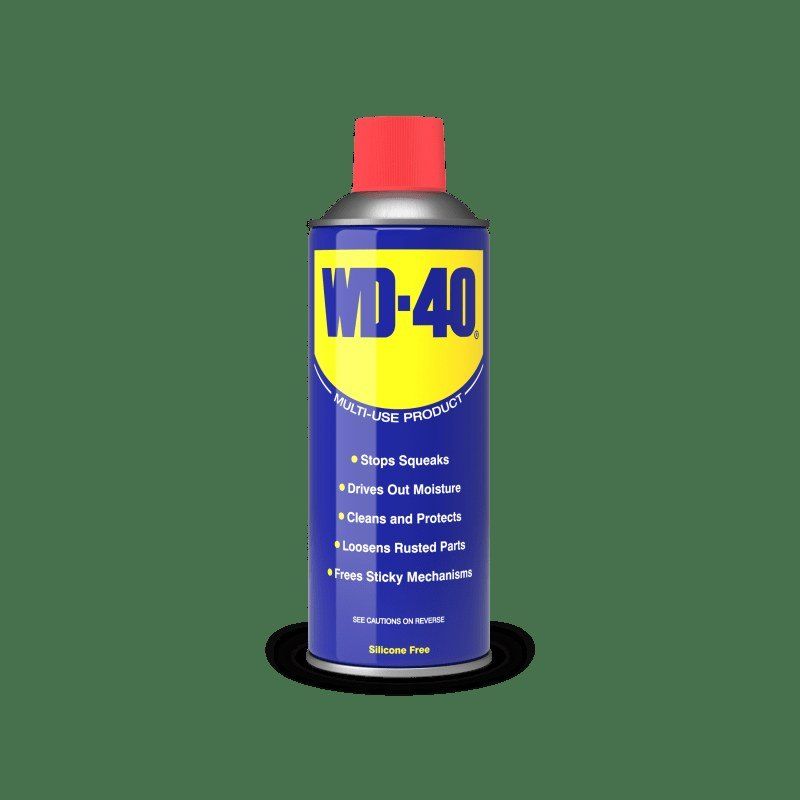
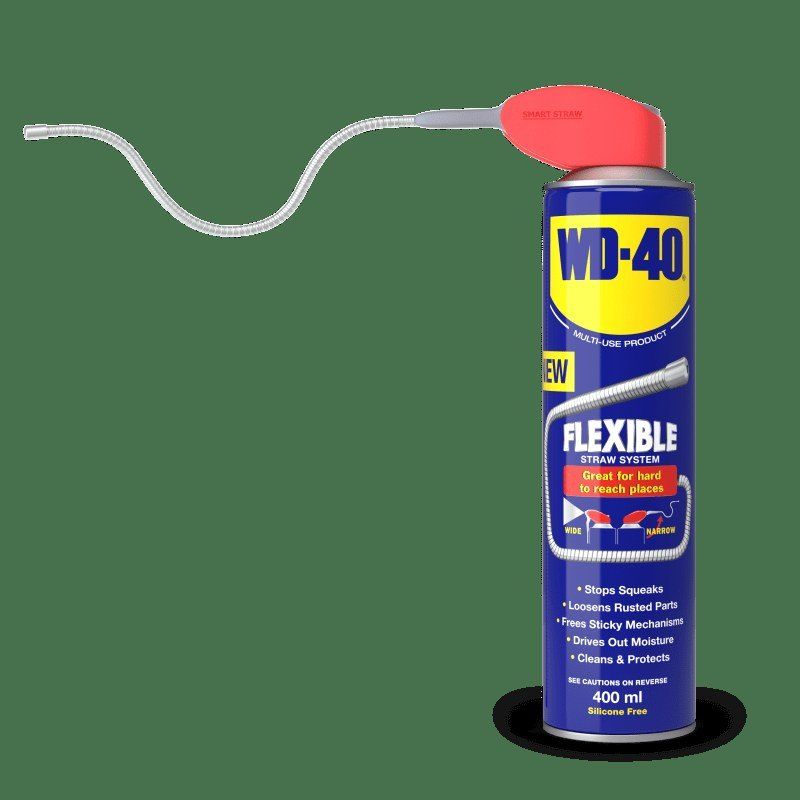
Spray WD-40 Multi-Use directly onto the paint drips so they are fully covered. If there are lots of them, for example after painting a ceiling, WD-40 Trigger Pro with its trigger sprayer is more convenient. Try to keep it off the grout by spraying precisely or applying with a rag.
Step 4
Wait, then scrape the paint off
Give the product a few minutes to work, longer on old stains: it needs to get under the paint and loosen its grip on the glaze. Then lift the paint with a plastic scraper held at roughly 45 degrees, or wipe it off with a rag.
Use a razor blade only on smooth glossy tiles, holding it almost flat so you do not scratch the glaze. If a spot will not budge, apply a little more WD-40 and repeat.
Step 5
Wash the floor with soapy water
Once the paint is gone, wash the floor with warm soapy water to remove both the paint residue and the oily film left by WD-40. Dry with a clean cloth. If the glaze has been damaged anywhere, the spot can be touched up with a dedicated tile lacquer.
Tip: Before painting, mask the tiles along the walls with painter's tape and heavy sheeting, and wipe up any drips with a damp cloth as you go. It will save you an hour of work afterwards.
What next
Keep a can of WD-40 Multi-Use handy during decorating: it also cleans roller handles, removes tape without sticky marks and protects metal tools from rust before storage.
These uses come from the experience of WD-40 users in many countries. Always follow the instructions and warnings on the product label.
More guides in «How to use».