Squeaky hinges, rusted screws, tools gone damp in the garage and metal parts left outdoors all share a common cause. Friction, dirt, moisture and oxidation together make mechanisms stiff and eat away at metal.
WD-40 Multi-Use deals with all of them from one can: it lubricates, frees seized joints, displaces moisture, protects against corrosion and dissolves residues on non-porous surfaces. Here is how to get the most out of it.
What you will need
- WD-40 Multi-Use or WD-40 Smart Straw with the two-position straw
- a microfibre cloth, paper towels
- a soft brush or small paintbrush for dry dust
- work gloves, safety glasses
- a screwdriver or spanner
Important: Isolate any electrical appliance before treating it. Do not spray near naked flames or onto hot surfaces, keep it off brakes and tyres, and test first on a hidden area of painted or plastic surfaces.
Step 1
Prepare the surface
Brush away dust, dry dirt and sand so the product works on the metal rather than on the grime. Shake the can before use.
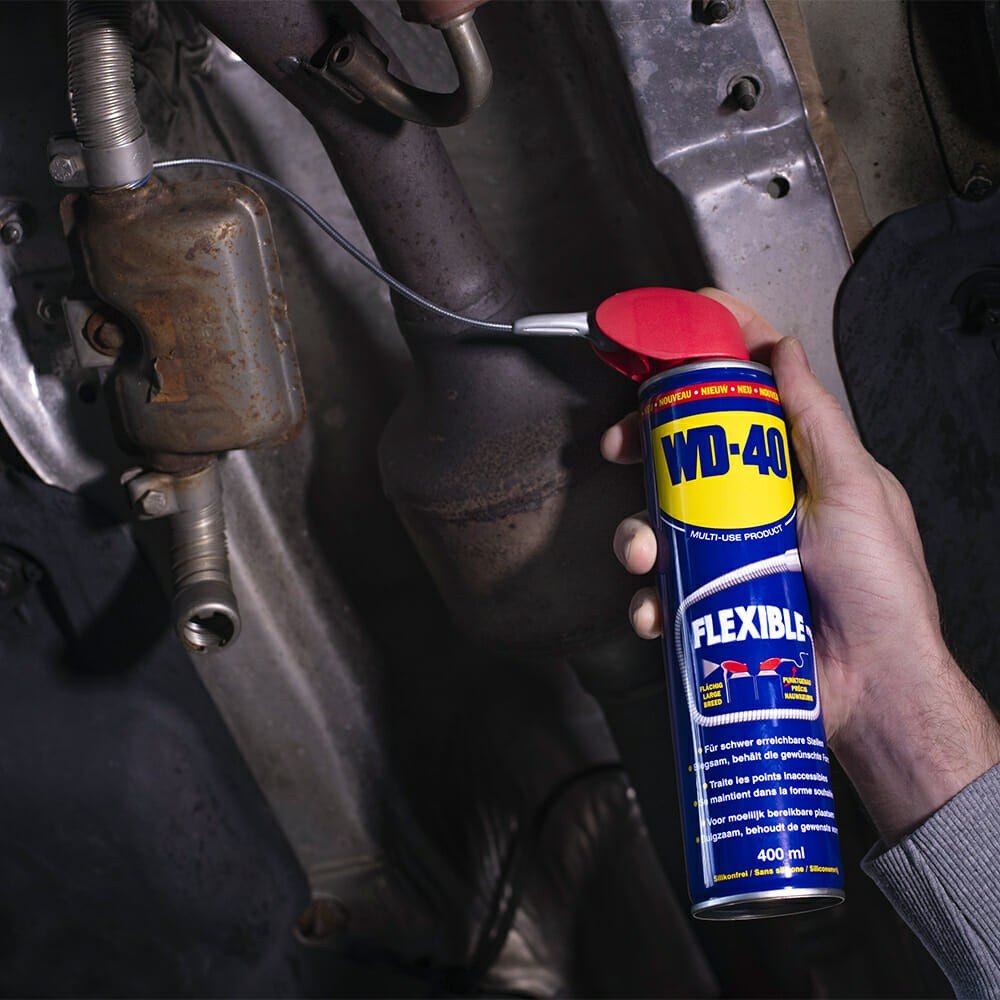
If you are working overhead or in a tight space, wear glasses and gloves. On car bodywork, varnished surfaces and plastics, test first in an inconspicuous spot.
Step 2
Choose the spray mode
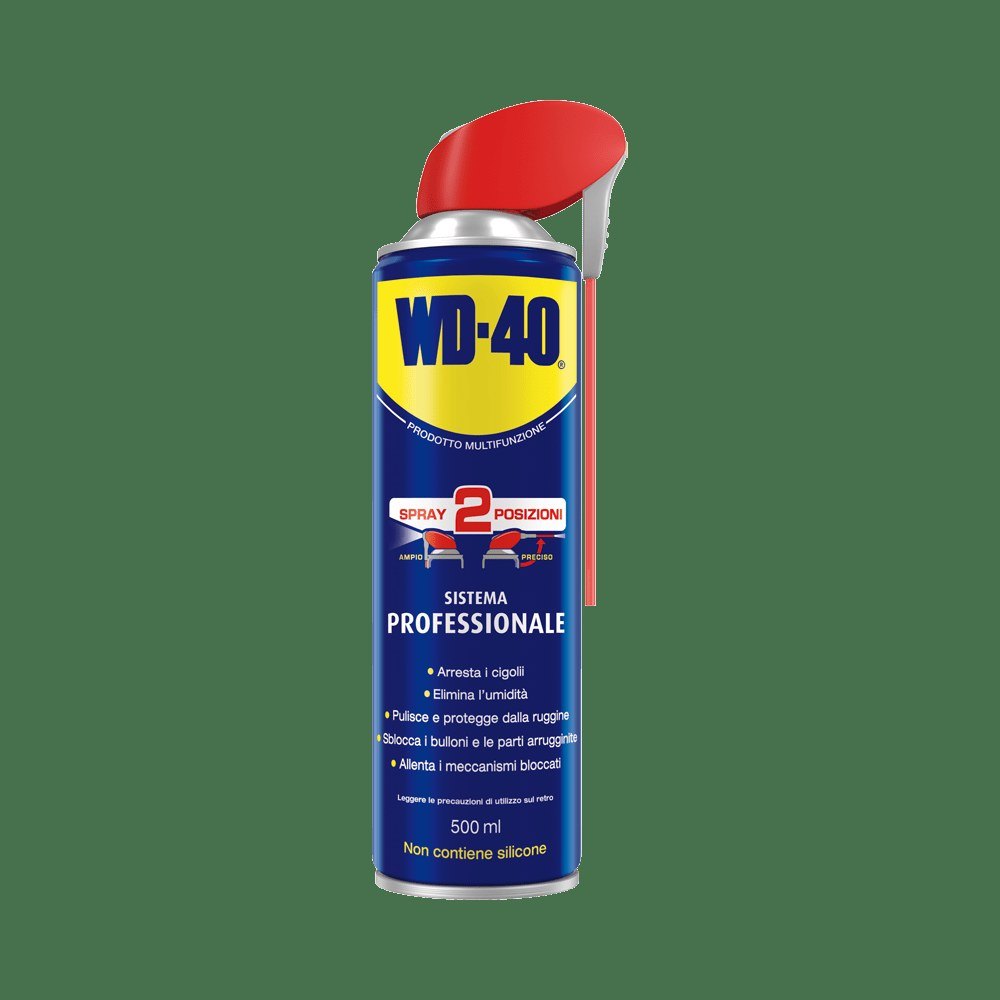
The straw on WD-40 Smart Straw has two positions: folded down for a wide spray over large surfaces, flipped up for a thin, precise jet into hinges, locks, screws and small mechanisms.
Apply the product exactly where there is friction, rust or dirt, without overdoing it. The can sprays at an angle too, so you can reach awkward spots.
Step 3
Lubricate moving parts
Apply WD-40 Multi-Use to hinges, pivots, pliers, clamps, garden shears or a lock mechanism. Work the part slowly back and forth a few times so the product spreads over all the friction surfaces, then wipe off the excess.
Step 4
Free rusted screws and nuts
Soak the thread generously with WD-40 Multi-Use and wait 5-10 minutes for it to penetrate under the rust. Then undo it smoothly with the correct tool, without jerking. If it still will not move, reapply and wait longer.
Step 5
Protect metal and drive out moisture
Apply a thin, even coat of WD-40 Multi-Use to tools, garage parts, garden machinery and outdoor metalwork. It displaces water and leaves a protective film, so rust stays away even in a damp cellar or after rain.
You can drive moisture out of connectors and terminals on isolated equipment the same way: spray, wait a few minutes and wipe off the excess.
Step 6
Lift residues from non-porous surfaces
Wet adhesive marks, sticker residue, tar spots or greasy stains on metal, tiles or bodywork with WD-40 Multi-Use and wait a few minutes. The dirt softens and comes away easily with a clean cloth.
On machine tools, do not leave product in the working or cutting zones. At the end the surface should be clean and dry to the touch.
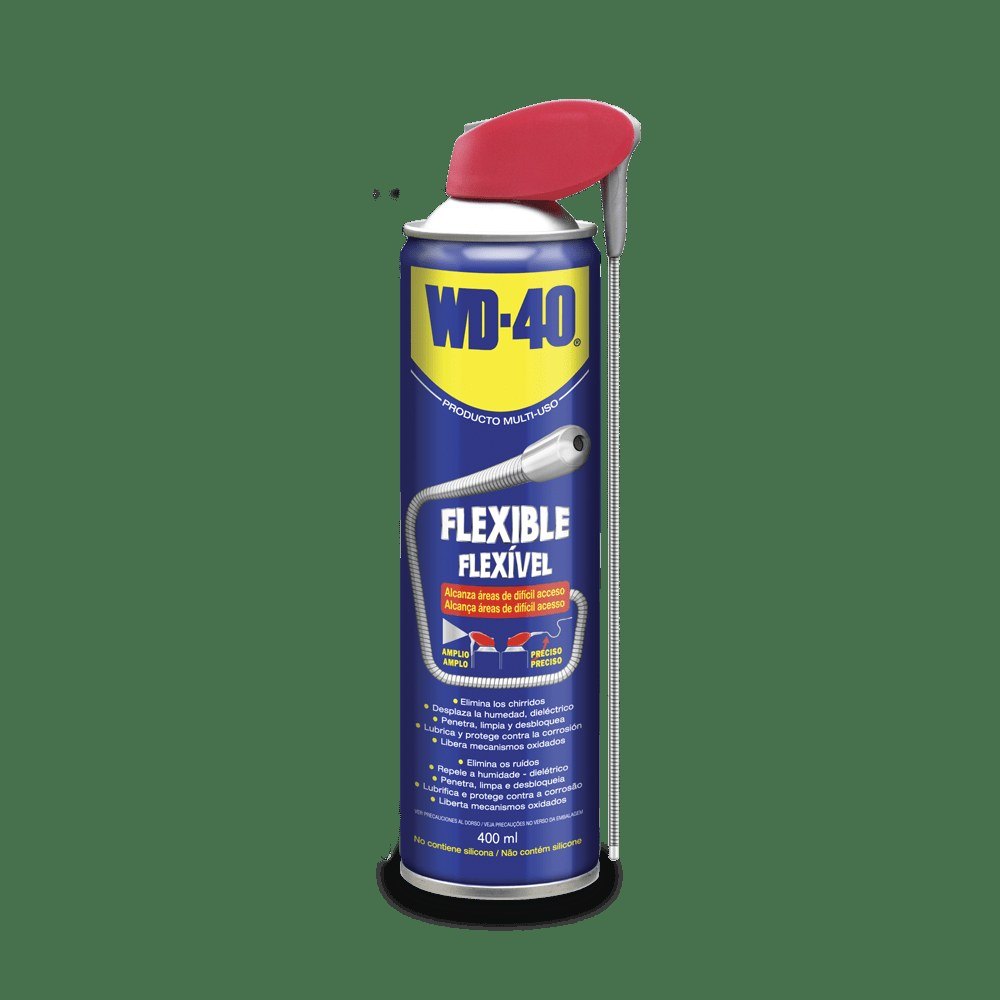
Tip: After using the thin straw, wipe its tip so it does not clog. Store the can somewhere dry, away from heat sources and out of reach of children.
What next
Keep one can at home and another in the car, and small problems will be solved in minutes. For workshops and fleets, WD-40 5 l with sprayer is the economical choice, and for large surfaces WD-40 Trigger Pro is the most convenient.
These uses come from the experience of WD-40 users in many countries. Always follow the instructions and warnings on the product label.
More guides in «How to use».