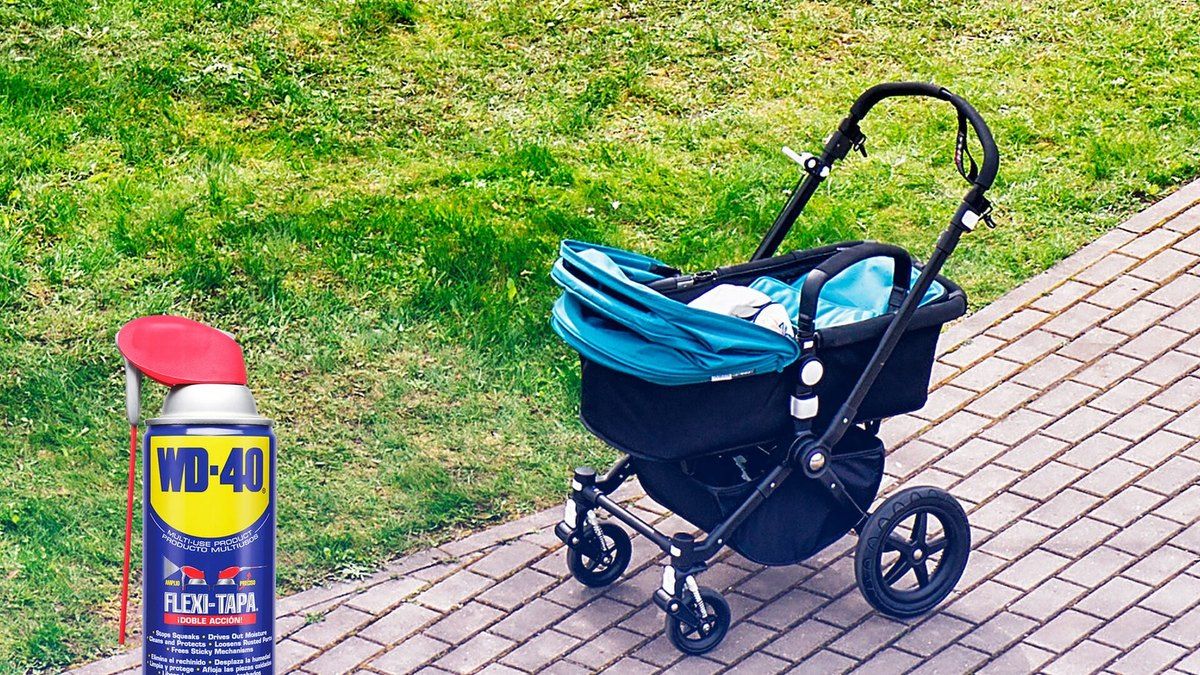
A stroller is pushed every day over tarmac, sand and puddles, and in winter over salted pavements too. Dust, grit and moisture work their way into the wheel bearings and frame joints, the lubricant washes out and a squeak appears that bothers both you and your child.
Most often the wheels and their axles are to blame. A thorough wash, targeted lubrication and a check of the screws usually bring back a quiet, easy ride.
What you will need
Important: Service the stroller without the child in it and away from the carrycot and fabrics. Do not spray onto the handlebar, upholstery or anything the child touches. Let the stroller air afterwards.
Step 1
Find where the squeak comes from
The noise usually comes from below. Push the stroller and listen: a rhythmic squeak that matches wheel rotation points to that wheel. A constant squeal often means a dry bearing, while a scraping sound can be dirt or a blade of grass between wheel and frame.
Lift the stroller and spin each wheel on its own. Check whether a wheel rubs on the frame after a knock against a kerb.

Step 2
Wash the wheels and frame
A good clean often solves half the problem. Wipe around the wheels with a sponge, warm water and mild soap, and reach into gaps with an old toothbrush. Avoid harsh cleaners, which can damage plastic, rubber and the frame finish.
On most models the wheels come off with a centre button or catch, so you can wash them separately. After walks on salted winter pavements, always rinse off the salt, as it eats into metal. Let everything dry.
Step 3
Lubricate the axles and bearings
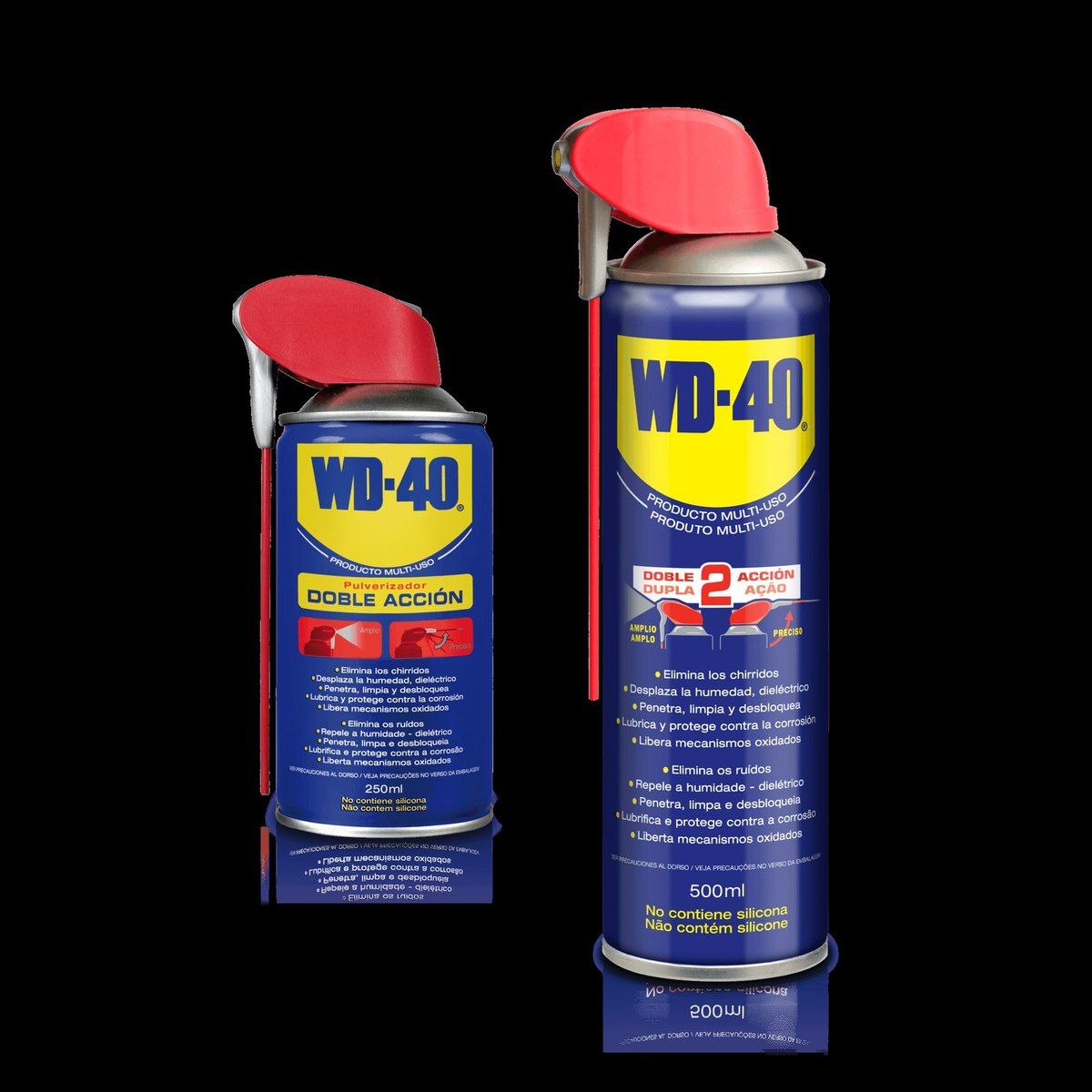
With the wheel off you can reach the axle. Flip up the straw on WD-40 Smart Straw and apply short bursts to the axle and bearing. It lubricates, displaces moisture and protects metal from rust.
Do not overdo it: excess lubricant collects sand and dust. Refit the wheel, spin it a few times and wipe off any residue.
Step 4
Treat plastic and rubber parts with silicone
For plastic bushes, rubber tyres and the swivel mechanisms of the front wheels, WD-40 Specialist Silicone is the better choice. It is safe on rubber and plastic, reduces friction and wear and does not attract dirt. You can also apply a thin coat to the folding hinges of the frame.
Step 5
Check and tighten the screws
Go round every visible screw with a screwdriver, especially near the wheel axles and on the frame joints. Tighten them firmly but not excessively, so parts are secure while the folding and swivel mechanisms still move freely.
If a screw has rusted and will not turn, apply a drop of WD-40 Multi-Use, wait a few minutes and try again. Follow the manual for your model.
Tip: After rain or wet snow, do not leave the stroller folded in a cold hallway: open it up indoors so the metal can dry. This prevents rust on the axles and stops the squeak returning.
What next
A check and light lubrication every 4-6 weeks, or roughly every ten outings, keeps the stroller quiet. Clear heavy mud and sand straight after a walk. WD-40 Smart Straw is equally handy for bikes, scooters and sledges.
These uses come from the experience of WD-40 users in many countries. Always follow the instructions and warnings on the product label.
More guides in «How to use».