Squealing or grinding when you brake usually means it is time to check the pads. Brakes also get noisy because of dirt and dust on the rotor and in the caliper, poor installation, worn parts or dry lever pivots.
After autumn rides on wet roads and mud, and winter rides through de-icing salt, brakes get dirty especially fast. A check takes half an hour and needs no special tools.
What you will need
- WD-40 Multi-Use
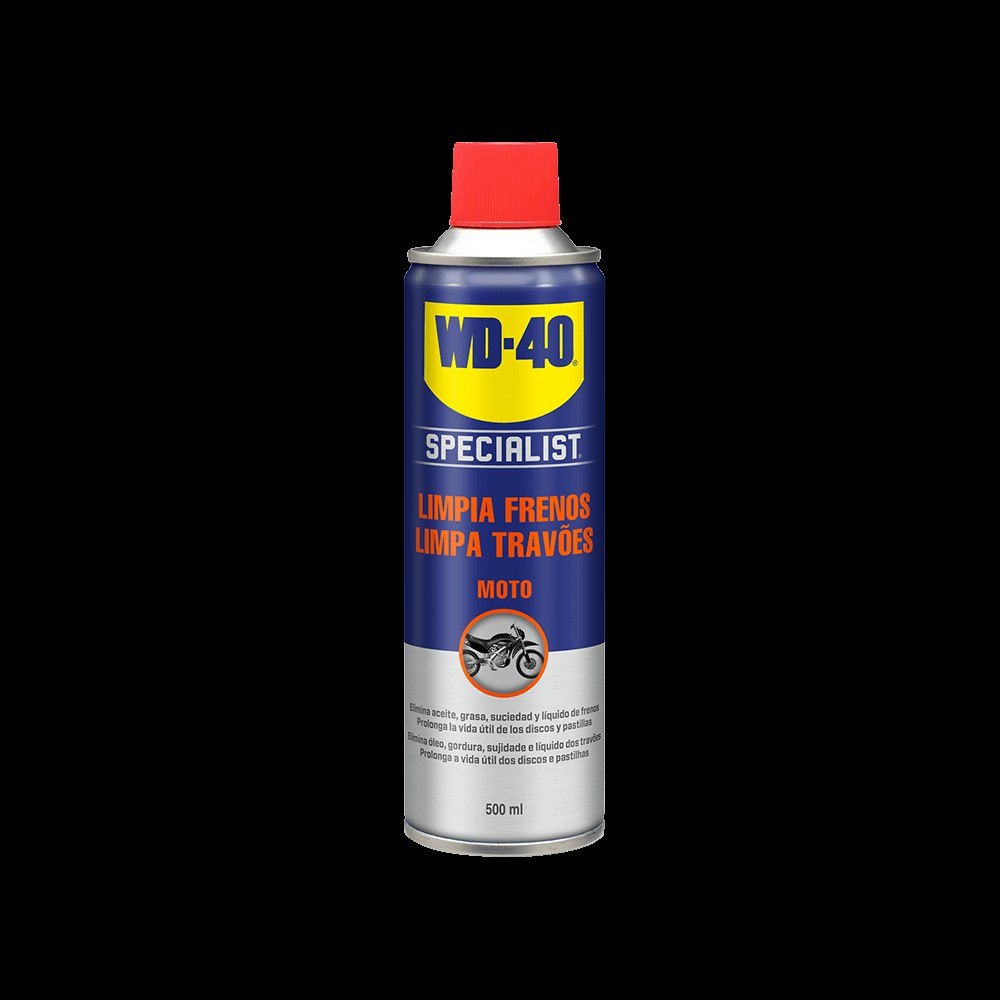
- clean dedicated disc brake cleaner or isopropyl alcohol
- tweezers or fine pliers
- clean lint-free rag
- nitrile gloves
- Allen keys
Important: No lubricant, including WD-40, must ever reach the rotor, pads or rim braking surfaces. Pads contaminated with lubricant lose stopping power and usually have to be replaced. Wear gloves and do not touch the rotor with your fingers.
Step 1
Remove the wheel
Turn the bike over or put it in a stand and remove the wheel to get at the caliper. Take care: the rotor must not touch rags or surfaces with traces of lubricant.
Lay the wheel down rotor side up on a clean surface.
Step 2
Take out the pads
Unscrew or pull out the retaining pin and lift the pads out with tweezers. Do not hold the pads by the friction surface or put them down on a bench that may have grease on it.
Step 3
Inspect the pistons and caliper
With the pads out you can see the pistons and the inside of the caliper. Dust, grit and dried mud here mean the bike has not been washed properly for a while. Carefully remove the dirt with a clean rag dampened with disc brake cleaner and let it dry.
Step 4
Check the pads and rotor
Measure the thickness of the pad friction material. The manufacturer gives the minimum, and pads thinner than that must be replaced. A shiny, glazed pad surface is another common cause of squealing.
Wipe the rotor with disc brake cleaner, which evaporates quickly and leaves no film. A rotor with deep grooves or below minimum thickness must be replaced.
Step 5
Lubricate the levers and reassemble
Fit the pads, secure the pin and refit the wheel. Now look after the parts that genuinely need lubrication: apply a little WD-40 Multi-Use to the brake lever pivots and, on rim brakes, to the pivots and cable. Spray only onto the pivot, holding a rag on the wheel side.
Brake gently several times at low speed to bed the pads in.
Tip: Carry a pocket-size
WD-40 100 ml on rides for levers and derailleurs, and keep the disc cleaner separate so you never mix them up at the roadside.
What next
Check your brakes once a month and after every ride through mud or on salted roads. If the noise remains after cleaning and fitting new pads, check the caliper mounting and rotor trueness, or visit a bike shop.
These uses come from the experience of WD-40 users in many countries. Always follow the instructions and warnings on the product label.
More guides in «How to use».