Climbing gear does not wear out from loads alone. Sand, dust, UV light, rain and damp storage quietly shorten its life, and your safety depends directly on the rope, harness and carabiners.
A typical kit includes a rope, harness, metal carabiners, belay device, helmet and climbing shoes. Below is a care routine that extends the life of your gear and helps you spot wear in time.
What you will need
Important: No lubricant, solvent or aerosol must ever touch the rope, slings, quickdraw tape or harness webbing: chemicals can weaken fibres without visible signs. Treat metal separately from textiles and wipe off excess carefully. Retire damaged gear rather than repairing it.
Step 1
Dry-clean your gear after every outing
Sand and dust trapped in the fibres act like sandpaper and accelerate rope wear. Thread the rope end through a rope brush and pull the whole length through it: the bristles comb dust and grit out of the sheath.
Brush dust off the rest of your gear with a soft brush and blow remaining grit out of mechanisms with compressed air.
Step 2
Wash the rope only when needed
Washing too often speeds up wear, so wash the rope occasionally, when it is genuinely dirty. Dry-brush it first, then soak for about 2 hours in lukewarm water with mild soap or a dedicated rope wash.
You can then machine-wash it on a synthetics cycle at no more than 30 °C, without a high-speed spin. Dry it loosely laid out in the shade, away from radiators and sunlight.
Step 3
Clean and lubricate the carabiners
Carabiner gates and rope contact points suffer most from sand. Soak the carabiners in warm soapy water, scrub with a soft brush, rinse well and dry with paper towels.
Once the metal is fully dry, put a drop of WD-40 Specialist Dry PTFE on the gate hinge and sleeve spring and open and close the gate several times. The dry film does not pick up grit. Wipe the excess off the body.
Step 4
Inspect the belay device and protection
Wash the belay device like the carabiners and inspect its working surfaces: deep grooves and sharp edges from wear mean it is time to replace it. Never lubricate surfaces the rope runs over.
After washing and drying, treat the moving parts of camming devices with WD-40 Specialist Dry PTFE, applying it precisely to the cam axles, and remove any excess.
Step 5
Protect steel hardware from rust
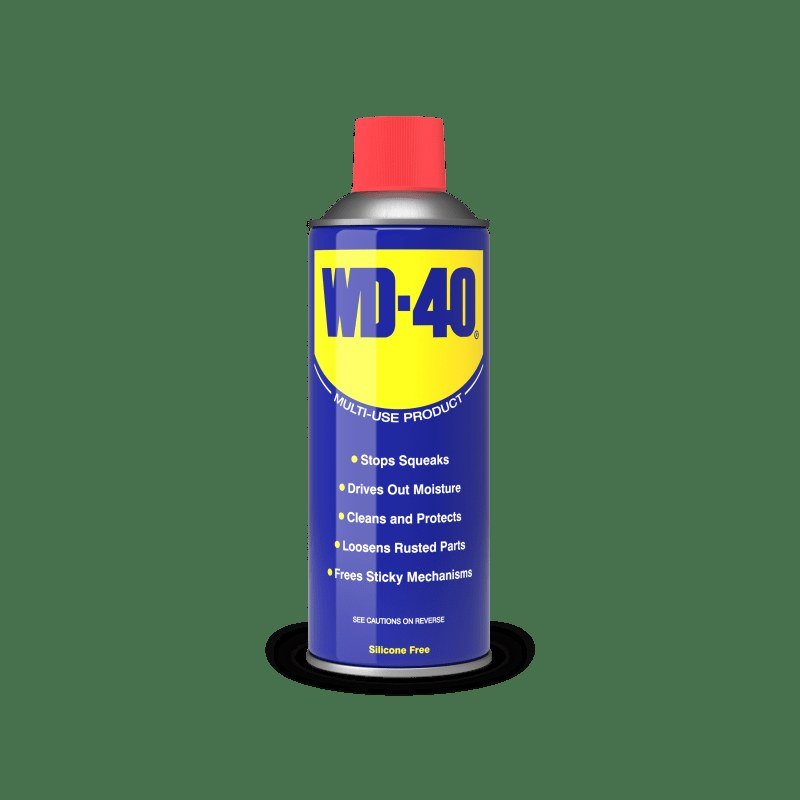
After the season, dry ice screws, crampons and other steel items thoroughly and wipe them with a cloth sprayed with WD-40 Multi-Use: the thin film displaces moisture and protects against corrosion. WD-40 Smart Straw is handy for crampon threads and hinges.
Wipe these items dry before your next trip.
Step 6
Store your gear properly
Keep gear somewhere dry, cool and dark, away from chemicals, petrol and batteries. Store the rope loosely coiled in a rope bag.
Record purchase dates and significant falls and respect the manufacturer's service life limits.
Tip: After trips to limestone crags or the wet Carpathians, do not leave gear damp in the car or a bag: lay it out to dry at home the same day. Moisture combined with dirt degrades both metal and textiles fastest.
What next
Dry-clean after every outing, wash the rope a few times a season, and inspect and lubricate carabiner gates monthly if you climb a lot. Regular inspection matters more than any lubricant.
These uses come from the experience of WD-40 users in many countries. Always follow the instructions and warnings on the product label.
More guides in «How to use».