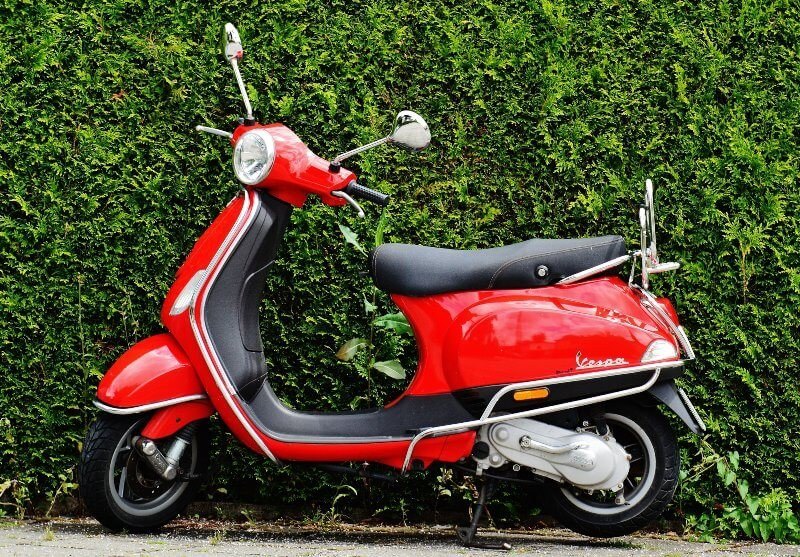
A town scooter collects everything: dust, puddle spray and, in winter and spring, de-icing salt from the road. Salt settles on the frame, fasteners and exhaust, and by the end of a season bare metal starts to rust.
Washing every 2-3 weeks and after every ride on wet, salted roads extends the life of plastics, chrome and electrics. Here is how to do it at home or at a self-service wash.
What you will need
- garden hose or pressure washer on its lowest setting
- car shampoo and a bucket of warm water
- soft two-wheeler brush
- several microfibre cloths
- brake cleaner for the discs
- WD-40 Multi-Use for metal and chrome
- WD-40 Specialist Silicone for plastic and rubber
- WD-40 Smart Straw for cables and pivots
Important: Only wash the scooter with a cold engine and exhaust. Never aim a pressure jet at the ignition lock, dashboard, connectors or bearings, and keep all lubricants and silicone away from brake discs, pads, tyres and the seat.
Step 1
Prepare the spot
Put the scooter on its centre stand on level ground, ideally near a drain. If you have no suitable space at home, use a self-service wash and take everything with you.
Cover the ignition lock and the exhaust outlet with a plastic bag to keep water out.
Step 2
Wash the bodywork
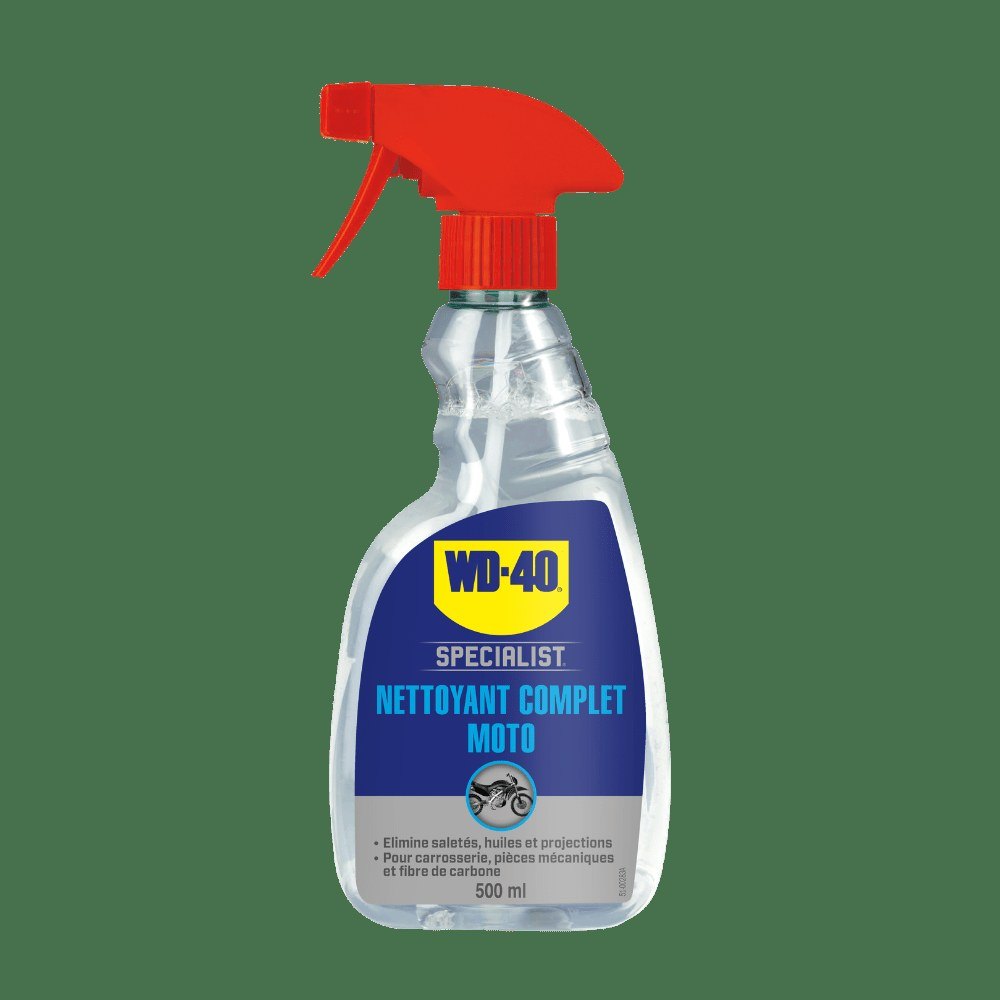
Wet the whole scooter from the bottom up to soften mud and grit. Apply shampoo with a sponge or sprayer to the plastics, frame, wheels and seat.
Brush the dirtiest areas: wheel arches, footboards and the lower frame. Rinse with clean water and dry straight away with microfibre to avoid streaks and salt marks.
Step 3
Clean the brake discs
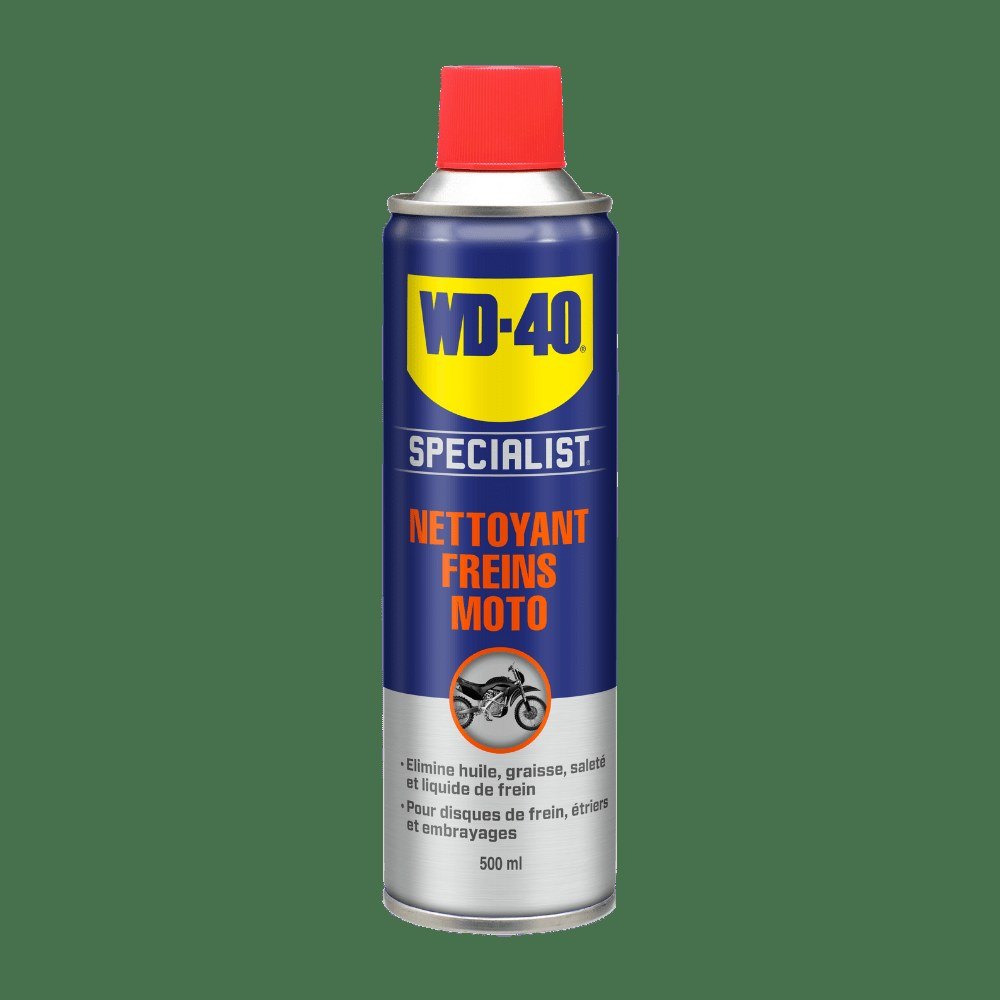
Discs collect brake dust and an oily road film. Apply brake cleaner to a cloth or directly to the disc and wipe both faces while turning the wheel.
Use no lubricant or silicone here: brakes must stay completely dry and grease-free.
Step 4
Protect metal and chrome
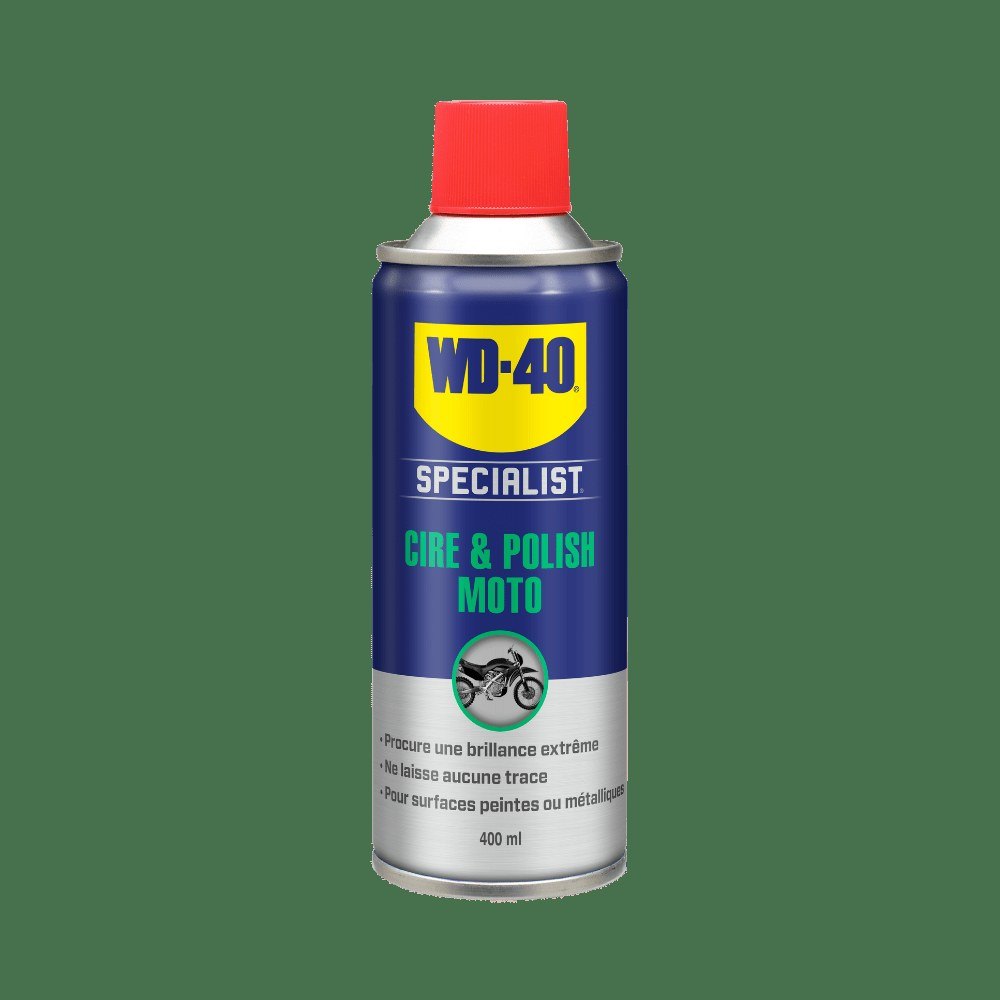
Once the scooter is dry, put WD-40 Multi-Use on a cloth and wipe chrome parts, fasteners, bolts, the stand and bare areas of the frame. It displaces the last of the moisture and leaves a thin film that guards against corrosion.
Buff the chrome to a shine with a clean, dry microfibre.
Step 5
Refresh plastic and rubber
Spray WD-40 Specialist Silicone onto a microfibre and wipe unpainted plastics, rubber trims and seals. Silicone restores colour, repels water and helps stop rubber cracking in frost.
Do not apply it to the seat, footboards or handlebar grips, as they will become slippery.
Step 6
Lubricate moving parts
Using the thin straw of WD-40 Smart Straw, treat the centre and side stand pivots, brake lever pivots and the ends of the throttle and brake cables where they leave the outer. Twist the throttle a few times and wipe off any excess.
Tip: After riding on salted winter roads, wash without delay: salt attacks metal hardest in the first days while it is still damp. Even a quick rinse followed by a wipe of
WD-40 Multi-Use on the fasteners saves bolts and frame from rust streaks.
What next
Wash the scooter every 2-3 weeks in season and after every ride on salted roads. Repeat the protective treatment with WD-40 Multi-Use monthly and before winter storage, and refresh the plastics with WD-40 Specialist Silicone as needed.
These uses come from the experience of WD-40 users in many countries. Always follow the instructions and warnings on the product label.
More guides in «How to use».