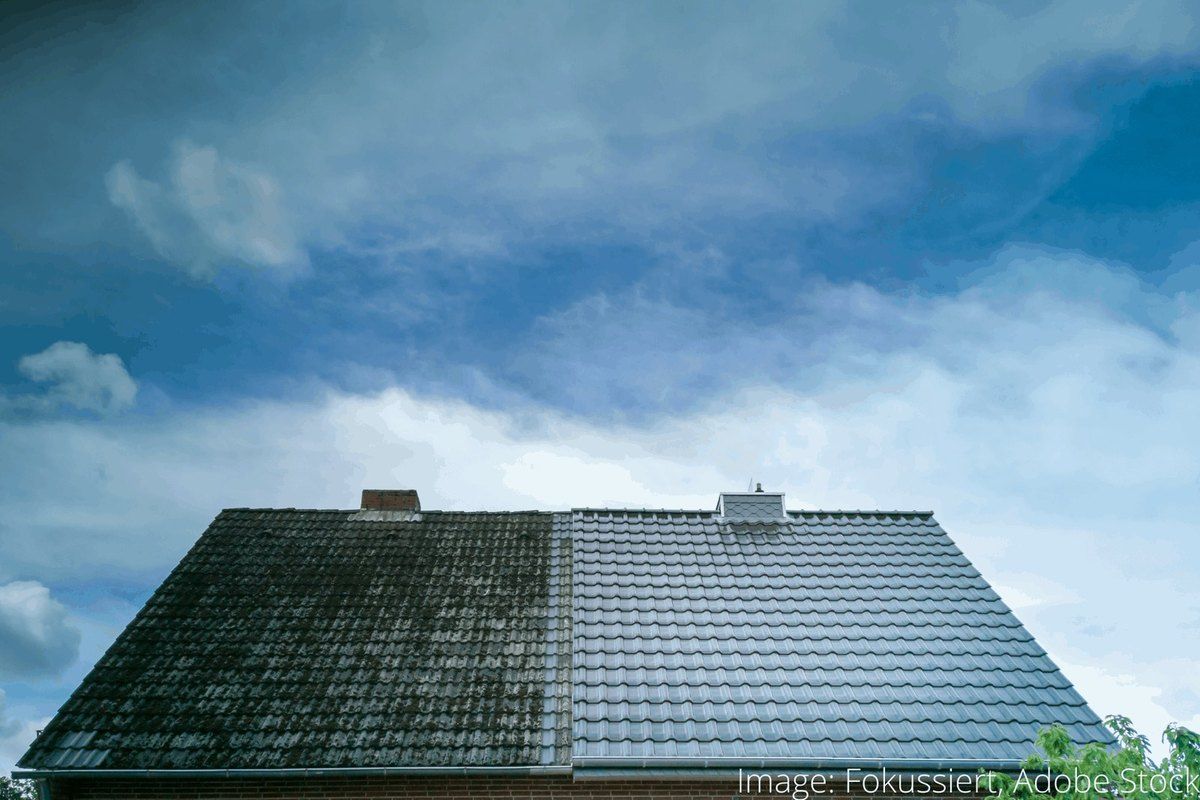
A roof faces rain, snow, sun and dust every day, and if trees grow nearby, moss, algae and leaves soon settle on the tiles. It is not just about looks: moss holds moisture, which freezes and expands in winter, so tiles crack and shift and the roof starts to leak. Leaves also clog gutters and downpipes.
That is why a roof is worth cleaning every year or two, ideally in late spring or early autumn in dry weather. The method depends on the roof: clay and concrete tiles, natural slate, bitumen shingles and plastic panels each need different care.
What you will need
- A sturdy extension ladder
- WD-40 Specialist Silicone for the ladder mechanism
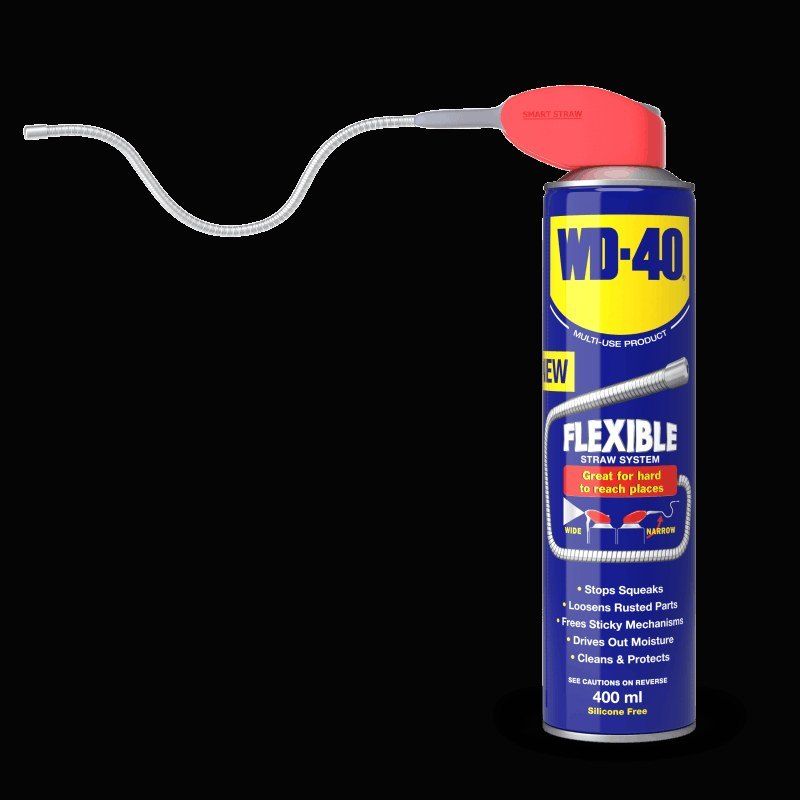
- WD-40 Multi-Use for the ladder's metal locks and hinges
- Fall protection: harness with carabiner, rope, anchor points, helmet, non-slip shoes
- Garden hose
- Pressure washer
- Stiff plastic-bristle brush and a soft brush
- Washing-up liquid, and a dedicated moss treatment if needed
- Boards or crawl boards for moving across soft roofing
Important: Roof work is dangerous. Never work alone, on a wet or icy roof, or in windy weather. Use fall protection and a helmet. Apply silicone only to the sliding rails of the ladder, never to the rungs or feet, which would become slippery.
Step 1
Put safety and the ladder first
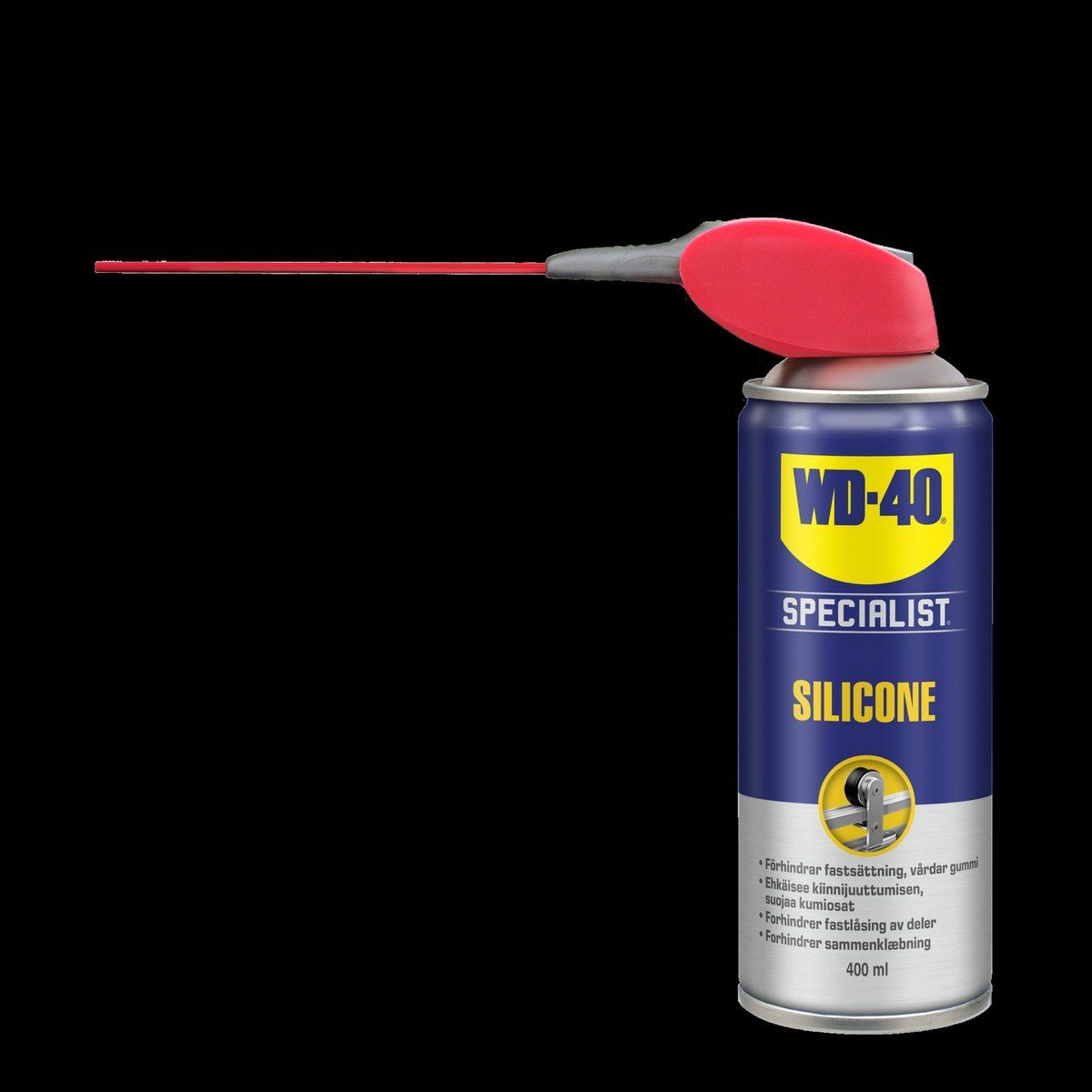
Roofs are often hard to reach, so start with the ladder. Before use, spray WD-40 Specialist Silicone onto the rails of the extending sections: silicone does not attract dust and gives a light, smooth glide, so the ladder will not jam at height. Treat the locks and hinges with WD-40 Multi-Use so they click firmly into place, and wipe off any excess.
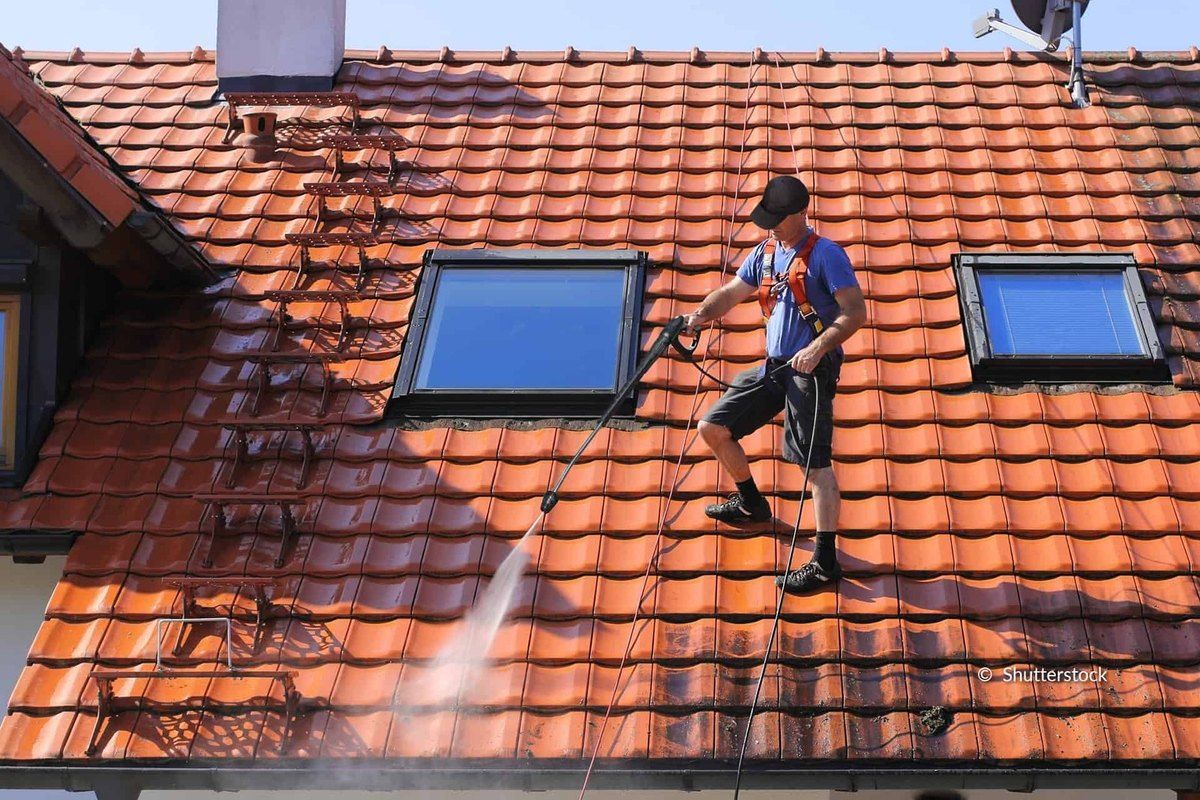
Put on a harness, tie the rope to a secure anchor point and wear a helmet and non-slip shoes.
Step 2
Clear the gutters and rinse the roof
First clear leaves and dirt from the gutters, or the washing water will not drain away and will pour down the walls instead. Then rinse the whole roof with an ordinary hose, starting at the ridge and working downwards. This washes off anything lying loose and is the same for every type of roof. Let the roof dry.
Step 3
Deep clean clay and concrete tiles
A pressure washer on a medium setting works best for clay and concrete tiles. You can add a little washing-up liquid to the water. Always aim the jet from top to bottom, in the direction the tiles overlap: spraying upwards or sideways drives water under the tiles into the loft and can dislodge them.
Where moss clings on, scrub with a stiff plastic brush and rinse again. Natural slate is cleaned the same way, but softer stone should only get low pressure. Finish by clearing the gutters once more. Dedicated moss and algae treatments slow regrowth; wear goggles and gloves when using them.
Step 4
Clean bitumen shingles gently
Never pressure wash bitumen shingles with a coloured granule finish: the jet strips the granules and damages the surface. Rinse them with an ordinary hose and brush gently with a moderately soft brush. This type of roof is quite soft, so do not walk on it directly; lay boards to spread your weight.
Step 5
Wash plastic roofing
Polycarbonate or ABS panels can be pressure washed, but without a brush, or with a very soft one only, to avoid scratches and dull marks. Be especially careful where you step on such a roof, as plastic can easily give way. Work from a ladder or from boards laid across the rafters.
Tip: After cleaning, inspect the roof: replace cracked or slipped tiles straight away, before the autumn rain and first snow. It is far cheaper than repairing soaked insulation in the loft.
What next
Clean the roof every year or two and the gutters twice a year, in spring and after leaf fall. After the season, treat the ladder rails with WD-40 Specialist Silicone again and store it under cover.
These uses come from the experience of WD-40 users in many countries. Always follow the instructions and warnings on the product label.
More guides in «How to use».