Gym kit tends to live where there is plenty of moisture: a cellar, a garage, a balcony or a gym where sweat and breath raise humidity. Sweat contains salt, so bars, plates, dumbbells, racks and cables soon gain orange spots if they are not wiped down.
This equipment is not cheap, and neglected corrosion makes it awkward and unsafe: the bar gets rough, cables stick and fixings weaken. Regular cleaning and a quick treatment take a few minutes and add years to its life.
What you will need
- microfibre cloths, a clean cotton rag
- nylon bristle brush
- fine abrasive paper or an abrasive pad
- WD-40 Multi-Use
- WD-40 Trigger Pro for large frames and racks
- surface sanitiser
Important: Always unplug electrical machines (treadmills, exercise bikes with electronics) before cleaning. Do not apply lubricant to seats, handles or the treadmill belt: they could become slippery.
Step 1
Clean off dust and sweat
Rust is easier to remove from clean metal. Wipe the equipment with a damp microfibre cloth, paying attention to gaps, joints and the knurling on bars.
Let all surfaces dry completely before moving on.
Step 2
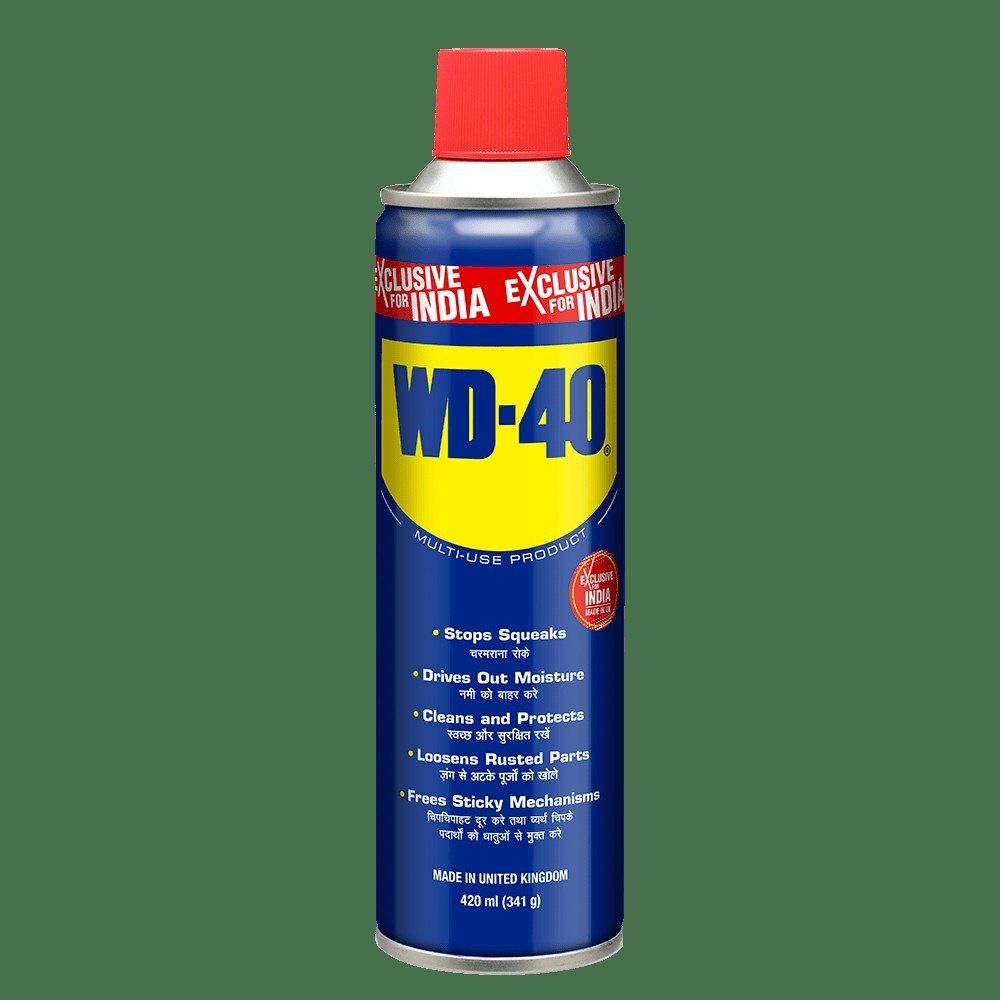
Apply WD-40 to the rusty areas
Shake the can and spray WD-40 Multi-Use onto the rust so it is fully covered. For large frames, power racks and machine bases, WD-40 Trigger Pro with its trigger is more convenient.
Cover grips and rubber pads with a cloth to keep the product off them.
Step 3
Wait a few minutes
Leave it for 5-10 minutes. In that time it works under the rust and weakens its grip on the metal, so the deposit comes off much more easily.
On old, thick rust you can apply a second coat and wait longer.
Step 4
Scrub and wipe the rust away
Go over the treated area with the nylon brush, then wipe off the softened rust with a rag. Clean bar knurling by brushing along the pattern.
If traces remain, sand them lightly with fine paper and repeat the treatment. Do not sand chrome or painted surfaces; use only the brush and cloth on them.
Step 5
Wipe down and sanitise the equipment
Wipe off the excess thoroughly with a dry cloth: only a barely visible film should remain on the metal, not a greasy layer. Sanitise grips, seats and any area that touches skin.
Wipe the cables, pulleys and guide rods of cable machines and treat them with WD-40 Specialist Silicone so the carriages run smoothly.
Tip: Keep a cloth by the rack and wipe sweat off bars and dumbbells after every session. In a cellar or garage, run a dehumidifier: without damp, rust hardly appears.
What next
As prevention, treat metal parts once a month, more often in damp rooms. For spot treatment of bolts, hinges and adjustment pins, WD-40 Smart Straw with its thin straw is ideal.
These uses come from the experience of WD-40 users in many countries. Always follow the instructions and warnings on the product label.
More guides in «How to use».