A wheelchair tackles kerbs, cobbles, puddles and salted snow every day. Load and moisture make the joints, wheel fixings and folding mechanism squeak, and rust spots appear on the frame. A squeak does not mean the chair needs replacing, but it is a sign it needs some attention.
Regular care takes little time and no special skills. Inspect the chair carefully, wash it, lubricate the moving parts correctly and check the fixings.
What you will need
Important: Never apply lubricant to the tyres, rims or brake pads: the chair will stop braking. Only lubricate the brake lever pivots. Sealed wheel bearings do not need external lubrication. Check the manufacturer's manual before you start.
Step 1
Inspect the chair
Stand the chair on a level surface, roll it slowly, fold and unfold it, and press on the backrest and footrests. This helps you locate the squeak: frame joints, front castors, footrests or backrest mountings.
Also check tyre pressure (ideally monthly), brake wear and the frame: cracks, rust or bends need a service centre.

Step 2
Wash the frame and wheels
Wipe the frame, wheels and folding mechanism with a cloth dipped in warm water and mild soap. Keep the upholstery and bearings dry. Be thorough with sand and salt after winter, as they are the main cause of squeaks and corrosion.
Rinse with clean water and dry the chair thoroughly, paying attention to joints and holes where water can collect.
Step 3
Protect the metal from moisture
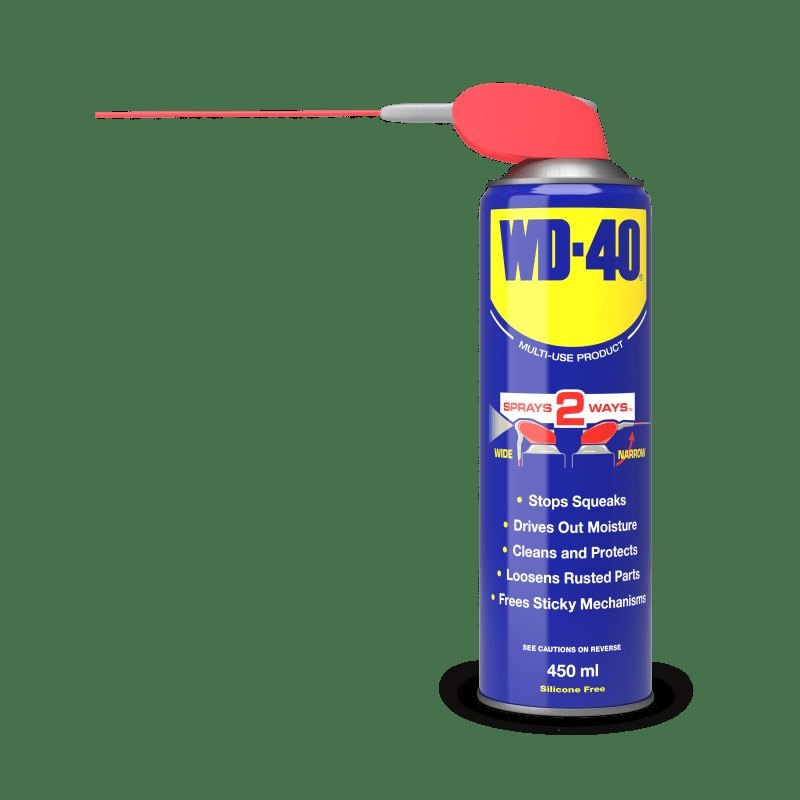
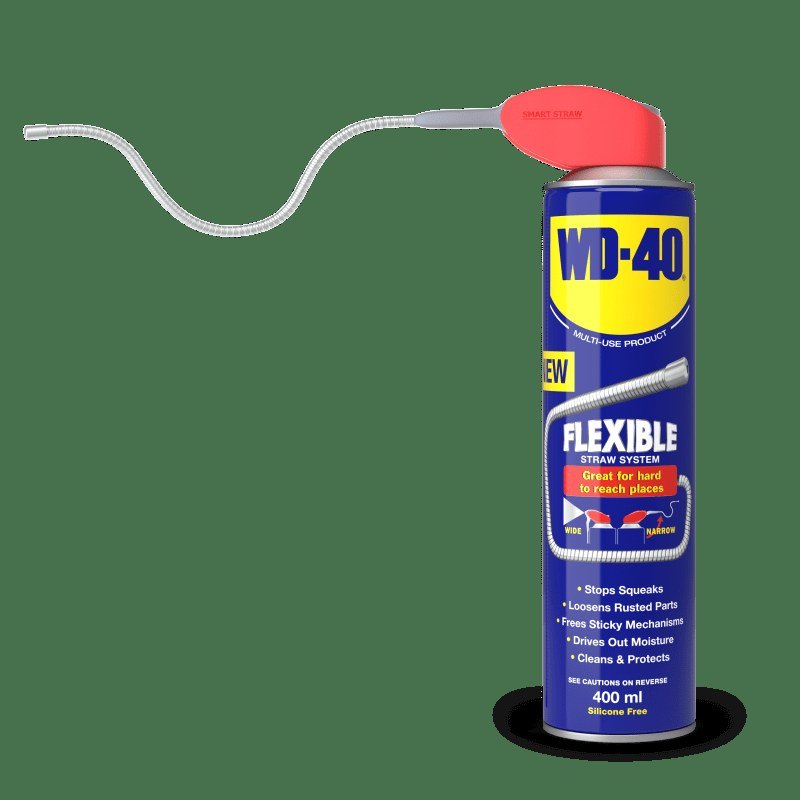
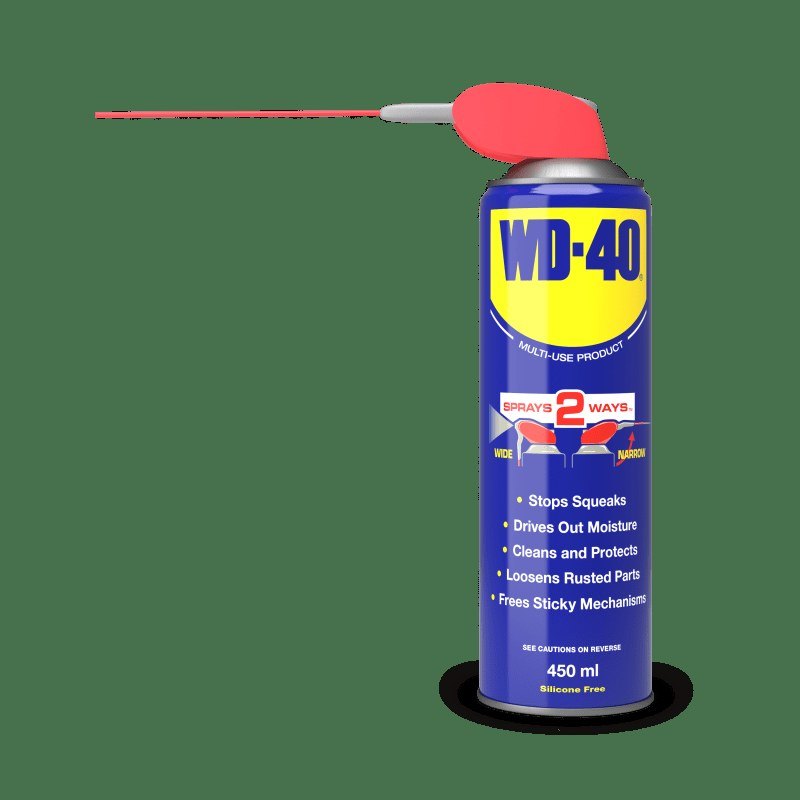
After washing, apply WD-40 Smart Straw to metal joints, bolted connections and any rust spots. It drives water out of gaps, stops corrosion and helps free stiff parts. Wipe off the excess so it does not mark clothing.
Step 4
Lubricate the moving parts
Apply WD-40 Specialist White Lithium Grease to the folding mechanism joints, footrest pivots and backrest mountings. It stays on loaded joints, does not run and silences squeaks for a long time. Fold and unfold the chair a few times to spread it.
Where metal slides on plastic, such as the front castor forks, WD-40 Specialist Silicone is the better choice: it is safe on plastic and does not attract dust.

Step 5
Check screws and fixings
Go over all the bolts on the wheels, backrest, armrests and footrests. Tighten any loose ones without overdoing it: an over-tightened joint also squeaks and stops the pivot working freely. If a screw is seized, wet the thread with WD-40 and wait a few minutes before undoing it.
Step 6
Test the brakes after servicing
Wipe the tyres and rims with a clean dry cloth to make sure no lubricant is left on them. Check that the brakes hold the chair securely on a slope. Only then is the chair ready to use.
Tip: Keep a simple schedule: check the brakes weekly, do a full inspection with washing and lubrication every two months, and have the chair serviced professionally once or twice a year. Add an extra wash after the slush and road salt season.
What next
Regular care extends the life of the chair and keeps every journey quiet and safe. For everyday prevention, keep WD-40 Smart Straw at home and repeat the lithium grease treatment whenever a joint starts to squeak.
These uses come from the experience of WD-40 users in many countries. Always follow the instructions and warnings on the product label.
More guides in «How to use».