Most people only think about the jack once a tyre is already flat: at the roadside, in the dark, often in the rain. That is exactly when it turns out the screw has rusted, the joints have seized and the handle barely turns. The standard jack spends years in the boot or spare wheel well, where moisture collects, and every use leaves mud, sand and winter salt on it.
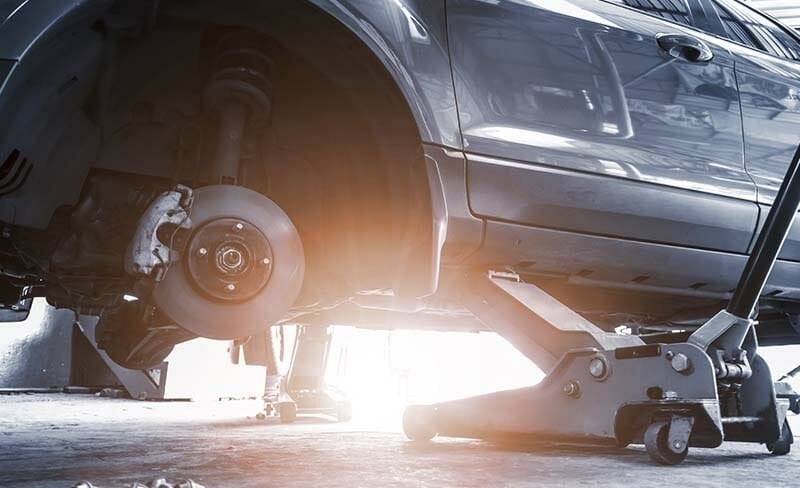
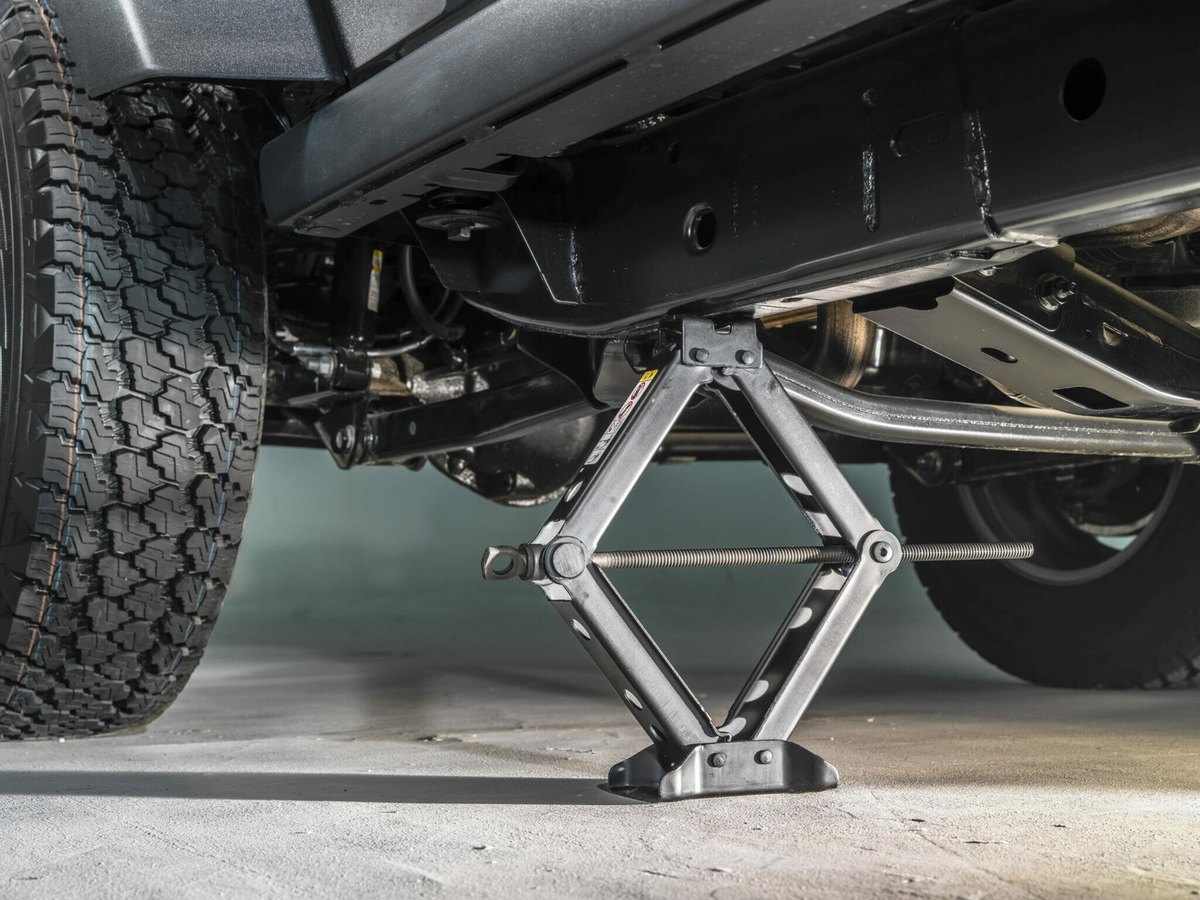
Most cars carry a mechanical scissor jack with a threaded screw, while garages and workshops use hydraulic bottle or trolley jacks. Looking after them is simple and takes half an hour a year, and in return the tool will work when you really need it.
What you will need
Important: Never work under a car supported only by a jack: always use axle stands. Place the jack only at the lifting points shown in the owner's manual.
Step 1
Clean off the dirt
Open the jack fully and wash it with warm water and car shampoo. Go over the dirtiest areas, caked mud and sand in the thread with a brass brush, which is gentler on metal than a steel one. Let the tool dry thoroughly afterwards, ideally somewhere warm.
Step 2
Remove tar and protect against rust
Remove bitumen and road tar spots, as well as light surface rust, with WD-40 Multi-Use. Spray it on, wait a minute and spread it over the whole jack with a microfibre cloth. The thin film left behind displaces moisture and protects the metal from fresh corrosion. In tight spots the thin straw of WD-40 Smart Straw is handy.
Step 3
Free up the joints and screw
Wind the handle from the lowest to the highest position. If the screw moves in jerks and the joints squeak or stick, the old grease has dried out and mixed with dirt. Treat the joints and thread with WD-40 Specialist Penetrant, wait a few minutes, then raise and lower the jack several times. Wipe away the loosened dirt and old grease.
Step 4
Apply fresh grease
Apply WD-40 Specialist White Lithium Grease to the clean screw and joints. It clings to metal, resists water wash-off and copes with heavy loads, so the screw turns smoothly even after a year in the boot. Wind the mechanism through its full travel to spread the grease, then wipe the excess off outer surfaces so it does not attract dust.
Step 5
Service a hydraulic jack
Bottle and trolley jacks lift by oil pressure in a sealed circuit. Once a year check the oil level through the filler plug as described in the instructions and top up only with the recommended hydraulic jack oil. If the jack lifts sluggishly or sinks, there may be air in the system: bleed it by running several full lifting cycles with the plug or release valve slightly open, following the manufacturer's instructions.
Wipe the ram, the trolley wheels and the handle joints and treat them with WD-40 Multi-Use, then wipe the ram dry.
Step 6
Check the kit and the spare
Make sure the jack handle, wheel brace and wheel chock are in the boot. Check the spare tyre pressure too: it should be as ready as the jack. Store the jack folded in a dry place, not loose at the bottom of a well where water collects.
Tip: After winter, when the jack may have been in contact with salt, give it at least a quick treatment: wipe it, spray it with
WD-40 Multi-Use and wind the screw through. It takes five minutes and saves it from seizing at the worst possible moment.
What next
Do a full service once a year and every time the jack has been used in mud or rain. The same products are useful for the wheel brace, door hinges and bonnet catch.
These uses come from the experience of WD-40 users in many countries. Always follow the instructions and warnings on the product label.
More guides in «How to use».