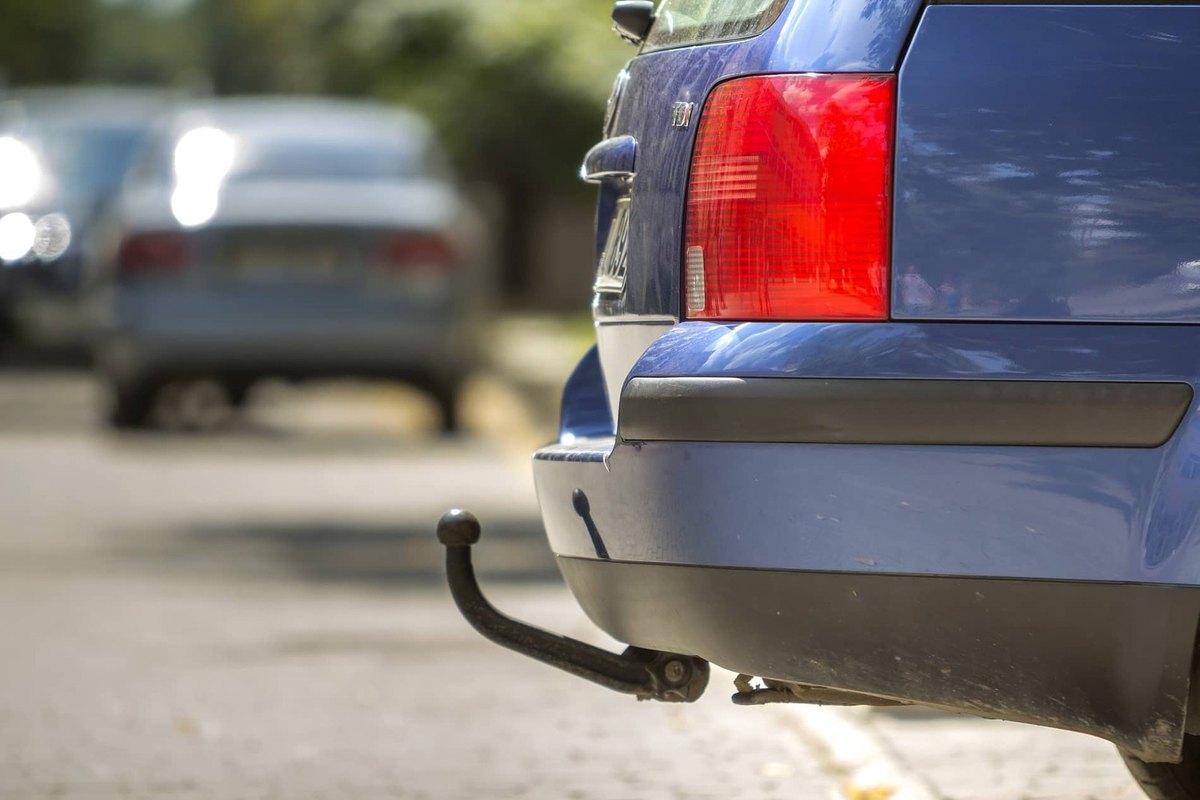
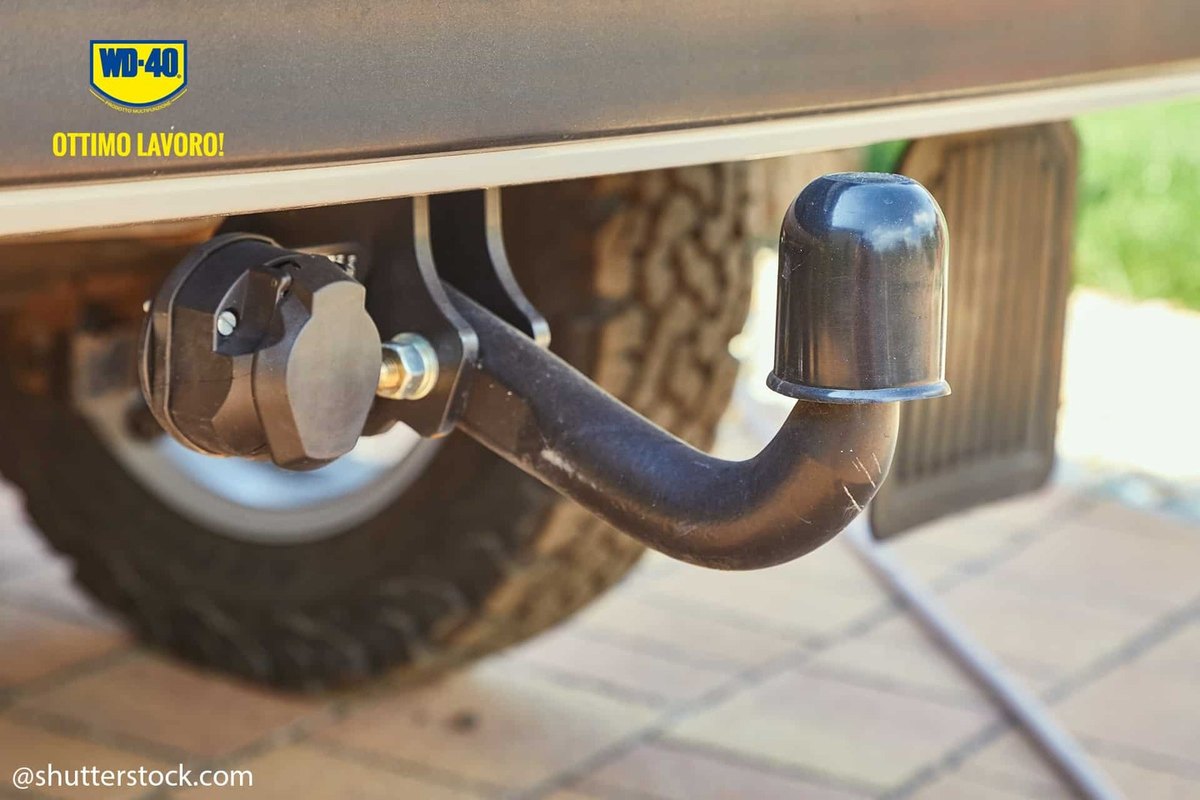
A tow hitch is bolted firmly to the vehicle chassis and lets you pull a trailer, a boat or a caravan. Its heart is a steel tow ball with a standard 50 mm diameter, onto which the trailer coupling head fits and locks. Hitches can be fixed, detachable or swing-away.
Next to it sits the electrical socket that carries brake, side and indicator light signals to the trailer. Winter road salt, mud and water thrown up by the wheels quickly damage both the ball and the contacts. Regular care takes a few minutes and directly affects safety.
What you will need
Important: If your trailer uses a stabiliser coupling (friction pads acting on the ball), you must NOT lubricate the ball. Leave replacement of the ball or neck to a specialist, as it is a safety critical part.
Step 1
Clean the tow ball
Road dirt usually washes off with water, after which the ball must be wiped dry. Remove old hardened grease, oily marks and salt residue with WD-40 Multi-Use: spray, wait a minute and wipe with a cloth. It dissolves the grime and leaves a thin film that protects against rust.
Gently rub small rust spots away with fine sandpaper. Work lightly so you do not change the shape of the ball, because a secure connection with the trailer depends on it.
Step 2
Check the mountings and ball diameter
Check that the hitch mounting bolts are tight about 1,000 km after fitting, and then before every trip with a trailer. Inspect the bracket: cracks, distortion or heavy corrosion at the mountings mean you should visit a workshop straight away.
Measure the ball diameter with a caliper in several directions. If it is below 49 mm, the ball and neck must be replaced, and only a qualified installer should do this.
Step 3
Lubricate a ball without a stabiliser
For a standard coupling head, apply a thin layer of WD-40 Specialist White Lithium Grease to the clean ball. It reduces friction and wear on the ball and coupling, does not run, and repels water, so it guards against corrosion.
Do not overdo it: a thin film is enough. Excess grease picks up sand and dirt, which act as an abrasive.
Step 4
Keep a stabiliser ball dry
A stabiliser coupling has friction pads that press against the ball to damp trailer sway. Grease mixes with the pad material into a paste and ruins their effect. Keep this type of ball dry and free of grease.
If a new ball is painted, carefully remove the paint from the working surface with sandpaper, as it also interferes with the pads. If in doubt, follow the coupling manufacturer's manual.
Step 5
Clean the electrical socket
Before setting off, check the trailer lights. Treat oxidised or damp contacts in the car socket and trailer plug with WD-40 Specialist Contact Cleaner: it dissolves dirt, grease and condensation and evaporates quickly without leaving a film. Do this with the ignition off.
Always close the socket cover when no trailer is connected.
Tip: Fit a soft plastic cover on the ball whenever you are not towing: it keeps dirt and moisture off the ball and keeps your clothes clean too.
What next
Clean and inspect the hitch before every trip with a trailer, and give it a full service after a winter of salted roads. If noticeable rust has already formed on the ball, follow our guide to removing rust from a tow hitch and then protect the metal with WD-40 Multi-Use.
These uses come from the experience of WD-40 users in many countries. Always follow the instructions and warnings on the product label.
More guides in «How to use».