A motorcycle battery has two well-known enemies: cold and long periods without use. Both slowly drain the charge until, come spring, the engine simply will not start. An alarm or GPS tracker also draws current while the bike is switched off.
First, identify your battery type: maintenance-free AGM or gel, classic flooded lead-acid with filler caps, or lithium. They last between two and five years and their care differs slightly. The general rules are below.
What you will need
Important: Wear safety glasses and gloves. Disconnect the negative terminal first and reconnect it last. Never rest metal tools on the battery.
Step 1
Disconnect the battery when the bike is idle
Regular rides of 20-30 minutes at varied revs let the alternator charge the battery properly, whereas short trips only drain it. If the bike will stand for weeks, disconnect the battery from the electrical system, and for winter remove it if possible and store it somewhere dry and above freezing.
Step 2
Clean the battery compartment
Clear dust, leaves and dirt from the compartment and remove any moisture or oxidation from the metal parts around it. Apply a little WD-40 Multi-Use to brackets, bolts and metal surfaces in the compartment: it displaces moisture, prevents rust and lifts greasy marks. Do this twice a year, before and after winter storage.
Step 3
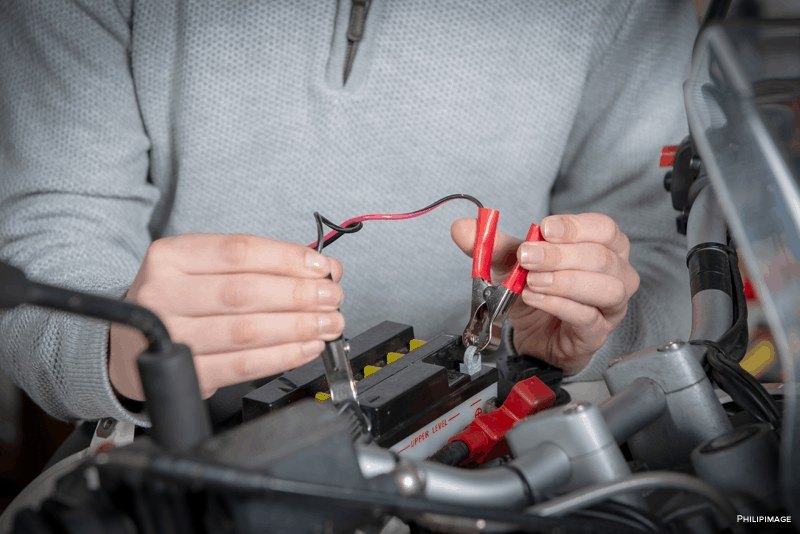
Clean the posts and terminals
If the terminal bolts are seized, apply WD-40 Specialist Penetrant and wait a few minutes. Remove the clamps, brush the posts and terminals with a brass brush and wipe with a cloth.
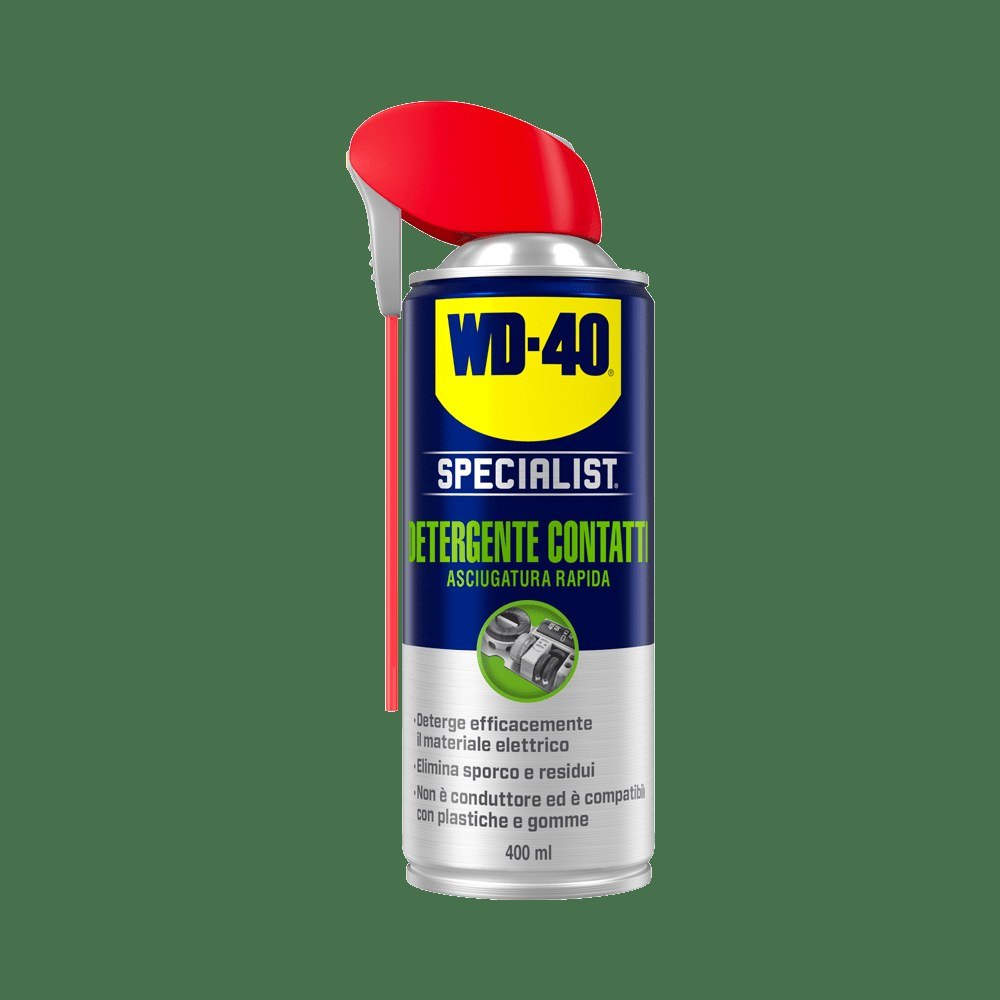
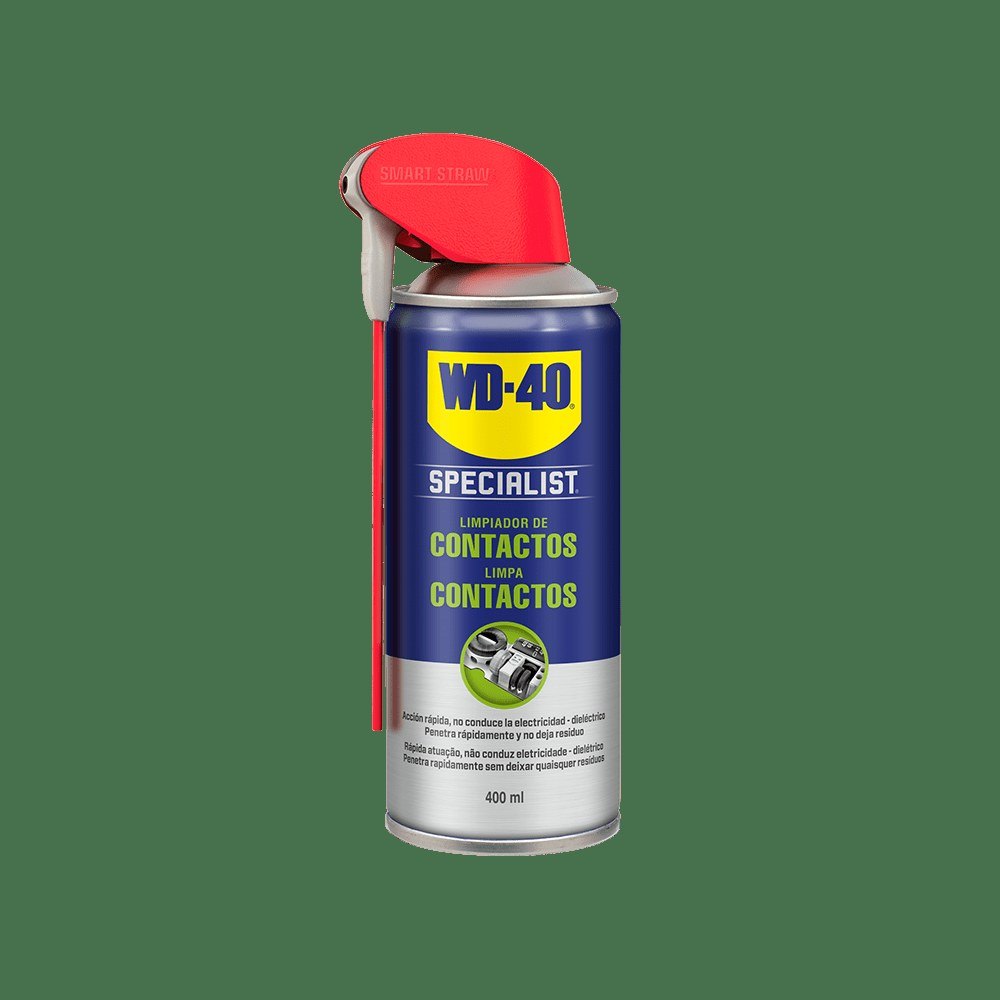
Then treat them with WD-40 Specialist Contact Cleaner: it dissolves grease, dirt, dust and condensation, evaporates quickly and leaves no residue. Clean contacts carry current better and make starting easier.
Step 4
Protect the terminals from oxidation
Once connected and tightened, apply a thin layer of dedicated battery terminal grease to the positive terminal. It stops damp air from oxidising the post over the winter.
Step 5
Check the voltage and recharge
Measure the voltage with a multimeter every month. Recharge a 12 V battery if it drops below 12.4 V, and a 6 V battery below 6.2 V. A good electronic charger suits lead-acid batteries, while lithium batteries need a dedicated charger.
The easiest option is a battery maintainer: it charges in cycles and keeps the battery from either running flat or overcharging.
Step 6
Service flooded batteries
Older motorcycles may still use batteries with liquid electrolyte and filler caps. Besides charging, check the level in each cell and top up with distilled water to the mark when needed. The rest of the care is the same.
Tip: Never charge a frozen battery. If a discharged battery has spent a night in frost, let it thaw at room temperature before connecting the charger.
What next
In spring, before refitting, go over the terminals with Contact Cleaner once more and check the voltage. For the rest of the bike after winter, WD-40 Multi-Use helps with cables, locks and lever pivots.
These uses come from the experience of WD-40 users in many countries. Always follow the instructions and warnings on the product label.
More guides in «How to use».