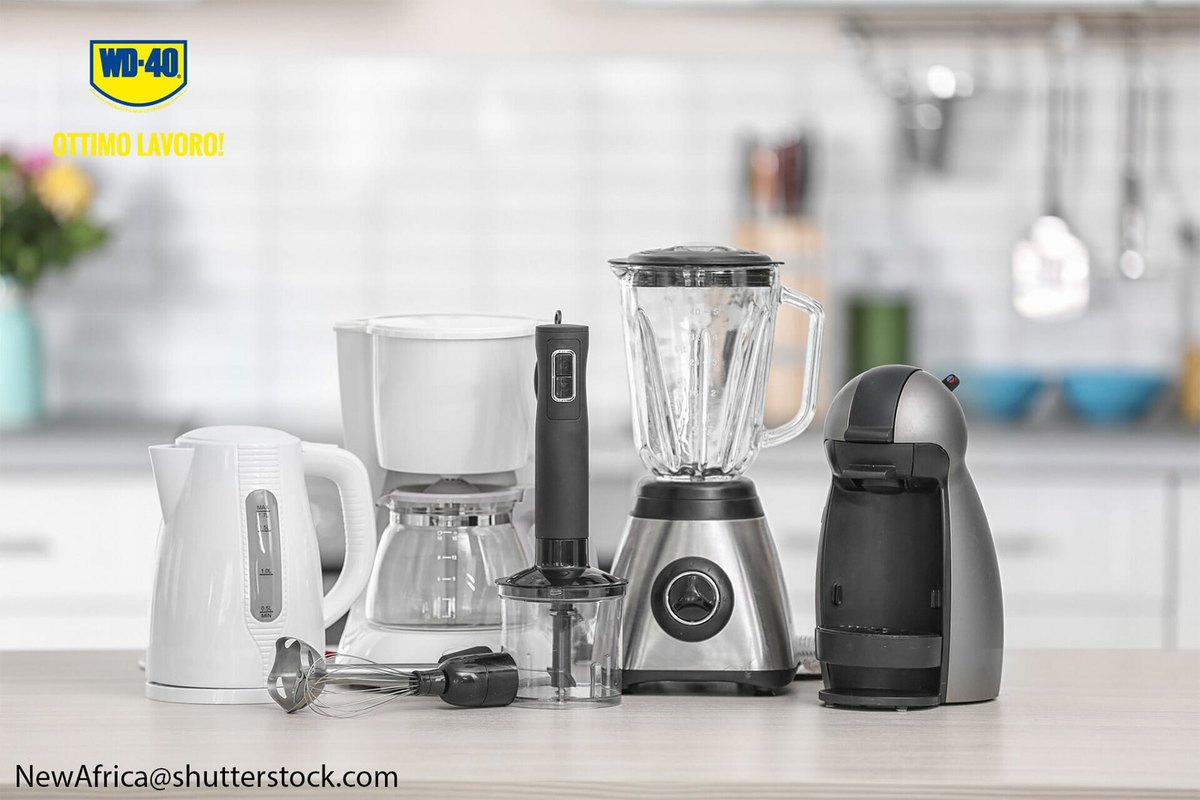
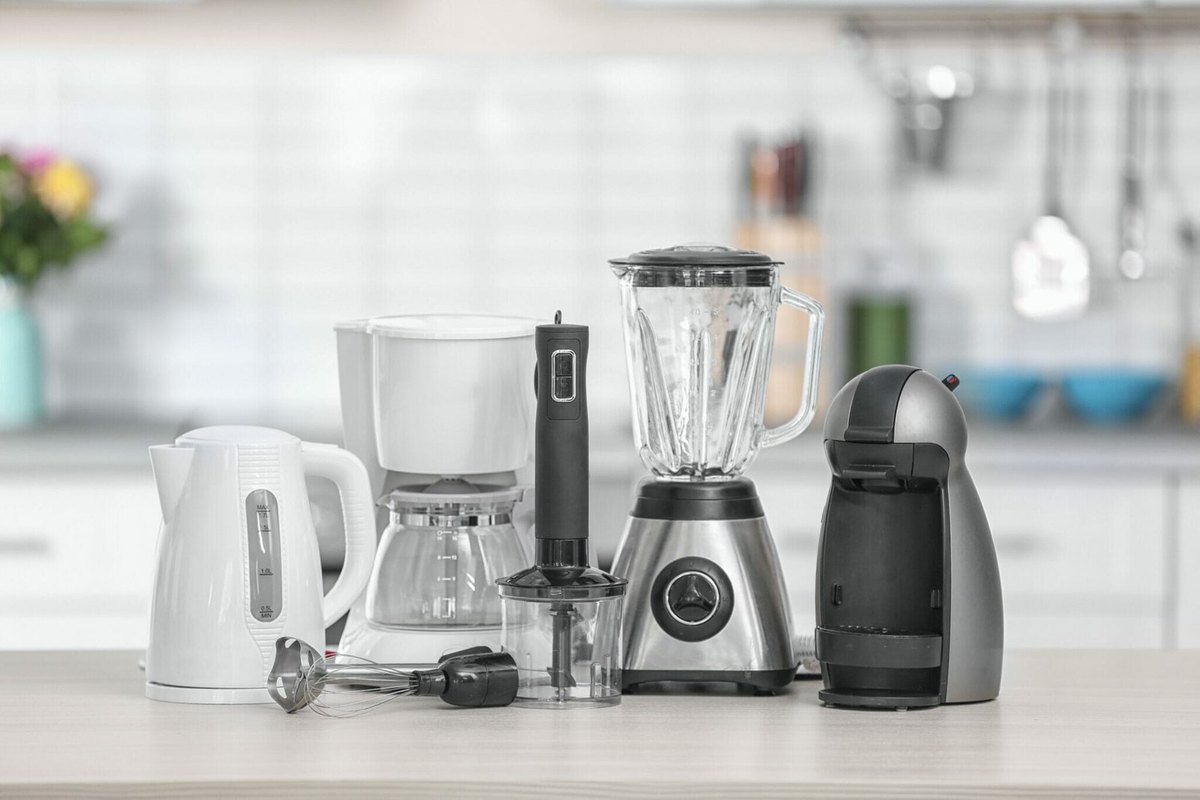
Small household appliances fall into three groups: those with a heating element (iron, toaster, heater), those with a motor (mixer, blender, fan, vacuum cleaner) and combined ones such as a hairdryer. Larger appliances like washing machines, tumble dryers and dishwashers have their own typical weak points: feet, springs, hinges and rollers.
Many minor faults, from squeaks and humming to a sticking switch, can be fixed yourself if you work carefully. Anything involving electronic repairs or gas appliances is best left to a service engineer.
What you will need
Important: Always unplug the appliance before inspecting or repairing it, and turn off the water supply to large appliances. Do not open an appliance that is still under warranty, as you may lose free repairs.
Step 1
Disconnect the appliance and open the casing
Pull the plug and let heating appliances cool down completely. The casing is usually held by self-tapping or machine screws, sometimes by clips that need pressing or sliding. Photograph each step as you take it apart, so reassembly is easier. Inspect the internal connections for signs of overheating, discolouration or melting.
Step 2
Check the cable and heating element
Heating appliances draw a lot of current, from a few hundred watts for a travel iron to two and a half kilowatts for a heater. As a result the power cable and its connections heat up and age first, especially near the plug and where the cable enters the casing. Replace a damaged cable rather than taping it up.
The heating element is usually connected with screw terminals or spade connectors. Clean darkened, oxidised terminals with WD-40 Specialist Contact Cleaner: a poor contact heats up on its own and destroys the connector.
Step 3
Look after motors, bearings and switches
If a motorised appliance has become noisy, vibrates or runs hot, worn bushes, bearings or couplings are often to blame. Once play is noticeable they should be replaced, not just lubricated. Remove dust, fibres and hair from inside fans, hairdryers and vacuum cleaners with a brush and vacuum.
Treat push, slide and rotary switches that still work but have become stiff or intermittent with WD-40 Specialist Contact Cleaner and operate them several times. It removes dirt and oxidation and leaves no film on the contacts.
Step 4
Washing machine and tumble dryer
If the washing machine knocks or vibrates heavily, check that it is level and inspect the feet. Free seized feet with WD-40 Specialist Penetrant, level the machine and tighten the lock nuts. Treat squeaking drum suspension springs with WD-40 Specialist White Lithium Grease.
In a tumble dryer, noise often comes from the drum drive: rollers, pulleys and belt. Mechanical parts can be lubricated with lithium grease, but no grease must reach the belt or the surfaces it runs on. Replace worn rollers.
Step 5
Dishwasher
The most common dishwasher problem is a door that does not close properly. Check the level and feet, the position of the upper and lower baskets, and the condition and seating of the seal in its groove. Inspect the hinges, springs and door cable if fitted. Treat squeaky hinges and springs with WD-40 Specialist White Lithium Grease, keeping it away from the inside of the tub, the dishes and baskets.
Step 6
Reassemble and test
Put the appliance back together in reverse order using your photos, making sure all wires are in place and none are trapped by the casing. Wipe external metal screws, brackets and hinges exposed to moisture with WD-40 Multi-Use and remove the excess. Switch on and check it works. If it overheats, sparks or trips the breaker, switch off at once and contact a service engineer.
Tip: Every few months simply vacuum the vents of hairdryers, heaters and power supplies. Dust inside reduces cooling and is the most common cause of small appliances overheating.
What next
Give cables and plugs a quick look every time you take an appliance out of the cupboard, and service the mechanisms of large appliances once a year. The same lithium grease works for door hinges and squeaky furniture.
These uses come from the experience of WD-40 users in many countries. Always follow the instructions and warnings on the product label.
More guides in «How to use».