Any renovation leaves splashes of cement, plaster, tile adhesive or grout on the floor, and the water from the mixes dries into a white or grey haze. It is not only unsightly: the crumbs break up underfoot and the sand in them scratches tiles, laminate and parquet.
It is best to work in stages, from dry cleaning to mild acids and careful scraping. WD-40 Multi-Use helps at the final stage by lifting stubborn marks and streaks left after washing.
What you will need
- A broom and a powerful vacuum cleaner
- White vinegar, warm water, a bucket and a mop
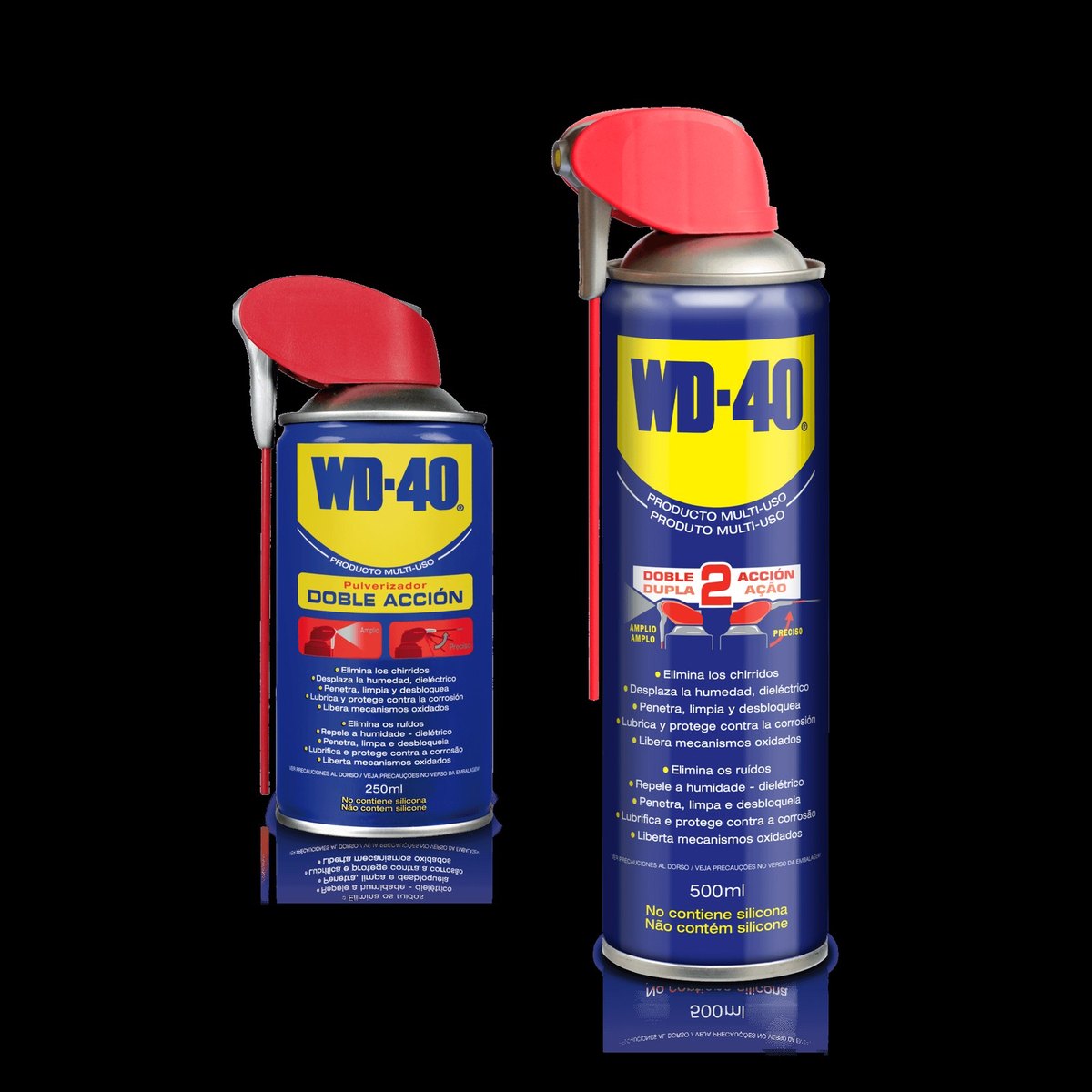
- WD-40 Multi-Use or WD-40 Trigger Pro 591 ml for large areas
- A medium-stiff scraper and a flexible scraper with rounded corners
- A sponge with a mild abrasive side and dry cloths
- Acid tile cleaner, rubber gloves and safety glasses
Important: Never use vinegar or acid cleaners on marble, travertine or other limestone: they etch the surface. Test any product on a hidden area first. After using WD-40, always wash the floor again, or it will be slippery.
Step 1
Clear the dry debris
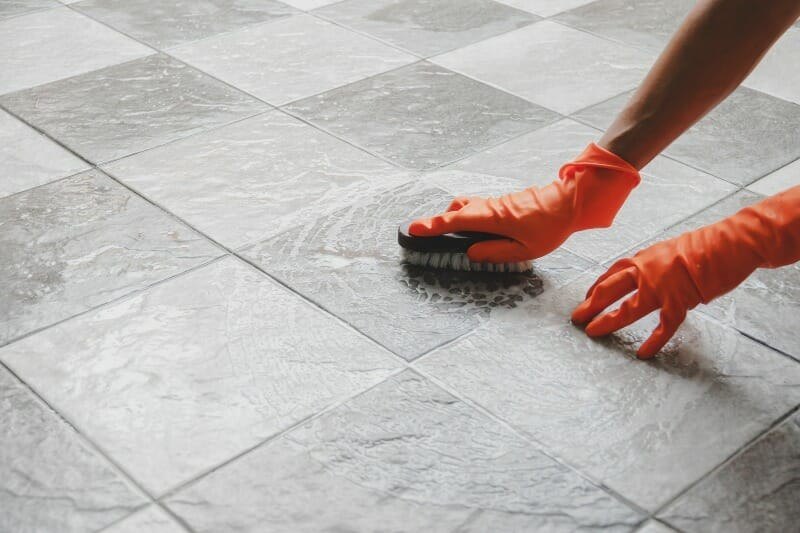
Start with a dry clean: sweep the floor, then vacuum thoroughly while the tiles are still dry. This removes sand and loose crumbs that would otherwise smear when wet and scratch the surface.
Step 2
Pre-wash with vinegar and WD-40
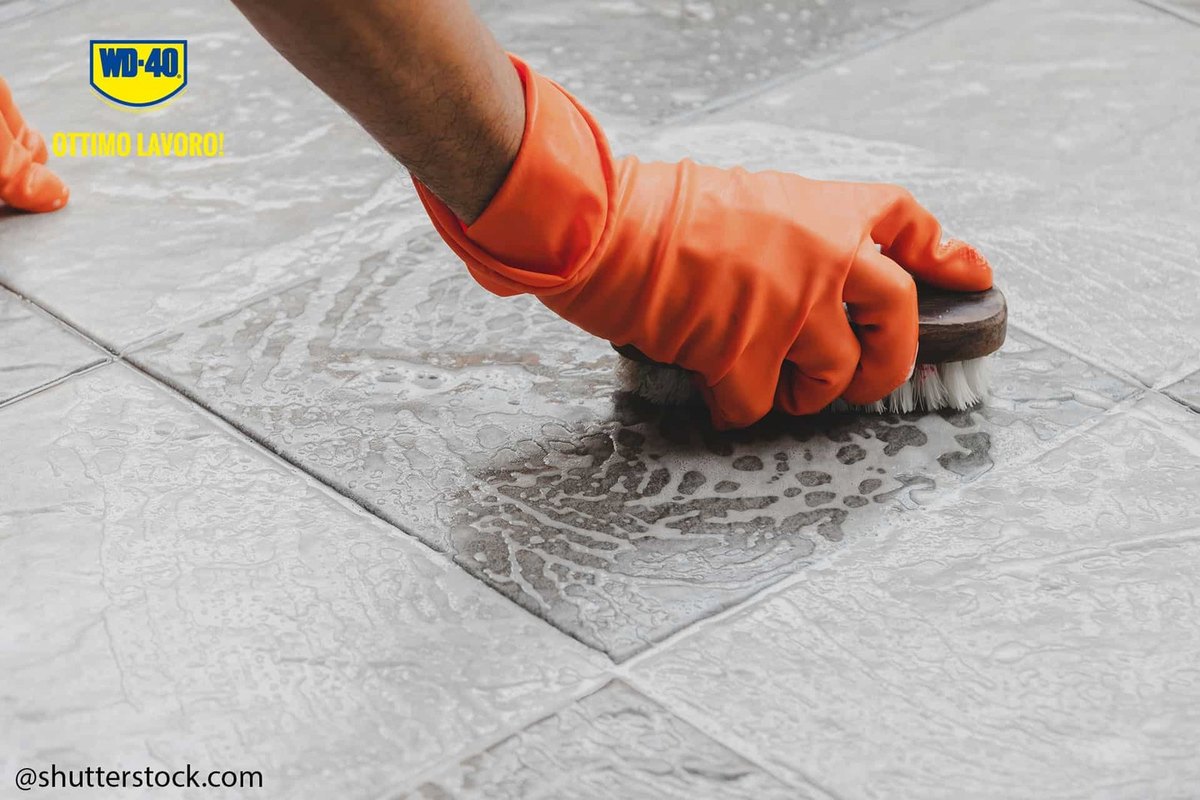
Cement and lime mortars dissolve in acid, so add a glass of vinegar to a bucket of warm water. Wipe the tiles, let the solution work for a few minutes and scrub with the mop. Light marks will disappear and the tougher ones will become easier to see.
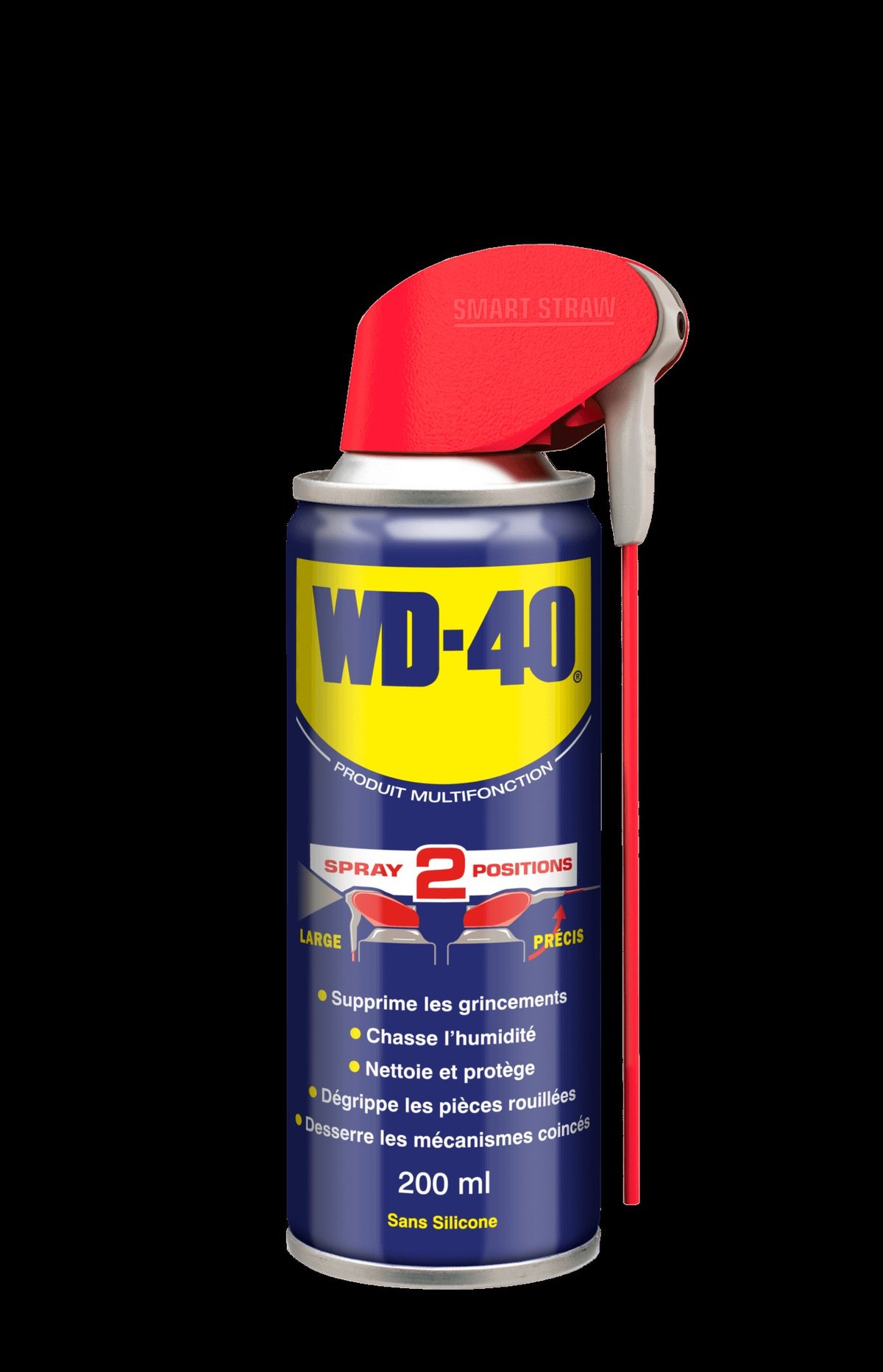
Once the floor is dry, spray WD-40 Multi-Use onto any stubborn streaks, wait a few minutes and wipe with a dry cloth. For large areas, WD-40 Trigger Pro with its trigger sprayer is more convenient.
Step 3
Remove plaster and grout
Plaster is the easiest material to remove: a vigorous scrub with water and vinegar is usually enough. If it resists, lift the pieces with a scraper first and then wash.
Step 4
Lift hardened cement to suit the surface
On ceramic and porcelain tiles, shave off the lump with a medium-stiff scraper held at a shallow angle. Then wet the area with warm vinegar water, scrub with a mildly abrasive sponge and dry.
On terracotta, parquet and laminate use only a flexible scraper with rounded edges, no abrasive sponge, and a weak solution. Tile adhesive can leave a permanent mark on porous surfaces, so act as early as possible.
Step 5
Use an acid cleaner on stubborn build-up
On dense, non-porous tiles and granite, thick deposits can be softened with a dedicated acid cement remover applied with a brush. It breaks down hardened mortar but is aggressive.
Wear gloves and glasses, ventilate the room, always test on a hidden area and keep strictly to the contact time on the label.
Step 6
Give the floor a final wash
Finally, wash the floor thoroughly with clean water so that no acid, vinegar or WD-40 is left behind. Change the water in the bucket twice.
When the floor is completely dry, renew the protective finish if needed: wax, polish or grout sealer, depending on the floor type.
Tip: Before your next renovation, cover the floor with plastic sheeting or cardboard and tape the joints with masking tape. Splashes wiped off straight away with a damp cloth take seconds to remove, while dried ones take hours.
What next
After the job, WD-40 Multi-Use is also useful for your tools: clean mortar off scrapers, trowels and mixing paddles and protect the metal from rust before storing it in a damp garage or cellar.
These uses come from the experience of WD-40 users in many countries. Always follow the instructions and warnings on the product label.
More guides in «How to use».