Rust stains on paving almost always have a culprit: a metal bin, garden furniture legs, a barbecue, a bucket or a nail left on the path after rain. Moisture dissolves iron oxides and they soak into the surface, leaving orange rings and streaks.
A fresh stain is fairly easy to remove, while an old one may need several treatments. The key rule: the method depends on whether the tile is porous, and once it is clean you must protect the metal object itself, or the stain will return after a few showers.
What you will need
- lemon juice or citric acid, coarse salt
- bicarbonate of soda and washing-up liquid
- mild bar soap for porous tiles
- sponge with a scouring side, synthetic bristle brush, bucket
- rubber gloves
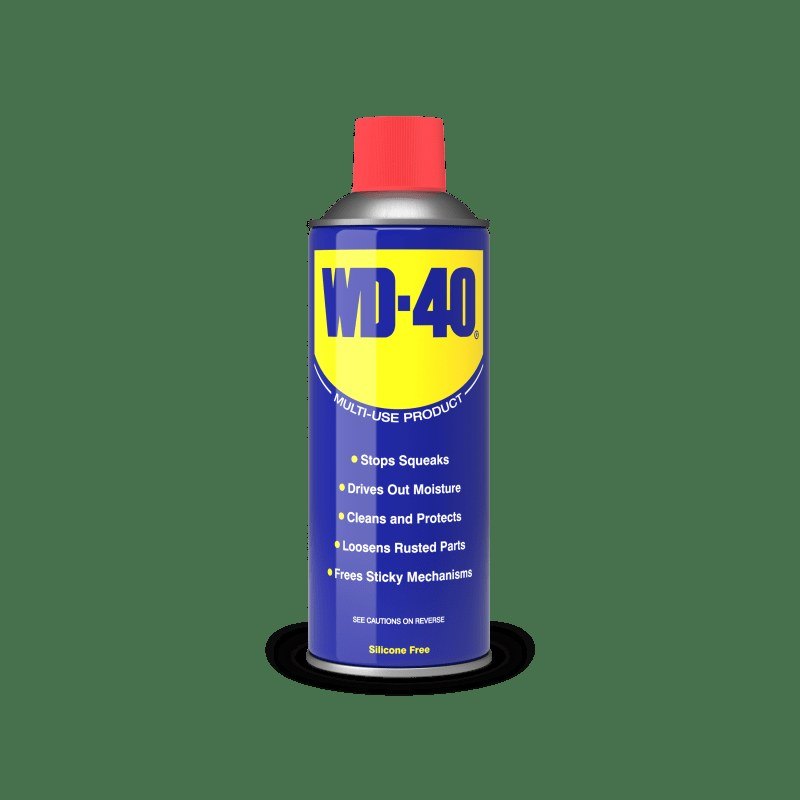
- WD-40 Multi-Use or WD-40 Trigger Pro for larger metal items
Important: Never use acids (lemon, vinegar) on marble, limestone, cement tiles or other porous stone: they etch the surface and leave dull patches. Test any cleaner on a hidden spot first.
Step 1
Identify the type of surface
Glazed porcelain and dense clinker tiles do not absorb water: a drop beads up on them. Concrete block paving, cement tiles, marble and natural stone are porous: water darkens the surface and soaks in quickly.
This decides whether you can use an acid or only gentle alkaline cleaners.
Step 2
Dense tiles: lemon and salt
Apply lemon juice to the stain and sprinkle generously with coarse salt. Small marks need a few minutes; for old stains leave the mix for up to an hour, without letting it dry out.
Rub with the scouring side of the sponge using light pressure so you do not scratch the surface, then rinse with clean water. Alternatively, make a paste of bicarbonate of soda and lemon juice, leave it for a few minutes and scrub off.
Step 3
Porous tiles and stone: mild soap only
For marble, cement tiles and concrete choose non-abrasive, acid-free products. Dissolve mild bar soap in warm water and scrub the stain thoroughly with a brush.
Repeat several times, letting the tile dry between rounds. If the stain is deep, it is wiser to call a stone care specialist than to damage the surface.
Step 4
Patios and outdoor paths
For large areas, mix 1 litre of hot water, 3 tablespoons of bicarbonate of soda and 1 tablespoon of washing-up liquid in a bucket.
Spread the solution over the paving, scrub the rusty areas with a brush and rinse with a hose. Work on a dry day so the paving can dry out by evening.
Step 5
Protect metal objects from rust
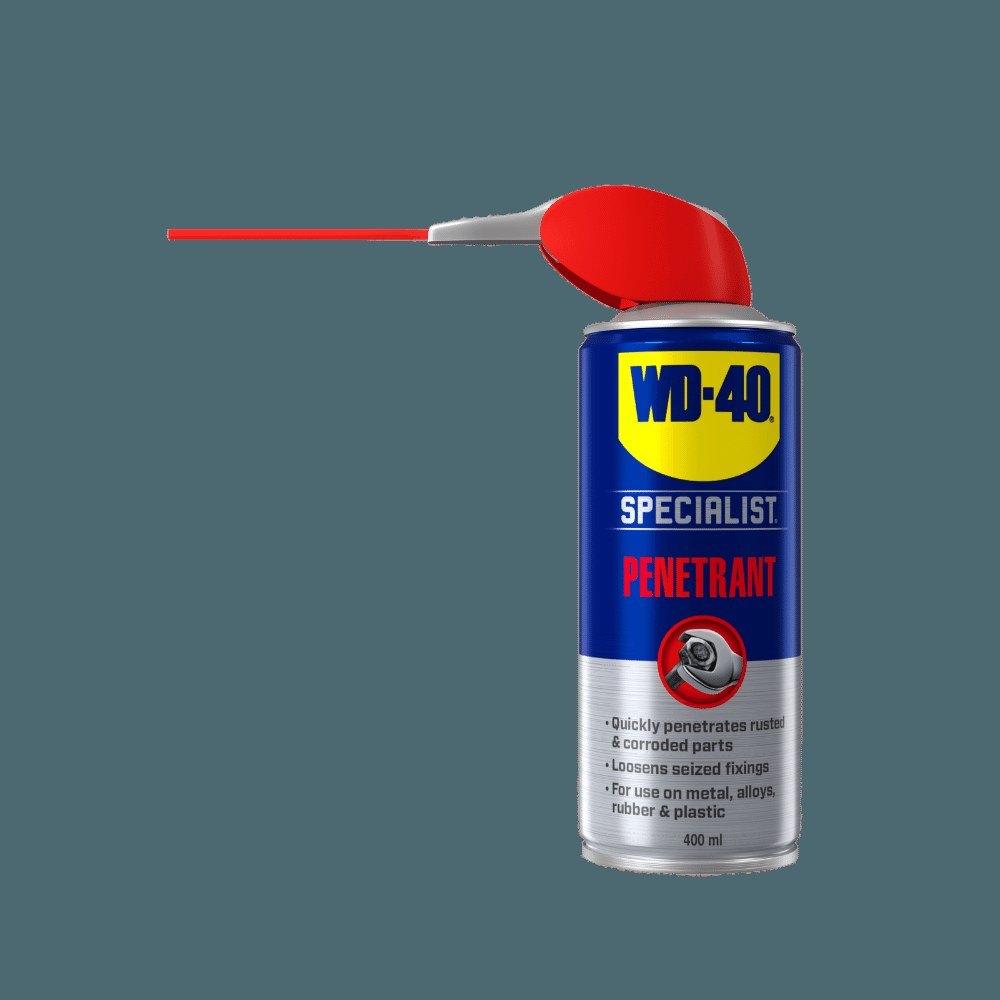
To stop stains reappearing, treat the object itself: bin, furniture legs, barbecue, plant stand. Remove loose rust, apply WD-40 Multi-Use over all metal surfaces and spread it with a cloth.
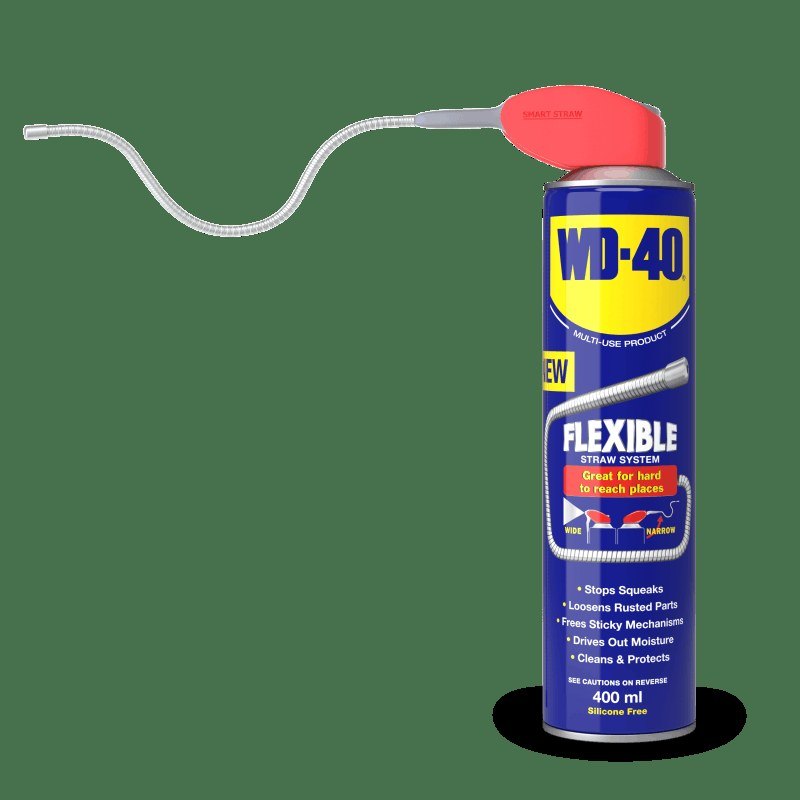
For large items WD-40 Trigger Pro is more convenient, and for gaps and joints use WD-40 Smart Straw with its thin straw. The film displaces moisture and slows corrosion.
Tip: Put plastic or rubber pads under garden furniture legs and metal bins: once the metal no longer touches the paving, orange rings will not form even in a wet autumn.
What next
Outdoors, repeat the protective treatment more often than indoors: in autumn, before winter and in spring after the snow melts. Rain, fog and de-icing salt wash the film away faster. For small items around the home, the handy WD-40 Smart Straw is ideal.
These uses come from the experience of WD-40 users in many countries. Always follow the instructions and warnings on the product label.
More guides in «How to use».