A kitchen exhaust fan removes hot air, steam and smells, but it also traps grease. The layer on the blades and filter builds up unnoticed: the fan begins to hum, pulls less air, and the sticky film collects dust and becomes a fire risk.
Fresh grease washes off easily with warm soapy water. If it has been building up for months and the soapy solution needs applying again and again, WD-40 is quicker: it softens old deposits so they wipe away easily, and the residue is then washed off.
What you will need
Important: Before you start, switch the fan off and unplug it, or switch off the kitchen circuit breaker. Turn off all burners and never use an aerosol near an open flame. Do not spray the motor or electrical parts, and switch the appliance back on only when everything is completely dry.
Step 1
Isolate the fan and the cooker
Switch the fan off and pull the plug. If it is hard-wired, turn off the kitchen circuit at the consumer unit.
Make sure the gas burners or electric hob are off and cool. Open a window for ventilation.
Step 2
Check that the blades turn freely
Turn the impeller slowly by hand. If the fan has not been used for a long time or the blades feel stiff, cleaning alone will not restore its performance.
In that case, remove visible deposits around the shaft and apply a drop of WD-40 Multi-Use Product through the straw of WD-40 Smart Straw precisely onto the shaft by the bush, without flooding the motor. Turn the impeller a few times and wipe off the excess.
Step 3
Remove and clean the grille and filter
Take off the protective grille and the grease filter. They trap most of the grease, and a clogged filter restricts airflow and strains the blades.
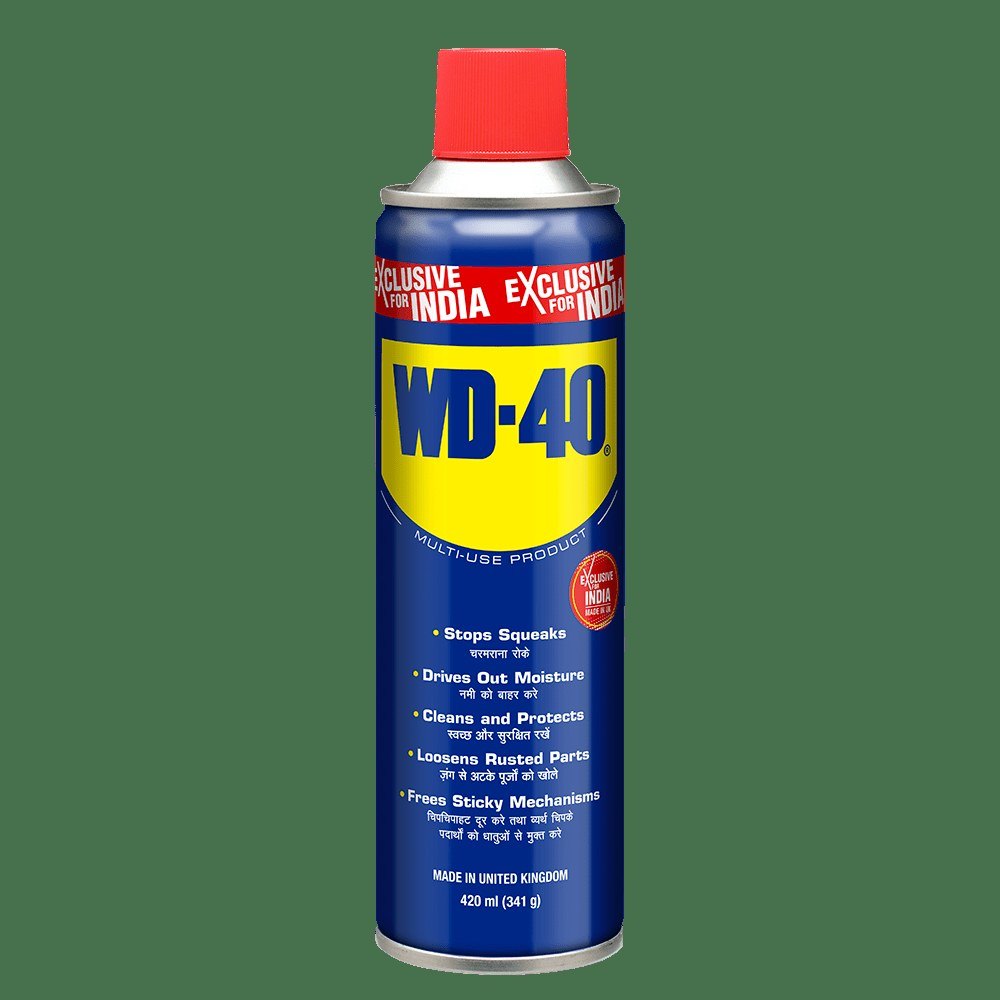
A metal filter can be soaked in hot soapy water, or sprayed with WD-40 Multi-Use Product, left for a few minutes and wiped with a cloth, then always washed in soapy water. Disposable fabric filters are best simply replaced.
Step 4
Spray WD-40 on the blades and housing
Spray WD-40 Multi-Use Product onto the blades and the inner walls of the housing. How much depends on the thickness of the deposit, but you do not need a lot: a thin coat does the job.
Leave it for a few minutes to dissolve the grease. Do not wait too long: wipe while the deposit is still soft.
Step 5
Wipe off the grease and wash
Wipe the blades and housing with a clean cotton cloth. The softened grease comes off easily and one pass is usually enough. If marks remain in the corners, repeat the treatment.
Finally wash the blades, housing, grille and filter with warm soapy water to remove any remaining grease and product.
Step 6
Dry and reassemble
Let all the parts dry completely, ideally for a few hours. No moisture should be left in the housing or on the contacts.
Refit the filter and grille, restore the power and test the fan: it should run quietly and smoothly.
Tip: Wash the filter once a month in ordinary soapy water while the grease is still fresh. A full clean of the blades and housing will then only be needed every few months.
What next
Depending on how often you fry, give the fan a full clean every 3-6 months. Keep WD-40 Multi-Use Product to hand: it also helps with grease on the hob and cooker hood.
These uses come from the experience of WD-40 users in many countries. Always follow the instructions and warnings on the product label.
More guides in «How to use».